Air-pilots have reported seeing a wasp at 6,000 feet and small green flies – probably aphides – at 4,000 feet, according to a Country diary entry from 27 August 1926. The observations should make us realise how little we know of the habits of common creatures which we boastfully think we understand.
Why would a wasp ascend so high?
Who would imagine that a wasp could ascend so high? It has proved that it can, but what did it go up for? A certain town-tip that I pass occasionally is a great place for wasps; they swarm over the rags, paper, tins, and rubbish of all kinds, and undoubtedly find much that for their grubs is fattening food in what man has thrown away as useless.
Probably the old meat and fruit tins, jam pots too, are mines of treasure for these busy wasps. But surely no wasp expects to find a town-tip up in the sky, nor can it be worth the labour of ascent to that altitude in the hope of finding winged game, though the wasp is an excellent fly-catcher.

Nuptial flight and distribution
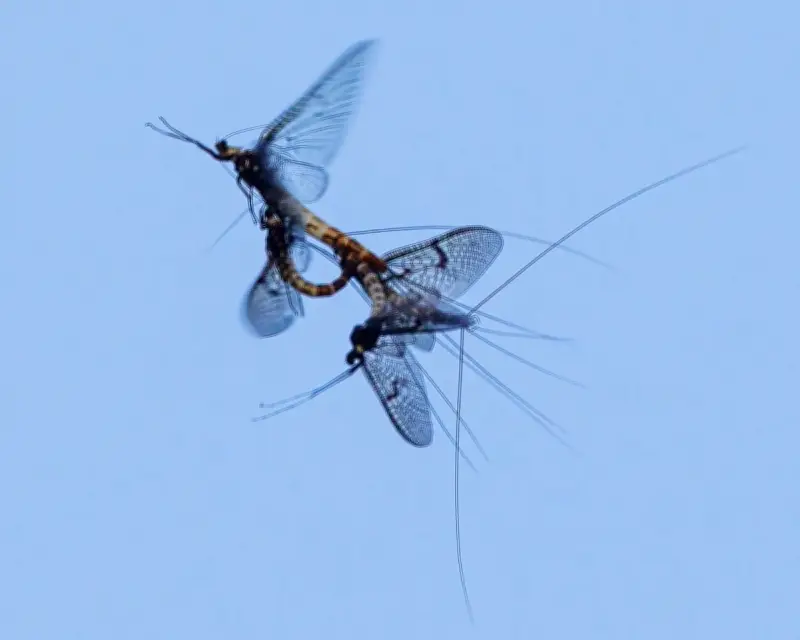
The mother or queen wasps are busy laying eggs, so that cannot have tempted a drone to seek a mate in the upper air. Nuptial flight may explain the swarm of green flies at a great height; many insects ascend when they are stirred by amorous impulse, and high flight must influence distribution.
A strong wind would carry them far from their original home, and doubtless many insect hordes are swept out to sea and trouble us no more.