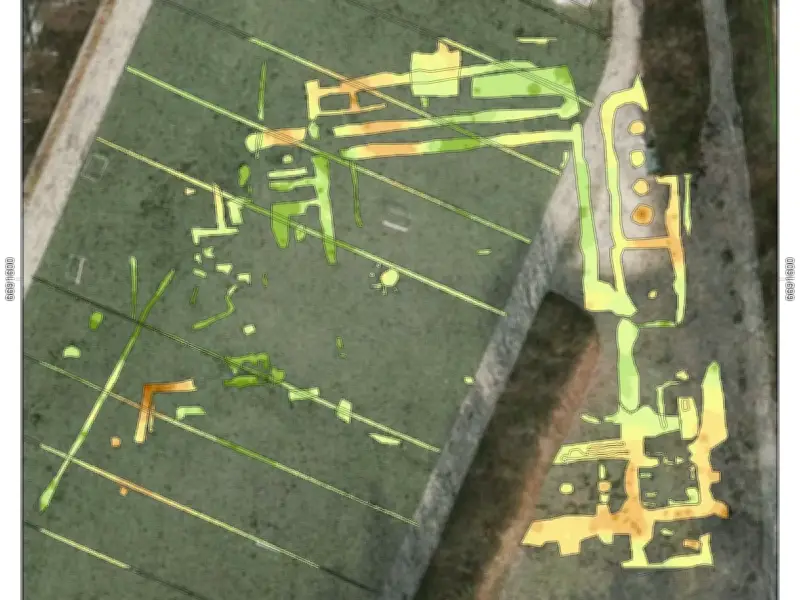
The remarkably well-preserved remains of a 13th-century convent have been discovered beneath a football ground in Denmark. Archaeologists found the site of St Clare's Monastery in Roskilde using ground-penetrating radar (GPR) during investigations ahead of a car park construction project.
The medieval monastery, which dates back to 1256, had been demolished and was believed lost to history. Its remains were located around a metre below the surface of a sports field in Roskilde, surprising experts with their condition. Scans revealed rooms, cloisters and a church located in the southern wing.
Radar Survey Reveals Well-Preserved Structure
The eastern wing appears to be the best preserved, with vaulting pillars and room divisions easily identifiable. According to the Norwegian Institute for Cultural Heritage Research, the remains are among the best ever found by radar of a monastic site in the country.
The scans were carried out as part of a project to build an underground car park beneath the sports field at Byparken in Roskilde. It was known the convent had been located in the area, so the National Museum of Denmark (ROMU) wanted to use GPR, which can be done quickly without excavation.
Experts React to Impressive Results
"We knew that St Clare's Convent had been located here, but not how much of the complex from 1256 had been preserved. The GPR survey has produced very clear results and a solid basis for planning further investigations," said archaeologist Jesper Langkilde at ROMU.
The convent was one of five monasteries in Roskilde, an important town in medieval times both religiously and for royalty centred there. It was dissolved and demolished after the Reformation in the 16th century, with bricks from the convent used to build Selso Castle, leading historians to believe nothing remained of the site.
Little was known about the convent, and this discovery offers a chance to learn more. "The results are simply impressive. GPR data do not always provide such clear images, and often the interpretation requires extensive analytical work," said NIKU archaeologist Arne Abel Stamnes. "This is the first time I have documented such a well-preserved monastery complex with GPR, and in my assessment these are among the clearest GPR results from a monastery complex in Scandinavia."
The next step will be to examine building trenches and carry out more extensive archaeological investigations in the area, depending on a decision by the Roskilde municipality.