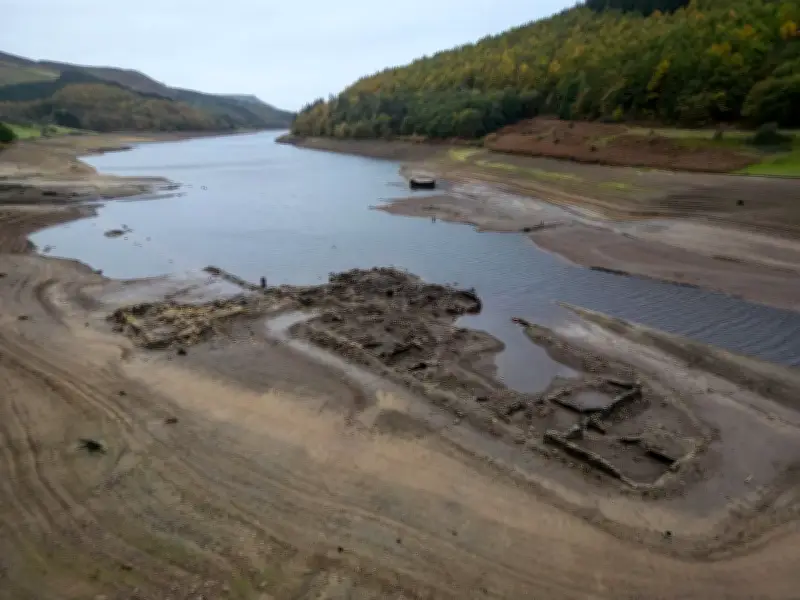
The foundations of two villages deliberately flooded in the 1940s have reappeared at Ladybower Reservoir in Derbyshire after a prolonged drought lowered water levels.
Stonework, walls and the foundations of former homes from the villages of Derwent and Ashopton have emerged from the depths of the reservoir in the Upper Derwent Valley. The villages were flooded to make way for the Peak District reservoir.
Visible remains and low water levels
Ladybower Reservoir can hold 2,869 megalitres of water, but after a prolonged drought over the summer it currently stands at just 32 per cent capacity. Aerial images reveal the detailed layouts of long-lost streets and buildings, including a former pump house still standing within the dirt. Chunks of finely cut stone walls remain upright despite spending decades underwater.
Historic buildings, churches and limestone cottages were submerged when the Derwent Valley was flooded. The reservoir now supplies water to Derby, Sheffield, Nottingham and Leicester. Rising temperatures throughout the summer, coupled with six months of below-average rainfall, have caused stored water levels to plummet.
First sighting in eight years
As a result of these conditions, the outlines of a number of Derwent and Ashopton's old buildings can now be seen. This is the first time they have been visible in eight years, with the last sighting in 2018.
Doug Clarke, Severn Trent's water resources lead, told the BBC: "We've seen six months of below-average rainfall and above-average temperatures so reservoir levels will take time to recover, but overall, across our region we've more stored than this time last year."
Water supply and refurbishment
Clarke added: "Reservoirs make up around a third of our water supplies, with the rest coming from rivers and groundwater, and our teams are continuing to work around the clock to treat more water and fix leaks at record levels. But we're also asking customers to continue using water wisely all year round, to help ensure there is always enough to go around."
Ladybower Reservoir also underwent major refurbishment work in the 1990s to raise and strengthen the dam wall. This work also looked to reduce the risk of "over-topping" during a major flood.