
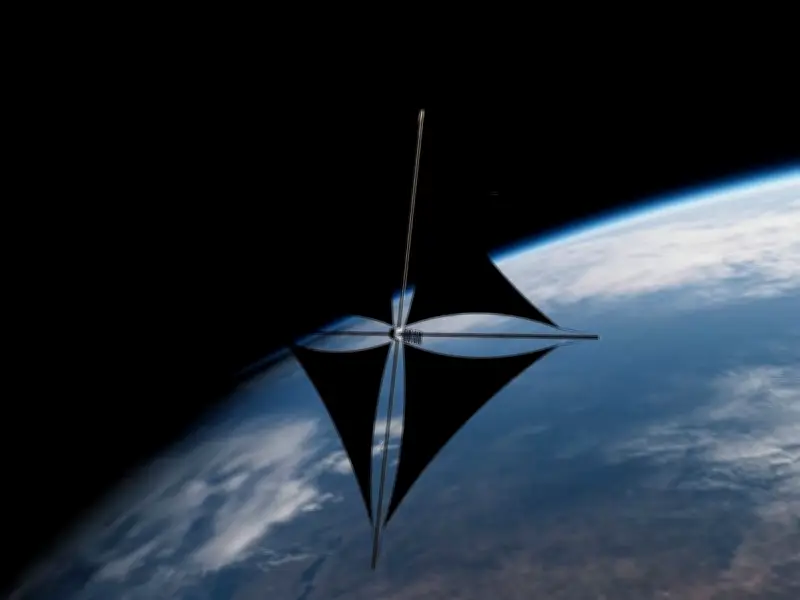
The US Federal Communications Commission (FCC) has approved a test satellite for a controversial space mirror project that aims to beam daylight down to Earth, despite warnings it could blind airplane pilots and disrupt night sky observations.
Tech start-up Reflect Orbital received the green light to launch a prototype craft named Earendil-1, fitted with a massive orbital mirror. The company claims its "sunlight on demand" system will project a beam of light roughly five kilometres wide, intended to boost solar farms, agriculture, and night-time search and rescue operations.
Safety and Astronomy Concerns
Critics have raised alarms about the potential side-effects. The American Astronomical Society issued a scathing statement warning of possible harm, including damage to sensitive research telescope equipment, flash-blinding of pilots and drivers, and permanent eye damage to anyone looking through a mid-sized telescope, as Reflect Orbital itself noted in its FCC filings.
The FCC, however, stated that safety concerns outside radio and satellite frequencies fall beyond its regulatory scope, allowing the approval to proceed.
Ambitious Expansion Plans
While the initial approval covers only one prototype, Reflect Orbital has far larger ambitions. The company plans to launch a constellation of 50,000 orbiting mirrors by 2035, adding to the millions of commercial satellites already proposed by tech giants like SpaceX and Blue Origin.
Legal and international space authorities are questioning how the project fits into global space law. The United Nations Office for Outer Space Affairs (UNOOSA) noted that the 1967 Outer Space Treaty allows free exploration but is not a free-for-all. A UNOOSA representative said: "Nothing in the treaties prohibits placing a reflective object in orbit. But such an activity is very far from unregulated. It is subject to due regard and consultation obligations owed to every other State. And any State that considers itself affected is entitled to raise it."
Space law expert Ram Jakhu, professor emeritus at McGill University, believes governments will eventually intervene. He said: "I think, in five, ten years, you will see something done about it, not only talk and talk... The whole issue of night sky, light pollution, these things, they are being addressed, but nothing has been decided yet. But I think there will be serious concerns and discussion, something we can see in the near future. The night sky is very important. But…astronomers are not a major player in geopolitics."
Light Pollution and Company Response
Astronomers argue that Reflect Orbital underestimates the disruption from light pollution. Beyond directly hitting telescopes, reflected light scatters through the atmosphere, washing out the darkness needed for deep-space observation.
Reflect Orbital said it wants to work within official boundaries. A spokesperson stated: "We recognise that responsible deployment at scale requires clear rules. We welcome oversight and want to play an active role in shaping it. We believe it is our responsibility to work alongside governments, scientists and regulators rather than ahead of them."




