Restaurant bathrooms have undergone a dramatic transformation, evolving from purely functional spaces into elaborate, attention-grabbing attractions. Once an afterthought, today's facilities are designed to impress, featuring lavish amenities, bespoke lighting, custom soundscapes, and selfie mirrors, all documented on social media channels like @LoosOfLondon, which boasts 78,000 TikTok followers.
This shift is evident across the UK. At Michelin-starred Timberyard in Edinburgh, guests encounter a shadowy space soundtracked by the sounds of fermenting grapes. In Oxford's Dosa Darlings, the Harry Potter audiobooks narrated by Stephen Fry play, while Soho's Osteria Vibrato features opera. Disco soundtracks and flashing lights, activated by a button, are now common at venues like Barbara's Bier Haus in Birmingham and Albert's Schloss.
From Utility to Experience
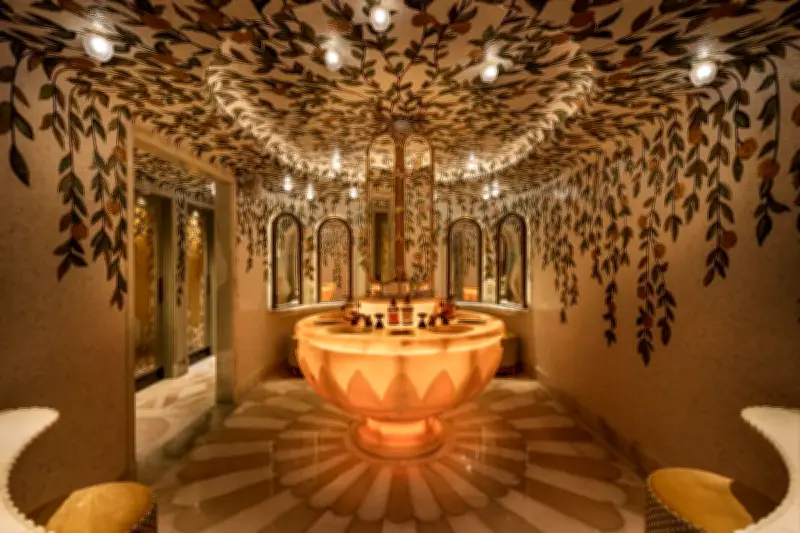
The trend extends to palatial TikTok-bait boudoirs at Mayfair's Bacchanalia, horror-themed mini cinemas at BloodSports in Covent Garden, and even a shrine to former basketball player Dennis Rodman at Story Cellar. This new wave of design is driven by social media and a post-Covid industry shift towards more immersive dining spaces.
Jo Radford, head sommelier and co-founder at Timberyard, explains the motivation: "We've become fascinated with the tiny details that add up to make a difference in a restaurant. The amount of time that a guest is in the building with food in front of them is quite a small portion of their overall time with us, so we were looking at all those other touch points and how we could elevate things."
Designing for the 'Stolen Moment'
Hospitality designer Russell Sage, with over 20 years of experience and clients including Gordon Ramsay and Angela Hartnett, notes the growing importance of bathrooms: "The bathroom is a little space where you can take time to look after yourself and maybe muck around and have an Instagram moment. It's increasingly become about giving people their own time, getting the lighting right, and making sure they feel a million quid by the time they step back into the restaurant."
At Lilibet's, a maximalist seafood restaurant in Mayfair, Sage designed restrooms inspired by the young Queen Elizabeth II's love of decorative china, featuring mirrors that are lengthening and slimming. "There have definitely been enquiries from people about whether they can buy one from us," says Sage. "We just thought, people want to look fabulous, so let's make a mirror that guarantees you look even more fabulous."
Practical Solutions and Challenges
Even smaller businesses are embracing the trend. Cal McRae, owner of Dalston bar Ellie's, built a custom martini-holder rack into the bathroom after expensive glasses kept smashing on the toilet floor. "I was absolutely buzzing off the back of that," says McRae. "And it was nice to find this practical solution to a problem, that was interesting from a design point of view and became a bit of a talking point."
The trend has also created challenges. The Cut and Craft in Manchester implemented a five-minute time limit on their Instagrammable toilets, and Jeremy King hired extra security at The Park in Bayswater due to influencers filming prolonged video shoots. James Plant, head of openings and innovations at Albert's Schloss, notes, "Now and again, we'll get four girls going in there with a bottle of prosecco and there'll be a big queue after 20 minutes. So we make sure we have toilet attendants, to give them a gentle knock and a nudge."
Despite potential backlash, Sage believes the amplified bathroom aesthetic will become more common. "It's the world that we're in now," he says. "Going to a restaurant is not a cheap business, so we owe it to people to give them a good experience, turn up the volume and really put on a show."
The truth likely lies in the middle, but the point of no return has been passed. A bathroom that has to be experienced to be believed is both added value and a lure. "We want to give people a stolen moment," says Radford. "There's nothing like seeing one of our guests returning from the bathroom, turning to the rest of the table and saying: 'You need to go downstairs and experience that.'" Expect more restaurateurs to turn their facilities into miniature worlds, and a prolonged toilet break mid-meal is no longer necessarily a bad sign.