
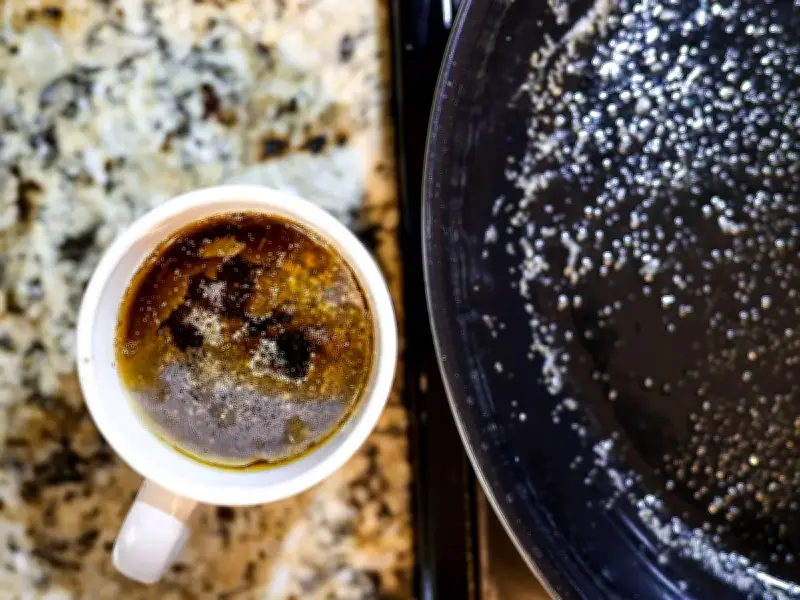
A prominent binman who shares advice on social media has told households exactly how they should be disposing of used cooking oil. The No1 Binman on TikTok, a self-described 'binfluencer', consistently offers helpful advice to assist the British public in determining which items can be thrown away and which cannot.
Why used cooking oil is a problem
Used cooking oil poses difficulties, particularly when you've accumulated a significant quantity, for example after deep-frying. It's commonly known that tipping it down the sink is strictly prohibited, as it hardens quickly and causes blockages requiring costly professional assistance. Water UK, the trade body representing the water industry, warns that fats, oils and grease poured down the drain are a leading cause of the 300,000 sewer blockages that occur across the UK every year, costing around £100 million to clear.
The correct method
So the food waste caddy might appear to be the obvious answer. But according to one waste collection specialist on social media, this method is equally incorrect. He explained: "Used cooking oil should go in your general waste. Do not put it in the food waste, and definitely not the recycling bin."
This advice is backed up by official advice, which recommends disposing of cooking oil by allowing it to cool, then sealing it in a container before placing it in the general waste bin. However, the No1 Binman also stressed that the oil shouldn't be poured directly into the bin, as this could damage the liner. He recommended: "If you can, put it in a container or something that can't be recycled and then put it in your general waste. It stops it from going anywhere in case a bag splits. A family-sized amount of oil is OK to put in general waste."
Exceptions and alternatives
A carton or jar serves as a perfect example of an appropriate receptacle, and make sure it has a secure, tight-fitting lid. That said, the waste collector highlighted one significant exception to this advice. He stated: "If you've got loads of it, like commercial, then no, it doesn't go in your general bin. You'd have to either contact your council or get someone else to come and collect it. But if it's just like a normal family-sized amount of cooking oil, then it'll just go in your general waste."
For larger quantities, many local councils across the UK operate household waste recycling centres where cooking oil can be dropped off separately. Some areas also have dedicated cooking oil collection points, and used cooking oil can even be processed into biodiesel — a renewable fuel source — making it well worth checking what your local authority offers before simply binning it.
For those eager to extract additional value from their leftover cooking oil, experts at Zero Waste Scotland have put forward some simple recycling alternatives. It can be used on your garden shed or fence as an alternative water-repellent coat, as it won't stain the timber and is completely safe to use around animals and plants. Alternatively, cooking fat from chicken or bacon can be converted into a homemade snack for garden birds. Simply pour it into a suitable container, mix with bird seeds and nuts, allow it to set solid, then place it outside for the birds to savour.




