Liverpool Boxing Stadium
Liverpool Boxing Stadium, the UK's first purpose-built boxing arena, opened in 1911 on Pudsey Street before moving to the site of St Paul's Church graveyard at the north end of Bixteth Street. It hosted hundreds of top boxers, including Nel Tarleton, Ernie Roderick, Alan Rudkin, and former World champion John Conteh. The final match took place in 1985, and the building was demolished in 1987. A commemorative stone now sits in St Paul's Square, near the ECHO's offices at number 5.
Tate & Lyle Factory
Henry Tate & Sons opened a sugar refinery on Love Lane in 1872, producing 400 tons of sugar weekly. Over its lifetime, more than 10,000 workers passed through its doors, with many families spanning four or five generations of service. The majority of the workforce were women, known as Sugar Girls. Despite efforts to save it, the factory closed in 1981. The Eldonian Village community was later built on the site.
Eastham Pleasure Gardens
Eastham Country Park, now a 100-acre tranquil woodland, was once the Eastham Pleasure Gardens, featuring amusements, concerts, and a zoo opened in 1874 by owners Henry Gough and T. W. Thompson. The zoo housed exotic animals including an elephant, polar bears, camels, tigers, bears, a lion's den, and an aviary with an eagle and black swan. The construction of the Manchester Ship Canal in 1894 industrialised the area, leading to the gardens' decline. Owner Thomas William Thompson died in May 1895. The land is now Eastham Country Park.
Liverpool Overhead Railway
Built in 1893 as the first elevated electric railway in the world, the Liverpool Overhead Railway ran close to the city's docks, providing cover for pedestrians and earning the nickname "Dockers' Umbrella." It served hundreds of commuters daily until congestion and traffic issues led to its demolition beginning in 1957. Remnants of the structure can still be seen in the city.
Cream
Liverpool's super club Cream launched in October 1992 at the now-demolished Nation nightclub in Wolstenholme Square. It became a legendary movement in dance and electronic music, attracting superstar DJs from around the world. The iconic club closed in 2007, and the venue was demolished in 2016 as part of the regeneration of Wolstenholme Square, along with the Kazimier Club. The redeveloped square now consists mainly of residential flats.
Hartley's Village
William Hartley built Hartley's Village in 1886 in Aintree, a self-contained community for his jam-making business. He constructed 49 houses on streets named after jam ingredients, such as Sugar Street, Cherry Avenue, and Spice Lane. The Grade II listed factory closed in the mid-1960s, leading to the loss of factory roofs and Hartley's own villa. The surviving parts of the factory are derelict, except for garages. The former workers' houses remain part of a conservation area.
Walkways in the Sky
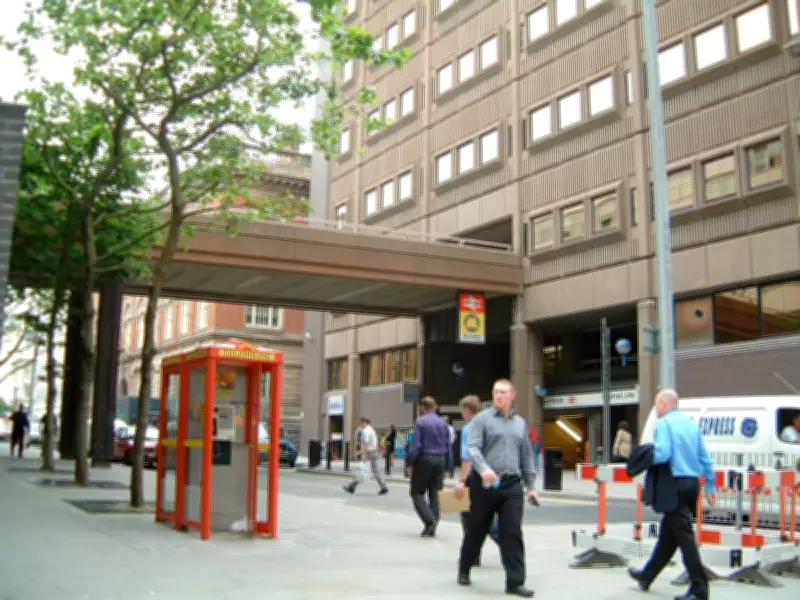
In the 1960s, Liverpool council planned a linked system of elevated walkways. Bridges appeared on Roe Street, Old Hall Street, and James Street, with the first crossing James Street in September 1970. However, the walkways were poorly used and became hotspots for crime. The ECHO campaigned for the demolition of the Roe Street walkway, calling it a "black, graffiti-strewn monstrosity." It was demolished in August 1992, making the front page under the headline "It's Gone."
Mossley Hill Zoo
The Liverpool Zoological Park opened in May 1932 on Elmswood Road in Mossley Hill, on the grounds of the former Rosemont estate. According to a Liverpool ECHO report on May 2, 1932, the zoo featured over 600 animals, including monkeys, kangaroos, elephants, lions, bears, storks, snakes, alligators, birds of prey, and tropical birds. Its star attraction was Mickey, a 14-year-old smoking chimpanzee. The zoo operated only until 1938. The site is now occupied by housing estates and university accommodation.
Bubble Bus Stops
Before Queen Square bus station's current form, the Roe/Hood Street Gyratory featured "bubble bus stops" with curved plastic shelters. The gyratory was proposed in 1966 as part of a £1.45m traffic scheme. By the early 1990s, it contributed to congestion, and demolition began in 1992. The new Queen Square bus station opened in 1996.
Custom House
Liverpool's Custom House, known as the city's Fourth Grace, was designed by John Foster Junior and completed in 1839 after 11 years of construction on the site of the Old Dock. The giant H-shaped domed structure housed dock and customs offices, collecting tolls and excise duties. During the Blitz of May 1941, fire bombs severely damaged the building. Its shell survived until 1948, when it was controversially demolished. The site is now part of the Liverpool ONE complex, where the Hilton Hotel stands.