Blood tests carried out on 49 residents of a Lancashire village living close to a large chemical factory have revealed high levels of cancer-causing "forever chemicals".
PFOA found in blood of almost 70% of residents
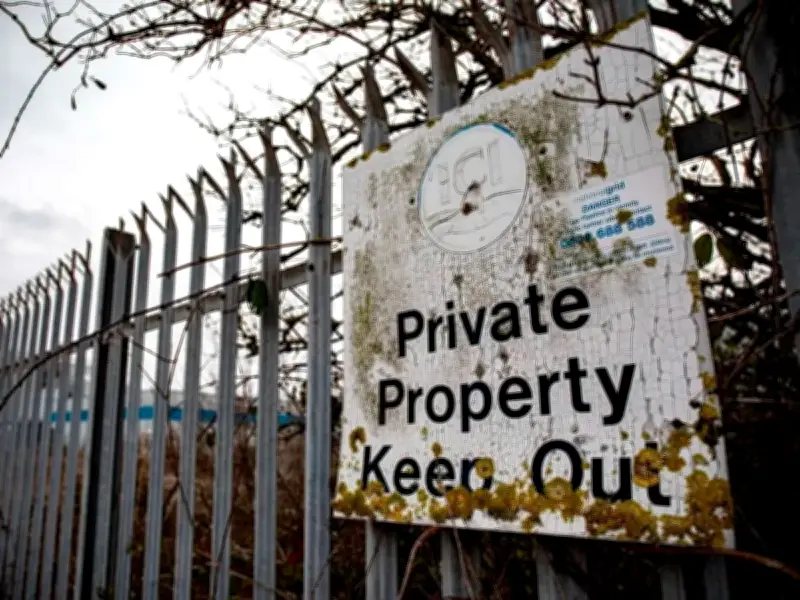
The Hillhouse manufacturing site in Thornton-Cleveleys - operated by AGC Chemicals Europe, and formerly by ICI - used PFOA between the 1950s and 2012. Also known as perfluorooctanoic acid, the banned substance has been classed as a carcinogen.
Part of the "PFAS" group of substances, PFOA is used in a range of products from pesticides to non-stick cookware, food packaging and waterproof clothing. They are known as "forever chemicals" because they can take centuries to break down in the environment.
The blood samples taken from those living near the site found that almost 70% of them had increased levels of PFOA.
Health risks and local authority action
Law firm Leigh Day, which has been investigating PFAS contamination in the area, said the elevated levels of the chemicals placed residents at higher risk of developing health problems such as high cholesterol and some cancers.
The local authority, Wyre Council, launched a multi-agency investigation in 2024 into whether PFOA used on the site and released into the air had contaminated surrounding land, and has temporarily closed allotment sites over contamination.
The Food Standards Agency (FSA) has advised people living within 1km of the site to wash and peel home-grown produce to remove soil that could be contaminated with PFOA, before eating. The FSA also warned those residents should not consume home-produced eggs, after tests revealed eating a single egg a week could reach or go over weekly safety limits.
Test results and expert analysis
Leigh Day said it worked with experts led by Dr Dave Megson at Manchester Metropolitan University (MMU), in association with Watershed Investigations. As part of that work, tests were arranged for 49 residents over this summer selected on how near the factory they lived, how long they had lived there and whether they ate local produce.
The results showed levels of PFOA above 20 nanograms per millilitre in 69% of those tested, putting them in the high risk category, with the overall average at 26 nanograms per millilitre, Leigh Day said. None of the participants had a result in the low risk category, of less than 2 nanograms per millilitre.
Higher than average levels of PFOA were found in those living within a kilometre of the industrial site, with three quarters of those who ate home-grown fruit and vegetables found to be in the high risk category.
'Hugely concerning' results
Leigh Day partner Sarah Moore, who leads the firm's investigations, said: "The results of our testing project in Thornton-Cleveleys are hugely concerning. They are a reminder that PFAS contamination has a human impact, not just an environmental one."
She continued: "The available evidence suggests that PFAS exposure can lead to serious health impacts, including cancers, when it reaches elevated levels."
"Those levels have already been exceeded in Thornton-Cleveleys and it is now the community that are paying the price of that exposure in terms of potential health effects, restrictions on what they can grow and eat locally, and the value of their properties."
Ms Moore added: "The Government has promised increased engagement and regulation of PFAS contamination, but as yet nothing has been done. The situation in Thornton-Cleveleys is a reminder that action should be taken now."
A spokesperson for AGC Chemicals Europe, Ltd. said the company was aware of the recent blood testing initiative and understood the concerns it may have caused among local residents.
The spokesperson pointed to the UK Government's position that PFAS blood testing did not predict future health problems.
"The Hillhouse site and surrounding area has been dedicated to industrial chemical manufacturing for well over a century – long before AGC Chemicals Europe, Ltd. was established – and a wide variety of historical users have operated on the site," they said. "Since the wider multi-agency investigation is still ongoing and no formal determination of land contamination has been made under Part 2A of the Environmental Protection Act, we cannot speculate on future outcomes or next steps."
Earlier this month, AGC Chemicals confirmed it would be ending manufacturing at the Hillhouse site at the end of the year.