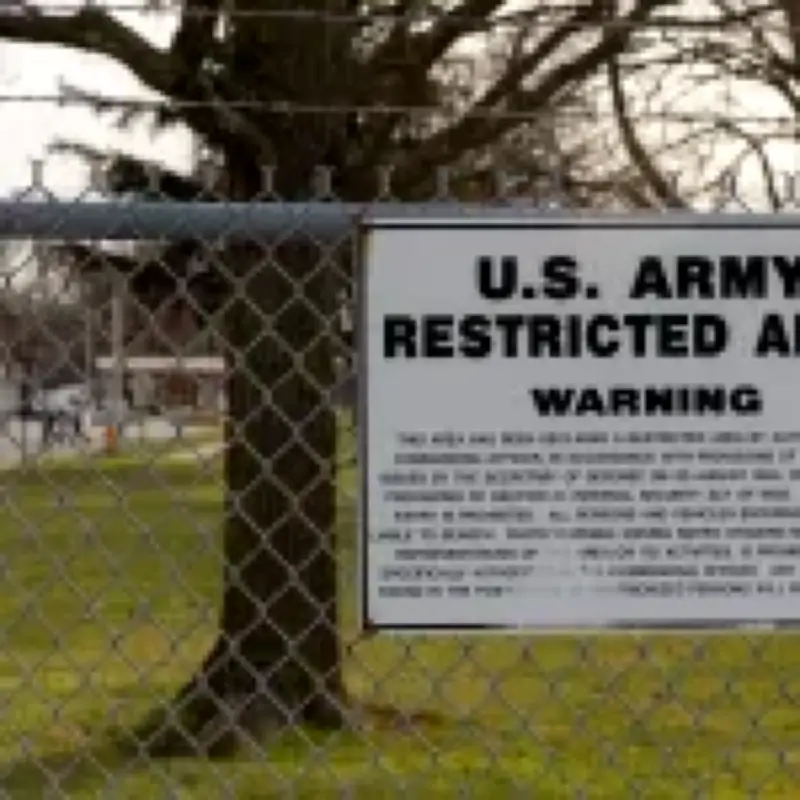
The US Army is pressing ahead with the controlled detonation of five tonnes of lead azide at an ammunition plant in Iowa today, despite widespread concerns over environmental and health risks. The explosion is set to take place at the Iowa Army Ammunition Plant, where officials argue that failing to act would be 'irresponsible' because the substance could detonate on its own.
Army Major General Eric Shirley said: 'Inaction is no longer an option.' Physical barriers have been placed around the blast zone to capture the toxic dust expected to spread, but residents in the area remain alarmed and say they are sheltering ahead of what they describe as a potentially 'apocalyptic' explosion.
Safeguards and lingering fears
A panel on the Court of Appeals said that the US Environmental Protection Agency had incorporated adequate safeguards, but concerns persist. Officials have acknowledged that lead is toxic, prompting many locals to seal windows and doors ahead of the blast. Even people hundreds of miles away are worried about the potential fallout.
Atmospheric chemist Delphine Farmer told CNN: 'Once it does explode, there is a risk to nearby communities within a few miles. They'll be exposed to smoke, particles and dust that have this lead in them. Those lead particles can also transport dozens of miles away and deposit onto people's soil or get into their homes.'
Health risks and underground detonation
Young children and pregnant women are especially susceptible to lead poisoning if exposed. Lead can enter the bloodstream and harm developing fetuses, cause miscarriages and more. Children also absorb lead more easily than adults, making any potential fallout from this explosion dangerous.
The planned detonation today will be so powerful that it could damage buildings and shatter windows. The explosion will occur underground, inside concrete bunkers surrounded by sand barriers, but many worry that the underground detonation could also send lead into groundwater supplies.
Michael Schmidt, General Counsel at the Iowa Environmental Council, said: 'When our federal government makes decisions that result in a potentially toxic plume of lead dust that could cover much of southeastern Iowa, Iowans deserve to know that every available alternative was considered before choosing this method of disposal.'