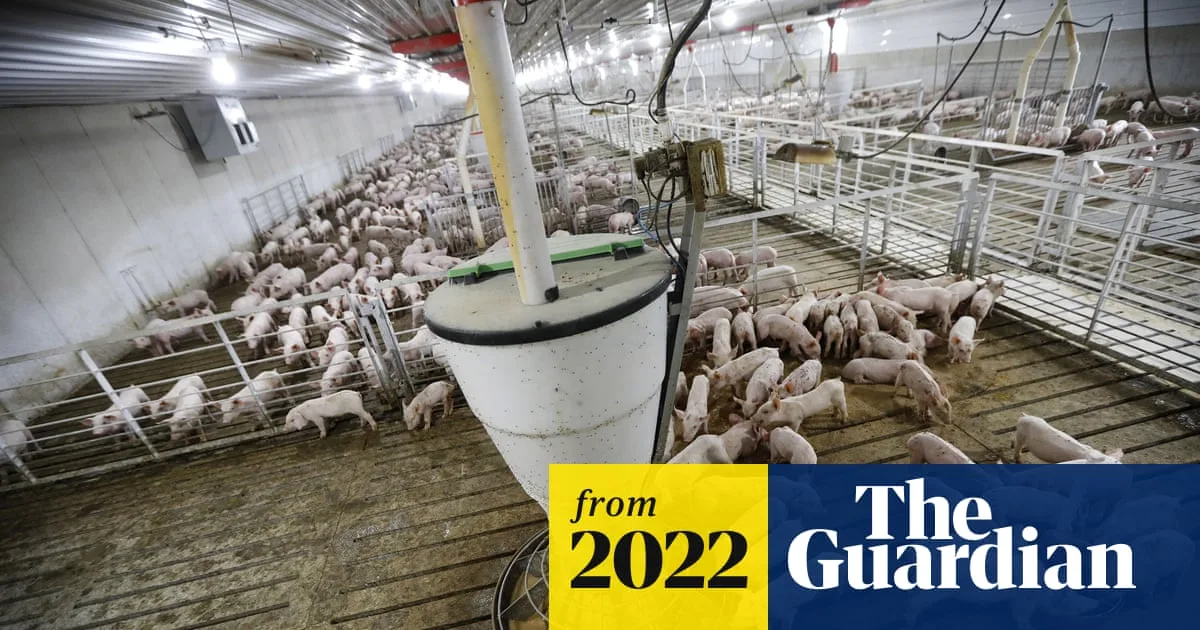
Dozens of advocacy groups have filed a lawsuit against the Environmental Protection Agency (EPA), accusing it of failing to develop a plan to regulate water pollution from factory farms. The suit claims the agency has not responded to a 2017 legal petition from over 30 environmental groups demanding stricter enforcement of the Clean Water Act for concentrated animal feeding operations (CAFOs), where thousands of animals are often confined.
The groups argue that the EPA has never explained how it intends to crack down on water pollution containing manure, antibiotics, and chemicals. Federal rules require government agencies to respond to petitions 'within a reasonable time'. The lawsuit states: 'Given the magnitude of the health and environmental threats, competing priorities do not justify further delay.'
According to the US Department of Agriculture, livestock and poultry produce about 1.4 billion tons of manure annually. Factory farms often store manure in ponds that can overflow into waterways or leach into groundwater, causing nitrogen and phosphorus contamination. This taints drinking water and triggers toxic algal blooms harmful to aquatic life. The Centers for Disease Control and Prevention notes that waste-polluted water can irritate skin and cause gastrointestinal and respiratory problems.
Emily Miller, an attorney for Food & Water Watch, the lead petitioner, said the EPA itself has acknowledged that three-quarters of factory farms discharge pollution, yet the agency allows companies to decide whether to comply with the Clean Water Act. 'EPA has set up a catch-me-if-you-can system,' Miller said. 'Factory farms only have to get Clean Water Act permits if they admit they discharge, which is obviously not an incentive to do so.'
Anthony Schutz, associate dean at the University of Nebraska law school, said federal authorities have been 'reluctant' to regulate factory farms since the Clean Water Act passed in 1972, due to a powerful agricultural lobby. If the lawsuit succeeds, it could push states to tighten enforcement or risk losing regulatory authority. An EPA spokesperson said the agency 'continues to work collaboratively with farmers, industry stakeholders and environmental organizations' to implement effective solutions.
Industry groups argue that factory farms are sufficiently regulated. Ben Weinheimer of the Texas Cattle Feeders Association said nearly all cattle ranchers in his region comply with federal water regulations. However, agricultural waste has devastated waterways nationwide, with farm runoff contributing to pollution in Indiana and North Carolina, where hurricanes have caused manure lagoon overflows. In Iowa, resident Julie Duhn said she fears taking her grandchildren swimming due to lake pollution, calling the situation 'urgent'.