Fourth Suspect Detained in Major Oxfordshire Fly-Tipping Investigation
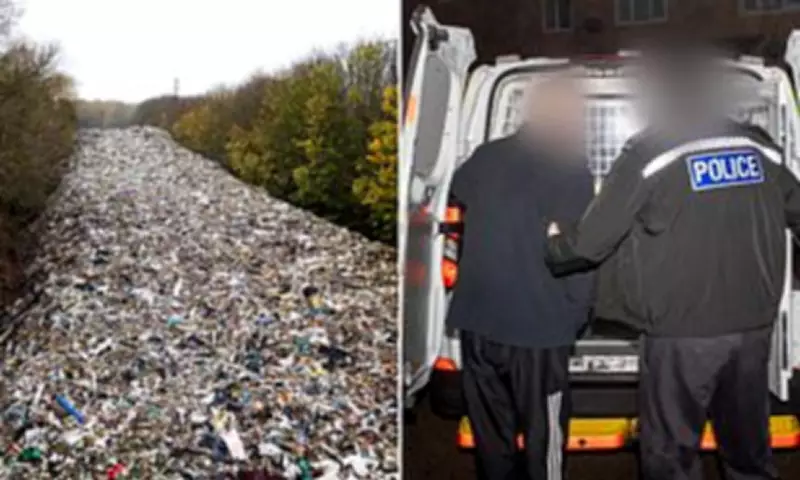
Police have executed a fourth arrest as part of an extensive investigation into one of Britain's largest and most notorious illegal waste dumps, located perilously close to the River Cherwell in Oxfordshire. The colossal 150-metre long mountain of rubbish, dumped in a field adjacent to the A34 near Kidlington, has ignited widespread public outrage and is projected to cost approximately £10 million to fully clear.
Environmental 'Critical Incident' Declared
The Environment Agency has formally declared a 'critical incident' regarding the dump, driven by acute fears of toxic pollution leaching into the nearby River Cherwell, a tributary that eventually flows into the Thames. This designation underscores the severe environmental threat posed by the site.
The latest development saw a 52-year-old man from Ashford, Surrey, arrested on Monday. He has subsequently been released on conditional bail as inquiries continue. This arrest follows the detention of three other individuals: a 69-year-old man in Andover and a 54-year-old in Slough, both arrested last Thursday on suspicion of environmental and money laundering offences, and a 39-year-old man from the Guildford area arrested in November. All have been released on bail.

Scale and Composition of the Illegal Dump
The fly-tip is a staggering 500-foot long, 20-foot high pile containing an estimated 21,000 tonnes of processed domestic waste. This includes shredded plastics, polystyrene, and various other household materials. The site was first reported to authorities in early July last year, with the Environment Agency initiating planning for its clearance in December.
"The horrific dumping at Kidlington was a deliberate and organised act with no regard for the impact on the environment or communities," stated Emma Viner, enforcement and investigations manager at the Environment Agency's National Environmental Crime Unit.
National Context and Criminal Enterprise
The Kidlington site represents just one of 517 illegal waste dumps currently identified across England. At least 11 of these are classified as 'super sites', harbouring over 20,000 tonnes of waste. Notable examples include a 280,000-tonne site in Cheshire and large dumps in Lancashire, Cornwall, and Kent.
Authorities note that most illegal sites are strategically located in rural or greenbelt areas, often operated by organised criminal gangs. These groups undercut legitimate waste disposal operators, profiting by charging lower fees to illegally bury waste.
Ongoing Investigation and Cleanup Operation
The investigation is being led by the Environment Agency's National Environmental Crime Unit, in collaboration with the South East Regional Organised Crime Unit and multiple police forces. Following initial reports, a cease-and-desist letter was issued. However, criminal activity was observed to continue into October, prompting the agency to secure a court order to close the site.
A £9.6 million contract has been awarded to private firm Acumen Waste Services Ltd to handle the monumental cleanup, with preparatory work scheduled to begin at the end of February. The Government has indicated that the full clearance operation may continue until the end of the year.
Government and Agency Response
Environment Secretary Emma Reynolds condemned the dumping, stating: "The illegal dumping at Kidlington was completely and utterly unacceptable, causing significant harm to the environment and distress to the community."
She emphasised ongoing efforts to combat waste crime, including increased enforcement funding, more officers, and tougher penalties for offenders.
The Environment Agency continues to urge the public to report any information related to waste crime via its 24-hour incident hotline at 0800 807060 or anonymously through Crimestoppers.