Coogee beach has once again been ranked as the Sydney ocean beach most polluted with faecal matter, according to the 2026 state of the beaches report by the New South Wales environment department. The report indicated that the beach's microbial water quality is susceptible to faecal pollution, particularly after rainfall.
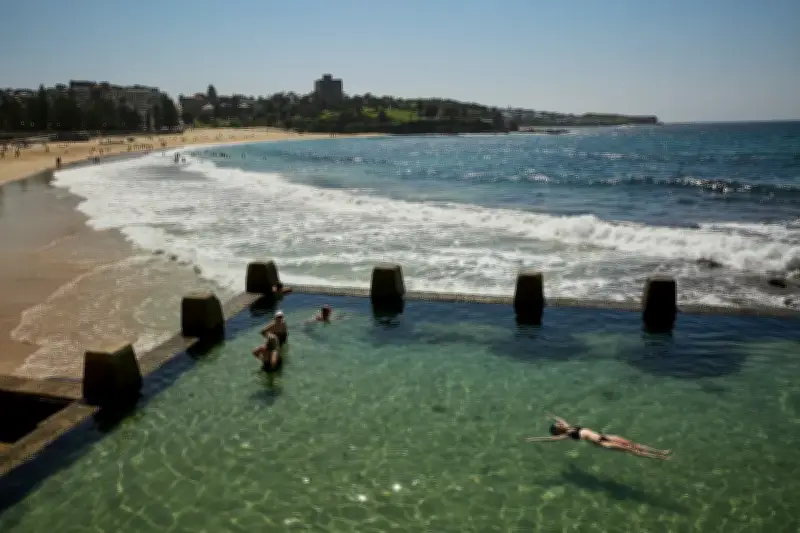
Despite this unsavoury finding, a sunny morning at Coogee on Friday revealed clear blue water, with hundreds of revellers stretching out on beach towels and paddling in the ocean. A search for any visible signs of poor water quality found only happy children and families.
Swimmers Share Their Views
Paul Sampson, towelling off after a swim, was asked if he felt the water was safe. He replied: “Well, I’ve swum here for about 25 years, and I’m still alive. Sure, compared to the south coast, the water’s not as clean, but what are you going to do? Generally speaking, the water’s a lot cleaner today to 10, 20 years ago.”
His perspective reflects broader improvements since 1989, when a Turn Back the Tide concert at Bondi beach drew more than 200,000 people protesting severe ocean sewage pollution on Sydney's coastline. However, the city still deals with the aftermath of the “mystery balls” – Coogee was one of several beaches closed in 2024 and 2025 after poo balls were carried ashore by waves and wind. A giant fatberg remains behind a closed door at the Malabar wastewater treatment plant.
Expert Insights on Pollution Sources
Prof Stuart Khan, a water quality expert and head of the School of Civil Engineering at the University of Sydney, said the poo balls were a “negligible contributor” to Coogee's water quality, as those deep ocean discharges occurred kilometres out to sea. He attributed Coogee's “poor” rating largely to storm water runoff that brings sewage contamination during heavy rain, rather than any mass faecal event.
Charlie Herbert, visiting the ocean pool with her young daughter after several days without rain, called the water quality findings “disappointing”. She said: “We only came because we were meeting some friends here – it’s definitely not my first port of call. But my kids don’t really like the water, so it’s not too much of a worry.”
Community Resilience and Concerns
David Goldstein, a four-decade resident of the eastern suburbs, has always chosen Coogee as his beach. Sitting at a cafe with his dogs Harriet and Peanut after a swim, he noted the pollution issue isn't new. “You get some resilience to it,” he said. “I started swimming in the mid-90s and may have got sick once. It’s not great, I’d prefer it not to be like that, but it hasn’t really made that many people sick.”
Goldstein expressed greater concern about sharks, having diverted his morning swim after one was spotted on the headland. “If a shark won’t get you, pollution will,” he said with a laugh.
With this advice in mind, a dive into the ocean brought the familiar shock of icy water and salt, a body moving with the waves surrounded by miles of blue. As Goldstein noted, there is much in the ocean that can kill – sharks, currents, rips, rocks, and maybe, but probably not, faeces. But it's best to avoid the water after heavy rain, just in case.