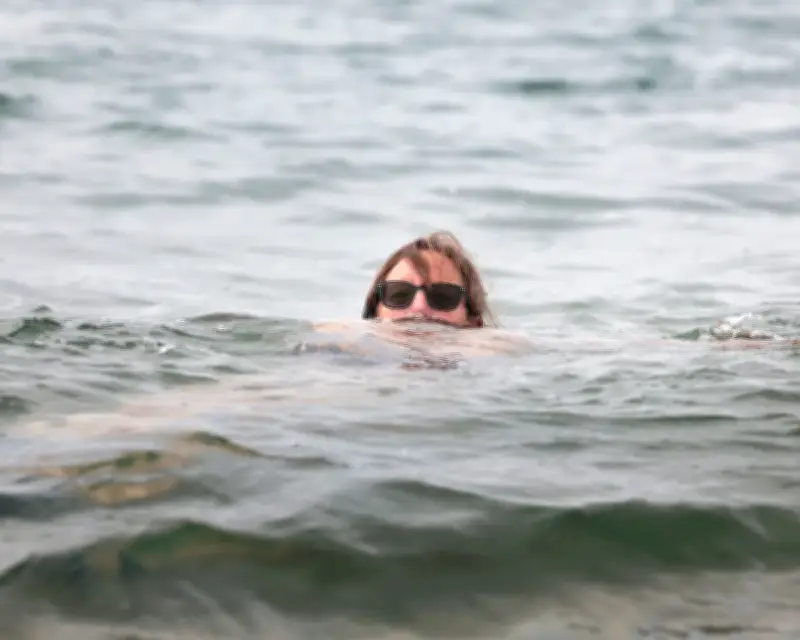
Swimmers on Brighton beach have expressed anger at sewage pollution in the sea, saying checking for spills has become as normal as checking the weather forecast. Public data shows a sewage alert was issued twice at the beach in August, with 158 alerts recorded overall in 2025.
Swimmers vent fury at sea pollution
Jo Armstrong, 75, sitting on Brighton beach with her daughter and granddaughter, said: “I’m furious.” Armstrong lives in Lewes, 8 miles from Brighton, and usually swims in nearby Seaford in East Sussex every day. But over the past week the water there has been too polluted to swim. “Brighton beach was the only place that stayed clean,” she said.
“There’s a tiny bit of rain and then the sewage comes, I just don’t understand it. It’s extraordinary that we can’t have clean beaches,” Armstrong added.

Pollution concerns affect swimmers
The Guardian spoke to swimmers at Brighton beach in the week Friends of the Earth ranked the UK’s water companies for their environmental damage, and news of further sewage leaks emerged. This summer England has endured record-breaking heatwaves during which scores of people have spent time on beaches and rivers.
Hildi Mitchell, 55, runs a programme called Pool to Pier, teaching pool swimmers to swim safely in open waters. She is finding that pollution is stopping people from taking the leap to the sea. “There are swimmers who have swum with us in the pool all year round but won’t come out in the sea in the summer because they’re worried about becoming ill,” she said.
When it comes to the safety of the water, checking for sewage spills has become as important as checking the weather and tidal patterns. “I would love to be able to swim anywhere, rather than thinking about trying to avoid pollution,” Mitchell said.
Impact on families and alternatives
Through Pool to Pier, Mitchell offers free workshops to children from families on low incomes. “These families already have limited things they can do in the summer to keep their children active, healthy and entertained. Swimming should be something that’s free and available to local families, but it’s not and that’s really sad,” she said.
Greg Veros, 59, has lived in Brighton for 22 years and swum all his life, but after falling ill due to what he believes was sewage pollution a few years ago, he now spends more time at Brighton’s outdoor swimming pool than in the sea. “I’m an enthusiastic swimmer, I can’t get enough of it,” Veros said. He used to skip his daily swim if there was a rainstorm or a sewage scare, but now the pool has given him an alternative. “It’s the best thing to have happened to Brighton,” he said.
For Mitchell, nothing can replace swimming in the sea. “It’s about freedom. You’re not constrained by the black line on the pool. Nobody’s in your lane, you’re not worried about getting in anyone’s way. It’s a place where you can just swim in the way you want to swim,” she said.
Anna Field, 54, moved to Brighton so she could swim regularly, but says checking for sewage spills is as important as checking the weather. There have been several times when she has come down to the beach and could smell the sewage, although this has been less common this summer amid the dry weather. When pollution stops her from swimming, it’s a bit like not being able to walk in the park because it’s raining, “except with this, you feel people [are] to blame”.
She is more angry than sad. “I absolutely love being in the ocean. It’s got its own personality, you look out of the window in the morning and it’s a different colour from yesterday or on some days it will tell you, no, you’re not coming in today,” Field said. “Swimming is such a nice thing for people to be able to do and it’s public, anyone can go in – it would be a real shame if that was less accessible.”