A report has found that women working in the arts in the UK believe they do not have equal opportunities for roles, particularly as they get older, with the sector described as fixated on “young and emerging” talent.
The survey of 76 arts professionals found that 95% of women thought gender inequality persisted, while 75% reported experiencing unconscious bias or sexism. More than two-thirds (69%) felt that age negatively affected their career success, a figure that rose to 100% among those in artistic rather than managerial roles.
AI and hiring bias
The research said gender discrimination and ageism were being exacerbated by the use of AI in hiring, which can penalise women for taking career breaks for caring responsibilities or reinforce historical biases.

Performers highlighted additional pressure on women to look young relative to men. “Often younger actresses are cast to play opposite men who are older for parts that are supposed to be the same age,” said one actor. Another participant said casting opportunities “drop off at 39”, while a female actor noted: “There are twice as many roles for my male colleagues as there are for me. There are even fewer roles for actresses over 50.”
Industry focus on youth
One respondent highlighted the obsession with words like “young and emerging” to describe talent. “There seems to be absolutely no celebration of experienced, seasoned, insightful, adult, et cetera. It’s always fresh. As if anything that isn’t fresh is mouldy,” she said.
Another said writers’ schemes tended to favour young people, while many emerging artist initiatives were aimed at young, graduating artists rather than developing later-life-stage artists. One person in arts marketing said there was a prevalent idea that only young people truly understood the online world, while a writer felt that stories of older women were seldom commissioned.
Reactions and recommendations
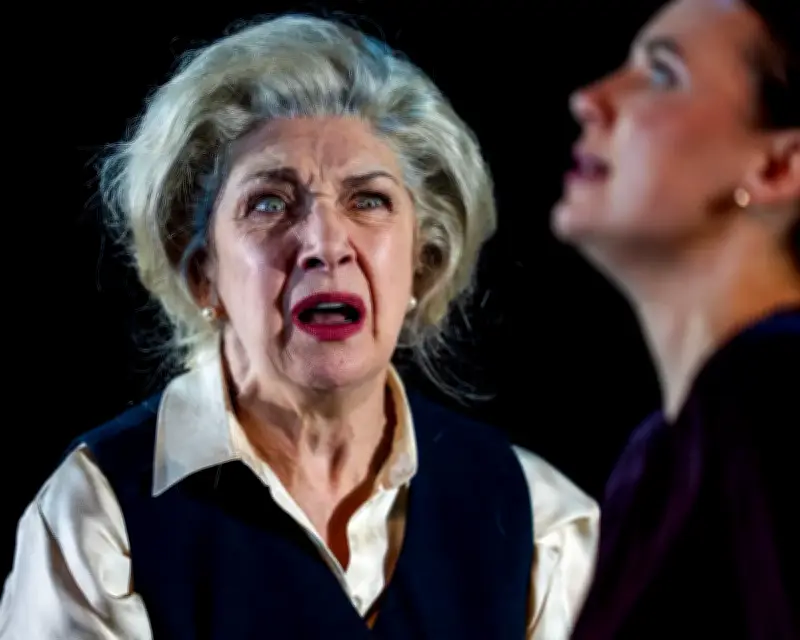
Theatre and TV actor Maureen Beattie, who starred in Casualty and was a member of the Royal Shakespeare Company, said: “So, we have proof at last that age discrimination is one of the major issues women face in the entertainment industry. Are we surprised? I’m certainly not. I’m one of the lucky ones who have slipped through this particular net and at the ripe old age of 72 have just come back from playing Lear in Pitlochry.” She added: “We need far more of these great big meaty roles for women so that the current waste of the great talent and life knowledge and technical skill older women bring to the table doesn’t go on disappearing into the night.”
Dr Jennifer Tuckett, chief executive of the support group Women in the Arts, who authored the report, said: “The findings regarding age discrimination against older women in the arts, and the potential for AI to increase issues for older women in the arts, are particularly worrying. Researchers are just starting to look at this area of AI and it is urgent we investigate this issue more – research has shown older women stand to be disadvantaged during any recruitment processes which use AI.”
The findings come from a survey undertaken as part of a five-year research project by Women in the Arts, run in partnership with the Writers’ Guild of Great Britain, Equity, WOW, Sphinx Theatre, ERA 50:50 and the Women in Theatre Lab. It is funded by Arts Council England and intended to feed into a taskforce addressing the needs of women in the cultural sector.
An Arts Council England spokesperson said the group would “consider the challenges women face around issues such as glass ceilings, harassment and caring responsibilities”, with a view to identifying good practice and interventions that support women at work.
The report called for more targeted work to address gender discrimination, including more funding, representation targets – potentially mirroring those in Australia, where these are required in funding applications – and leadership programmes, as well as algorithmic audits to minimise bias. The research will be handed to ministers on 12 October as part of a campaign to establish an all-party parliamentary group on women in the arts.