
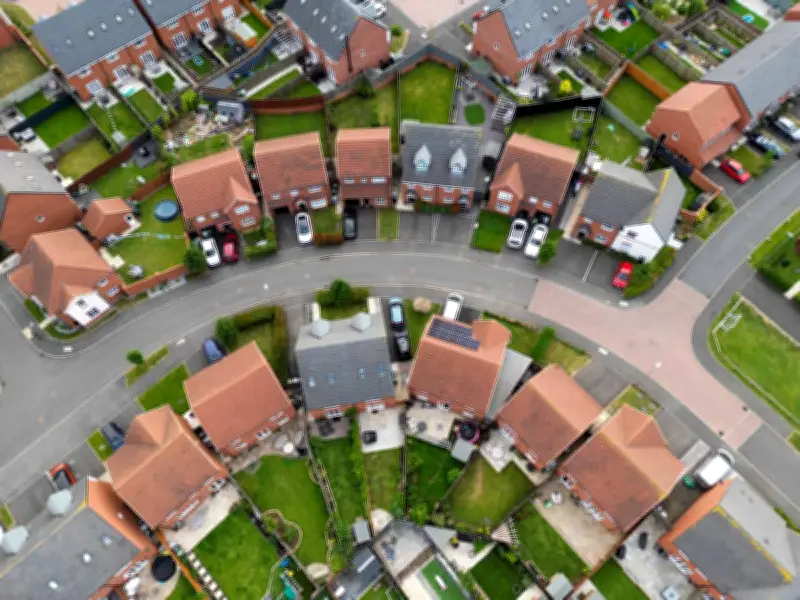
The Welsh Government is set to introduce new legislation requiring all newly built homes, as well as properties being redeveloped or undergoing a change of use, to have electric vehicle (EV) charging points installed.
Under the proposed plans, every new residential building with an associated car parking space within its boundary would need a charge point. This also applies to larger residential renovations involving more than 10 parking spaces, or properties undergoing a significant change of use.
Non-residential buildings included
The regulations would extend to every new non-residential building with more than 10 car parking spaces, including supermarkets and offices. These buildings, along with non-residential properties undergoing major renovations or changes of use with more than 10 parking spaces, would need a charge point and cable routes for one in five spaces.
The previous Labour-led Welsh Government introduced the proposals and launched a public consultation in 2024. With the results now published, the new Plaid Cymru Government has confirmed its intention to proceed with fresh legislation.
Government confirms plans
The government stated: "The Welsh Government will draft regulations to amend the Building Regulations 2010 in accordance with the Government Response to the Consultation. Approved Document S will be further developed and finalised in line with the government response set out above."
The timing of the amendments will depend on the prioritisation of the legislative programme.
Cost implications
It is understood the additional expense will add approximately £1,000 to the price of a new home. However, this remains considerably less than the average outlay of £2,300 should the charging point be retrofitted at a later stage.
Certain exemptions would apply, such as for particular listed buildings or circumstances where grid capacity is limited and upgrading it would significantly inflate expenses and jeopardise developments.
Industry concerns
Ifan Glyn, director of the Federation of Master Builders Cymru, previously raised concerns, stating: "Mandating the installation of EV charging points in homes could accelerate this shift (to EV vehicles), but it will inevitably increase build costs."
He added: "While this cost may appear minor compared to the overall cost of construction, it is important to recognise that most of these additional expenses are typically passed on to homeowners. This could negatively impact housing affordability, which remains a significant societal issue."
Consultation response
The government noted: "The Welsh Government has noted additional concerns raised by respondents, including fire safety risks, grid capacity limitations, public charging integration, affordability, and the need for consistent parking policies."
These issues will be considered in ongoing policy development and future reviews. More than half of those who took part in the consultation - 56% - backed the proposal that every new residential property with an associated parking space should be fitted with an EV charge point.
Housing associations and developers pushed for cabling and ducting only, arguing this would keep construction costs down and maintain affordability, while highlighting that EV uptake may be slower amongst lower-income households.
The government countered: "While some respondents advocated installing only cabling and ducting, allowing homeowners to install charge points later, the Welsh Government considers that installation during construction is more cost-effective for end users. The visible provision of an electric car charger may also support EV uptake as vehicles become increasingly available in the second-hand market and to lower-income households in the coming years."




