Victoria's Labor government has reversed its aggressive push to become Australia's datacentre capital, introducing stricter rules after community opposition became impossible to ignore.
The new regulations, announced this week, create a 150-metre buffer zone between datacentres and homes, mandate "fair community consultation," and force datacentres to use renewable energy. The government says these are the strongest and clearest rules in the country.
From courtship to caution
Just months ago, the government was actively courting the industry. In March, a private dinner at Government House hosted AI and datacentre leaders, where then-premier Jacinta Allan took notes and her minister for economic growth and jobs, Danny Pearson, asked how the government could help. In late January, Pearson dined with major datacentre companies and chip maker Nvidia at Rod Laver Arena, then watched Novak Djokovic's Australian Open quarter-final.
Ministerial diaries show more than a dozen meetings with AI and datacentre executives in the first three months of the year. In November, the then-premier told an economic forum the state would be "ruthless" in pursuing up to $25bn in capital expenditure from the industry.
Community pressure forces rethink
A change of premier in July, driven partly by poor opinion polls, led to a policy reassessment. Cabinet ministers, emboldened by community opposition, began directly rebuking industry figures, and constituents received replies from ministers rather than public servants.
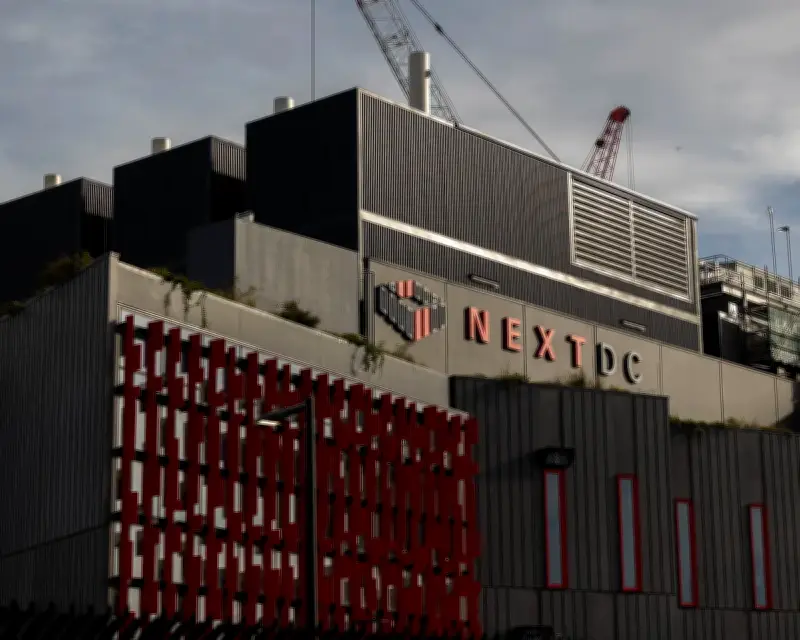
The jobs minister, Melissa Horne, publicly criticised NextDC chief executive Craig Scroggie for using AI to lobby for support of a controversial AI factory in Melbourne. Her letter was shared by Labor MP Katie Hall, who represents Footscray, where NextDC's M3 datacentre sits within 15 metres of some homes. Hall is facing pressure from the Greens, who recorded a 13.9% swing from Labor at the last election and need just 4.3% more to win the seat.
"The government's view has evolved because of advocacy from members of the Labor caucus on behalf of their communities," Hall said.
Residents see a shift
Sean Brown of Citizens of Tottenham, a vocal opponent of the M3 expansion, said the government's attitude changed around July when ministerial staff began replying to his letters. In early August, he received a two-page letter from minister Steve Dimopoulos acknowledging "legitimate concerns" about industrial activity near residential areas.
The industry has reacted with disappointment. Data Centres Australia chief executive Belinda Dennett warned the rules could push investment to other states. But the minister for artificial intelligence, Anthony Carbines, told the ABC that Dennett was "catastrophising," saying there was no evidence of investment leaving the state.
Queensland, meanwhile, is courting the industry. Earlier this month, its premier David Crisafulli secured a $31.9bn deal with AI company Anthropic for what could be Australia's largest datacentre, and has signalled more deals to come.