An investigation by Guardian Australia has found that the New South Wales government is burying hundreds of poor and vulnerable Australians in unmarked communal graves, often without notifying family, friends, or support workers, in a likely breach of government policy. The three-month investigation, which examined evidence from family, friends, and support workers alongside analysis of cemetery records and aerial and satellite imagery, identified serious failures that are placing people in unmarked graves unnecessarily.
Systemic failures in the burial process
The investigation found that in six cases, friends, community leaders, and family were either not told of the use of unmarked communal graves or were not given a proper chance to intervene and pay or crowdfund for a proper burial or marker. Guardian Australia also discovered that at least 18 individuals known to Sydney homelessness services have been placed in unmarked graves since 2016.
In one case, the rough sleeper Roger Davies was put in a grave with four strangers without his sister's knowledge because police lacked her current contact details. His sister, Chantel Dubsky, was alive and well in Adelaide and would have paid for her brother's cremation and repatriation. She describes the failing as "unspeakable."
Outrage from homelessness sector and veterans' cases
Prominent leaders in Sydney's homelessness sector are outraged by the revelations, saying they were not informed about the use of unmarked communal graves and were never given the chance to intervene and pay for proper burials for clients or former clients. Jon Swain, the Australian Alliance to End Homelessness NSW homelessness adviser, said, "Some people in the homelessness sector are aware that destitute funerals exist, and some may have attended them in the past as case workers, often as the only person present, myself included. What we were not aware of, and what has caused considerable alarm, is that people were potentially being buried in unmarked communal graves with multiple individuals in the same plot."
Guardian Australia also identified two Vietnam war veterans buried in unmarked communal graves in 2024 and 2025. Both served in the Royal Australian Navy. The federal government runs a funding assistance program designed to pay for the funerals of indigent veterans. The Department of Veterans' Affairs confirmed it "has not been approached to help fund the burials of destitute persons since 2020."
Contrast with Victoria and government response
The situation in NSW contrasts sharply with that in Victoria, where the state trustee uses a rural cemetery at Ballan to bury its most disadvantaged citizens in single plots, each with a marking. It does this as a "matter of respect for the deceased" and to ensure families and friends have a place to visit. The process costs $3,000 a burial, a fixed rate that, if adopted in NSW, would cost the state government at most about $360,000 a year.
Melissa Reynolds, the State Trustees Victoria chief executive, said, "We just feel like this is the appropriate way of honouring the deceased, to put them in their individual graves and to mark it. I don't think there's any right or wrong in the way that different states take a position on these things. We just think … it's important should anybody come forward at a future point, to recognise that they have got their own site and have been treated with dignity at the end of their life."
The revelations have prompted an immediate response. NSW Health delivered an apology to the dead and their loved ones, acknowledging they had not always been treated with the dignity and respect they deserved. The health minister, Ryan Park, has also intervened, describing the past failings as "unacceptable." The NSW government says it hopes recent changes may improve the process and has flagged further reforms, including working with charities and non-government organisations to find funding for funerals.
Families left devastated and seeking answers
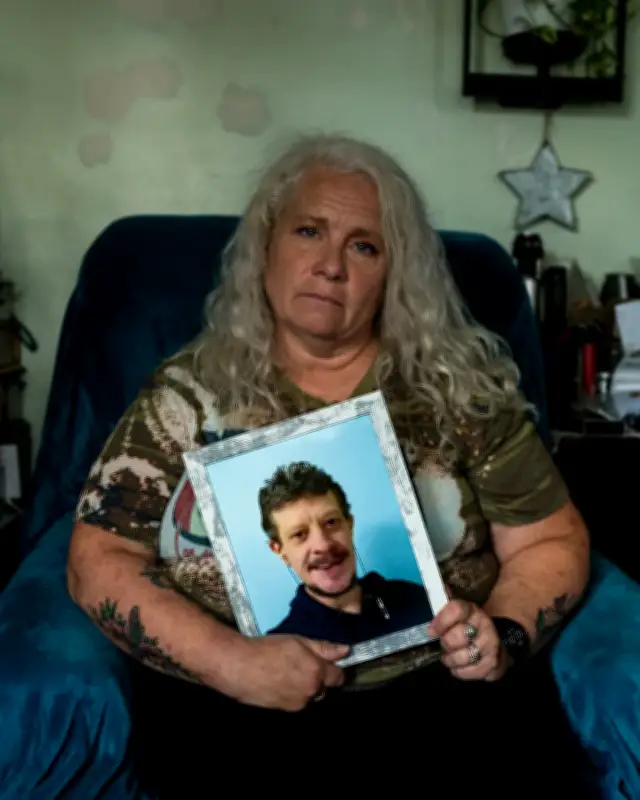
Families and friends of others interred in the graves are now desperate for answers. Elaine Grady, a close friend of Peter Giesel, whose remains were placed in a communal unmarked grave in Sydney in June, has spent the past month trying to get an explanation from NSW Health and Rookwood about Giesel's burial. She has been stonewalled at every turn. Her emails to NSW Health have gone unanswered. She has been told by Rookwood that the cemetery cannot answer her questions until she signs a statutory declaration stipulating why she wants the information and how she will use it.
Grady, who would spend hours each day on the phone to Peter from the US, joking and laughing, sharing pictures of American cars, and dreaming up plans for the out-of-work mechanic to escape his difficult life in Australia, said, "How could such a heartless thing happen to someone who gave so much of his heart to others?" She added, "Unfortunately, there are no answers, there is no one to turn to for help, and I am left with my hands tied, begging for answers I may never find. Every day I miss my friend and all the craziness that came along with him. Too often I will hear a song, or scroll past a photo, and remember how much he meant to me – how many smiles and laughs we shared. Someday we will meet again, and go right back to the way we were. Until then, we will keep [him] alive in our memories."