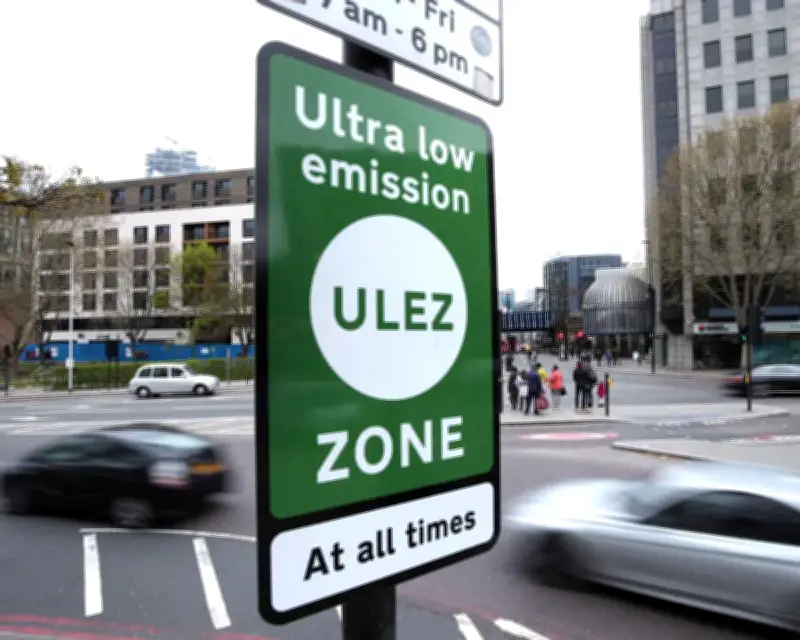
A major study has confirmed that London's Ultra Low Emission Zone (ULEZ) has been a "breath of fresh air" for the capital, leading to significant improvements in air quality and public health.
Key Findings on Air Quality
The research, which analyzed data from monitoring stations across London, found that the introduction of the ULEZ has led to substantial reductions in nitrogen dioxide (NO2) levels, particularly in central London where the scheme was first implemented.
Concentrations of particulate matter (PM2.5) have also fallen, contributing to cleaner air for millions of Londoners.

Health and Environmental Impact
Experts involved in the study highlighted that the improvements in air quality are already translating into tangible health benefits, with fewer cases of respiratory and cardiovascular conditions linked to air pollution.
The ULEZ, which charges older, more polluting vehicles to enter the zone, has been expanded to cover all London boroughs, extending the benefits to outer areas.
"The evidence is clear: the ULEZ has been a breath of fresh air for London," said a spokesperson for the study. "The reduction in pollution is not just a statistic; it means healthier lives for residents."
Future Implications
The findings are expected to inform future policy decisions on low emission zones in other UK cities, as the government seeks to replicate London's success in tackling air pollution.
The study concludes that continued investment in clean transport and stricter emission standards will be crucial to maintaining and building on the progress made.