A conservative activist group filed a lawsuit on behalf of six plaintiffs who argued their rights were violated because they were not Black.
Trump Administration Seeks to Halt First US Reparations Program for Black People
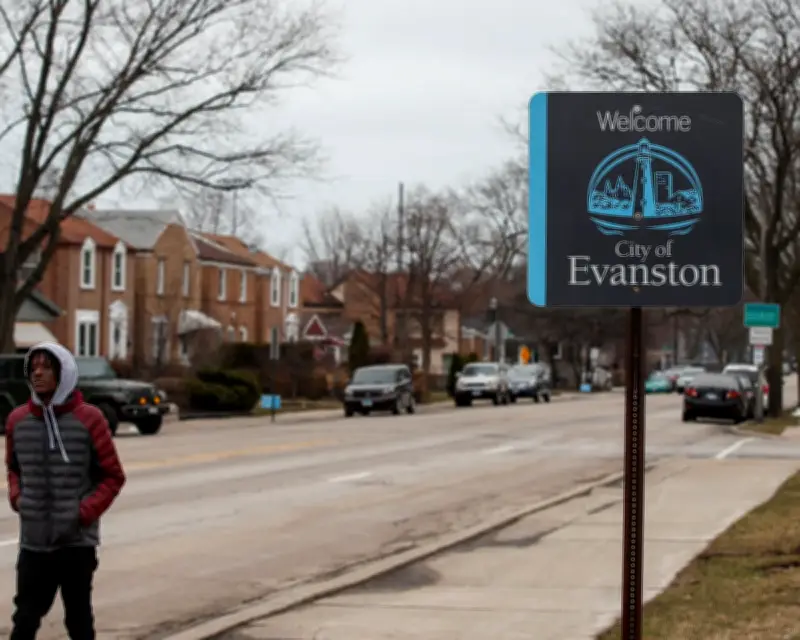
The White House joined a suit to stop the city of Evanston, Illinois, from compensating victims of housing discrimination. The Trump administration has joined a lawsuit attempting to stop a first-of-its-kind reparations plan that would compensate Black residents of a Chicago suburb, arguing that its race-based criteria are unconstitutional.
The program, in the Chicago suburb of Evanston, offers Black residents and their descendants up to $25,000 for past race-based housing discrimination. When the city's program was approved in 2021, it was hailed as a model for reparations movements across the US.

The US Department of Justice is wading into the legal fray two years after the conservative activist group Judicial Watch first filed the lawsuit on behalf of six plaintiffs whose parents or grandparents lived in Evanston, and argued their rights were violated under the equal protection clause since they were excluded from receiving reparations because they were not Black.
DOJ Statement
“There are sound ways for a city to remedy past discrimination or direct resources to its most vulnerable citizens and neighborhoods. Simply handing out money based on race, however, is not the answer,” Harmeet K Dhillon, the assistant attorney general of the justice department’s civil rights division, said in a statement.
Daniel Biss, Evanston’s Democratic mayor, said the city was reviewing the justice department filing and that the city stood behind its reparations program. “[We] are confident in its constitutionality, and look forward to defending it in court,” Biss said in an email.
Political Context
Throughout his second term, Donald Trump has sought to weaponize civil rights laws against groups they once protected and has fixated on dismantling programs related to diversity, equity and inclusion.
“This lawsuit is designed to intimidate and discourage other communities that are beginning their process of reparations, inspired by what Evanston has done,” Robin Rue Simmons, who spearheaded Evanston’s reparations program and now chairs the Evanston reparations committee, said. Simmons added that the lawsuit is an “attack on the revived hope that Black communities have felt having a path, through a hyperlocal process, to reparations”.
Program Details
In 2021, Evanston became the first city to launch a reparations program of its kind by which Black residents, and their direct descendants who lived in the city between 1919 and 1969 and experienced housing discrimination, such as that imposed by exclusionary zoning laws and other city policies, could receive up to $25,000. Residents of any race who experienced housing discrimination after 1969 are also eligible to use the program, but must show proof of the discriminatory policy or practice, according to the city’s restorative housing program guidelines.
Funded by local cannabis taxes, the program as of last June had already disbursed $6.3m to hundreds of eligible applicants, according to the Evanston RoundTable. The funds are limited in use: recipients can use them for down payments on a property, home repairs or improvements, and paying down a mortgage and other fees.
Though the program was passed to great fanfare in 2021, it has also been criticized for its limited application to home-related costs, and for funneling money back to the institutions, like banks, that were responsible for discriminating against Black homeowners in the first place.
Legal Arguments
Michael Bekesha, one of the attorneys who initially sued the city of Evanston on behalf of six plaintiffs in May 2024, told the Associated Press that applicants weren’t required to demonstrate that they were specifically harmed by the city of Evanston, leaving race as the only criteria. His clients would all be eligible for the program if they were Black, he said.

Bekesha said Evanston’s program was different from those in the past, pointing to the program that compensated Japanese people after the US government imprisoned more than 100,000 people in internment camps during the second world war, or the people in Chicago who were paid after being tortured by the city’s police department between the 1970s and the early 1990s.
“Reparations programs aren’t new, but they’ve always been lawful, they’ve always been connected to specific harms, specific injuries suffered by specific individuals,” Bekesha said. “And here in Evanston, there is no connection between the individuals receiving the money and any action taken by the city of Evanston at any point.”
Defense of the Program
Simmons rejected Bekesha’s framing that Evanston’s program is not narrowly tailored to the historical housing-specific harm, such as downzoning, household occupancy limits and zoning laws that disproportionately affected the predominantly Black Fifth Ward neighborhood. “I do believe strongly that the applicants who lived in Evanston during the eligibility period, and their descendants, experienced calculated harm that was quantifiable,” Simmons said.
The legacy of the discrimination remains, Simmons added. According to a 2022 study, residents in Evanston’s predominantly Black neighborhoods have a 13-year life expectancy gap compared with residents in mostly white neighborhoods.