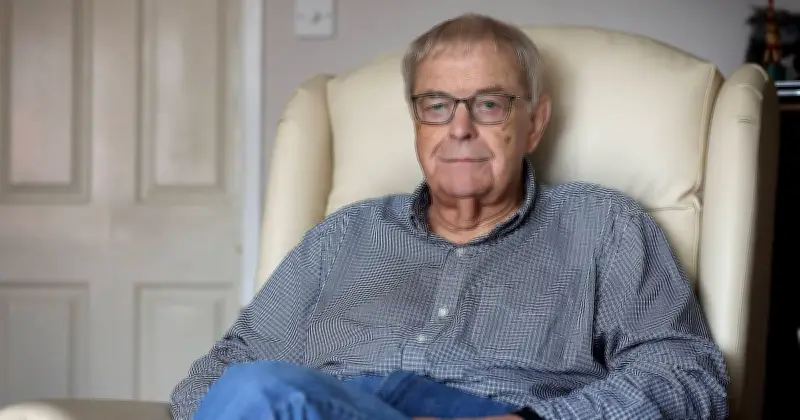
A terminally ill former teacher from Wigan is urging Prime Minister Andy Burnham to back the assisted dying bill ahead of its second reading in the Commons. Brian Griffin, 74, who lives with his wife Denise in Bryn, is a supporter of the Terminally Ill Adults (End of Life) Bill, which is set to be debated in Parliament next month.
A life spent teaching and now preparing for death
For decades, Brian taught biology and advanced skills to thousands of pupils across Wigan, including his own son and daughter, before lecturing at the University of Manchester. Now the 74-year-old is preparing for death, spending much of his remaining time contemplating how that will come about.
Besides myeloma, an incurable blood cancer, Brian has a stoma bag and a pacemaker. He takes over a dozen tablets daily for diabetes, kidney disease, hypertension and deficiencies in vitamins D and B12. Brian was forced to retire early after a bowel cancer diagnosis in 2007. Three years later, he learned he had myeloma. A stem cell transplant gave him 10 healthy years, though he required another in 2021. Second transplants don't last as long.

Burnham to abstain in the vote
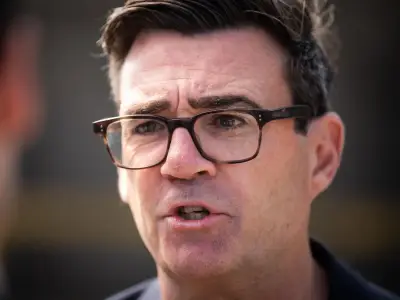
Brian's local MP is Andy Burnham, who on Friday (August 29) said he will abstain in the next Commons vote so as not to 'unduly influence the debate'. Burnham said: "This is an incredibly important and personal debate, not just for members, but for so many people across the country. There is no single right position and I have deep respect for MPs on all sides, and the expertise they bring to this debate.
"I, of course, have my own personal views on the issue. However, I am also clear that this is a matter for Parliament to decide and my role, as the Prime Minister, will be to lead a Government that implements the will of Parliament in this area – whether that is to change the law or not."
A personal plea and a family's reality
"If this Bill is passed, then in 30 years' time people will look back thinking 'they just used to let these people suffer – why?'", Brian says. "And I think people will just look back at it as absolutely barbaric."
The retired teacher has championed assisted dying since witnessing a close relative endure excruciating pain before she passed away in what he describes as 'horrific circumstances'. He adds: "She was squirming about on a bed, hour after hour, in absolute agony. And we were told 'sorry, there's nothing that we can do'. It was a terrible situation. I'm not saying I defend this but I can understand relatives going through something like that and thinking 'I've had enough'. I hope and pray I wouldn't have to do it for anybody, even Denise."
Brian's wife, a 75-year-old former careers adviser, admits she would rather not contemplate assisted dying at present. The couple have been married for 52 years. "I'm sure at some stage I'll have to deal with how he copes with chemo or whatever they can offer [him]," she says. "But I won't be able to help a lot because I'm not very big."
Safeguards and the road ahead
Brian remains convinced the proposed legislation contains robust safeguarding provisions. Those seeking an assisted death must be aged 18 or over, resident in England and Wales, and registered with a GP. Two independent doctors must verify and approve the application, with a minimum one-week interval between assessments. The case must also be examined by a multidisciplinary expert panel, and the individual must sign two separate witnessed declarations. Their decision must be reconfirmed at every stage, with the option to withdraw at any point.
In 2025, the Bill secured passage by 314 votes to 291 but failed to become law after delays in the House of Lords. When questioned about assisted dying shortly after becoming PM, Burnham stated that funding for palliative and social care ought to be 'fixed' first. Yet Brian sees no contradiction between enhancing palliative care and permitting assisted dying.
Campaign group Dignity in Dying argued that improving end-of-life care and offering the choice of an assisted death are not mutually exclusive. A spokesperson said: "Brian's story illustrates the real human cost of the undemocratic delay of the assisted dying bill in Parliament. MPs now have the chance to finish what they started and at last tackle the injustice of the status quo.

"They must grasp it with both hands. Otherwise, dying people and those who love them will continue to suffer, with assisted dying only available to those who can afford it and are willing to travel far from the comforts of home, and others condemned to painful deaths or taking matters into their own hands. That inequality is indefensible.
"Brian doesn't have the luxury of waiting for Westminster to find its nerve. He is living on borrowed time on his last transplant, while MPs decide whether to finish a job they have already voted for, twice, after more scrutiny than almost any Bill in modern parliamentary history. Parliament began this process - it should be allowed to finish it."
Back in Bryn, Brian has refused to let his cancer prevent him from living a normal life. While he no longer holds a Manchester United season ticket, he continues to watch his beloved team on television. He remains active with his local bowling club and enjoys feeding the birds. "They won't let an animal suffer like this, they just put it down and that's it, the animal goes peacefully and, as far as we know, with no pain at all," he says. "It's my life, I should be able to choose what happens to it."