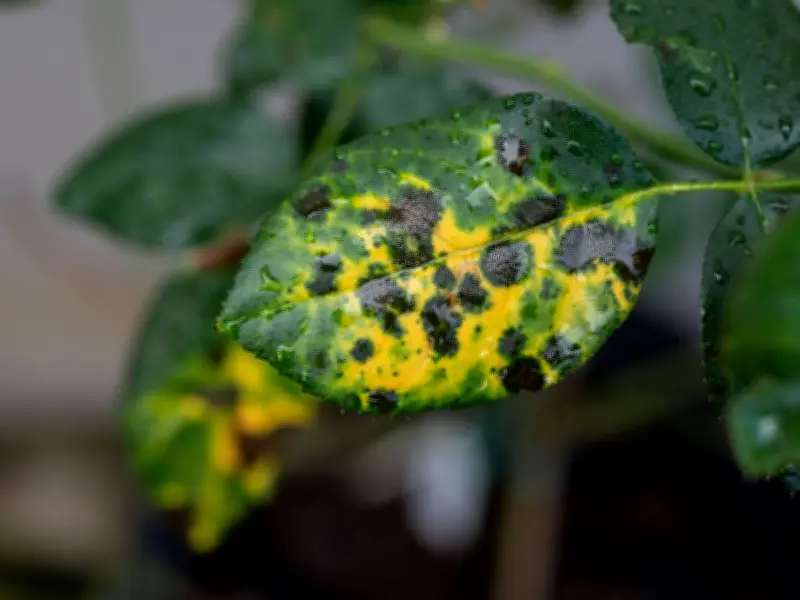
Rose black spot, a common fungal disease, causes purple or black spots on leaves and premature leaf drop. However, a simple sulphur spray can help prevent it.
Understanding Black Spot
Black spot is caused by the fungus Diplocarpon rosae, which adapts quickly to resistant rose varieties. It spreads through microscopic spores that splash onto leaves when raindrops hit the soil. For infection to occur, the leaf surface must stay wet for several hours.
Prevention Through Garden Practices
Aaron, host of The Herefordshire Gardener YouTube channel, recommends improving airflow by spacing and pruning roses to create an open structure. This helps leaves dry quickly. He also stresses removing fallen leaves promptly to break the spore cycle.

Using Sulphur as a Preventative
Aaron uses sulphur, a natural fungicide, as part of his approach. Sulphur creates an environment on the leaf surface that fungal spores dislike, acting as a preventative rather than a cure. Apply a fine layer of sulphur particles to all leaves, ideally starting in early spring when new growth appears. Reapply after rain and avoid spraying in hot weather.
Additional Care Tips
To keep roses blooming, deadhead spent flowers, provide liquid feed, and water adequately during dry spells. Combining these practices with sulphur spraying helps maintain healthy roses.