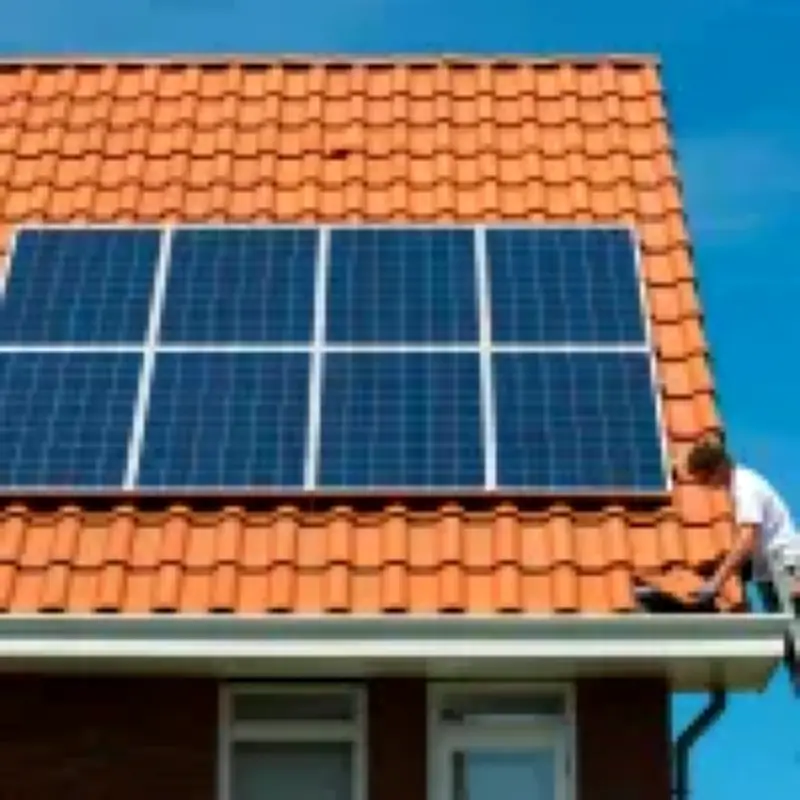
More than half of prospective homebuyers (53%) would actively seek out a property with solar panels already installed, according to a survey. In a stagnant housing market, panels could help sell a home, and for those concerned about climate change, installing them offers a way to contribute.
A Switch Together survey of 2,300 energy consumers across England and Wales found that 56% of households without solar would consider installing it. From August 27, plug-in solar panels can be sold widely across the UK, with availability expected in stores like Lidl and Iceland, as well as online retailers like Amazon. Nearly two million UK homes already run on solar power.
Roof vs plug-in solar panels
Homeowners must choose between roof-installed panels and plug-in panels that can be mounted in gardens, on walls, or on balconies.

Standard 4.5 kilowatt-peak PV solar panels on a roof cost an average of £7,600, according to the Energy Saving Trust. It takes about 10 years to break even, but Charlotte Snelgrove, head of low carbon tech at Octopus Energy, told Metro the average homeowner could save around £500 per year on energy bills.
“You’ll need to own your home, a pitched (non-flat) roof with enough clear space to fit at least two solar panels and a roof with concrete or clay tiles,” she said. “It also requires safe access for scaffolding.” South-facing roofs are best, but east or west-facing roofs also work. North-facing roofs may not be suitable. A roof inspection costs around £250, according to Checkatrade. Planning permission is typically not needed, but approval is required for listed properties or conservation areas.
Plug-in panels: lower cost, new availability
Plug-in solar panels cost about £400 and can be placed on balcony railings, garden fences, patios, or shed roofs. They plug into mains electricity and can be taken when moving home, making them suitable for flats. They became available on August 27 after previously being barred due to safety regulations.
An Electrical Installation Condition Report (EICR) from a qualified electrician is recommended, costing between £100 and £250, according to Checkatrade. A weatherproof outdoor socket costs £140 to £260 to fit. Standard extension cables must not be used; an MC4 extension cable is required. Renters need landlord permission. The Department for Energy Security & Net Zero estimates savings of £70 to £110 per year, meaning break-even in four to six years.
Batteries and usage patterns
Roof panels require a battery to store energy for use later. Octopus Energy installations start from £6,663 for a two-panel system without a battery, £8,623 for eight panels with a 5kWh essential battery, and £11,115 for a 12-panel system with a 10kWh smart battery. Plug-in panels do not include battery storage.
George Penny, solar panel installer and director at The Solar Co, said: “Homeworkers, retirees and families regularly using electricity during daylight hours benefit most. This is because plug-in solar systems don’t currently include battery storage, meaning the electricity should be used as it’s generated to ensure maximum savings on energy bills. Any surplus the household cannot use may flow into the grid, and consumers should not assume they will be paid for it.”
Choosing an installer and resolving issues
A quarter of people who already have solar say they almost didn’t go through with installation because they weren’t sure who to trust. John Collett, director at Quantum Renewables, told Metro: “The Microgeneration Certification Scheme is the industry standard for solar installers in the UK and you cannot access government incentives such as the Smart Export Guarantee without using an MCS-certified installer. Check the installer’s MCS number on the official MCS database at mcscertified.com before signing anything. Beyond that, look for membership of trade bodies such as NAPIT or RECC, check Google and Trustpilot reviews independently.”

Consumer champion Jane Hawkes, founder of the Lady Janey website, told Metro: “Ask for a written quotation that clearly sets out everything you will pay, including installation, scaffolding, electrical work, cabling, roof repairs, certification, monitoring equipment and any battery or inverter costs. It’s also worth asking whether there could be additional charges if the installation takes longer than expected or your property needs extra work. Check whether maintenance, warranties and call-out costs are included, and understand the cancellation terms before signing. If a salesperson won’t provide a clear, itemised price, that should be a warning sign.”
Installation takes two to four days, according to Charlotte Snelgrove. If panels aren’t working properly, Jane Hawkes advises keeping written records and using MCS complaints routes, Citizens Advice, or Trading Standards. With an MCS certificate, homeowners can sell electricity to the National Grid via the Smart Export Guarantee (SEG), earning around 15p to 25p per kWh, but a smart meter is required to monitor exports.