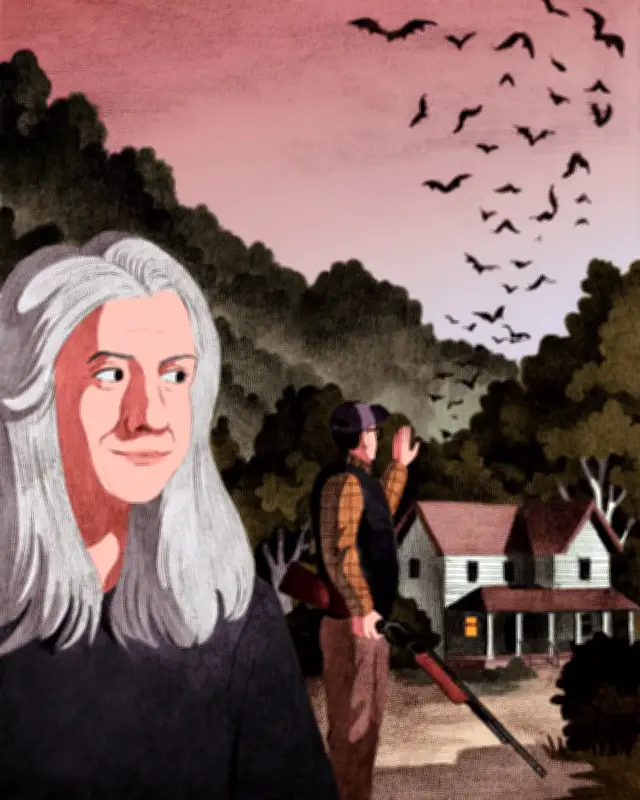
Meredith Dean, national director of the Rural Urban Bridge Initiative's Community Works program, owns six guns. She has spent the past two years working with liberal volunteers to find common ground with conservative gun owners, beginning with something remarkably simple: giving away gun locks.
From Bats to Shotguns: A Rural Reality
Dean's first gun was a vintage Winchester 12-gauge, acquired in the winter of 1990 after she and her husband moved from urban Philadelphia to a 100-year-old farmhouse in Appalachian Virginia. When a colony of bats took up residence in their attic, a neighbor named Jimmy suggested shooting in the air to scare them away. The bats chased the shot, no bats were lost, but they gained a gun.
Their second gun came the next fall. With her husband frequently out of town, a group of squatters moved into an abandoned farmhouse at one end of their gravel road, and foot traffic grew between it and a trailer at the other end. Suspecting meth was changing hands, Dean took a trip to Walmart and added a 20-gauge Remington youth model to the collection.

Finding Common Ground on Safety
Dean acknowledges that in rural America, guns are a fact of life, but the preventable deaths that come with unsecured firearms don't have to be. She brings together volunteers across political differences to address practical needs in their home communities, arguing that progressives won't gain traction in rural areas by showing up at election time and asking people to change their politics.
Promoting gun safety put that concept to an unusually difficult test. Guns are one of the subjects widely considered unbridgeable in rural politics, yet firearms are the leading cause of death among American children and teenagers, killing 2,581 children under 18 in 2023 alone. Keeping guns away from children seemed like the one place where the two sides might meet.
The Gun Aware Project's Success
The Gun Aware Project (Gap) was founded by Karen and Nick Fischer after a local high school murder-suicide in 2023. Gap organizes free gun-lock distributions during fall back-to-school events in public schools. One of the first distributions took place in Giles county, on the West Virginia border, where a growing number of residents support seceding from Virginia over gun laws.
To date, Gap has given away more than 4,000 locks, 1,000 of those to local departments like the Giles county sheriff's office. Volunteers have spoken with more than 15,000 people in a four-county area, sharing storage safety information along with the locks. The Fischers say they have been surprised by the number of people in NRA hats and camo who say: "I really like what you're doing, we need to protect our kids."
Karen Fischer explains that removing the magazine from a semi-automatic firearm does not necessarily unload it: a live round may remain in the chamber, something most children – and even some gun owners – do not realize. "The issue is not about taking away the second amendment," says Nick. "The issue is how we deal with living with the second amendment."
Changing Perceptions and Building Trust
Early research suggests the approach may be working. More than 4,400 surveys were conducted before and after the launch of Community Works in six pilot counties in Virginia and Georgia. According to the study's author, the Colby College social scientist Dr Nicholas Jacobs, residents in participating counties became less influenced by national partisan divisions and more likely to judge parties by how well they governed locally.
One Democratic volunteer who helped to hand out gun locks at a rural high school event reflected: "I was actually kind of scared to do this in gun country. I thought they'd call me 'woke' and walk right on by. But all the kids and parents were really nice, and they totally agreed with me about gun safety."

Dean notes that the negative Appalachian hillbilly stereotype was created in the late 1800s by travel writers and later adopted by timber, coal and railroad industries as justification for exploitation. She argues that today, tech and software billionaires and corporate giants, including gun manufacturers, benefit from keeping people divided. After handing out scores of gun locks to her neighbors, Dean will be donating half her guns to a local effort called Groceries Not Guns, and safely storing the others using her brand new locks.