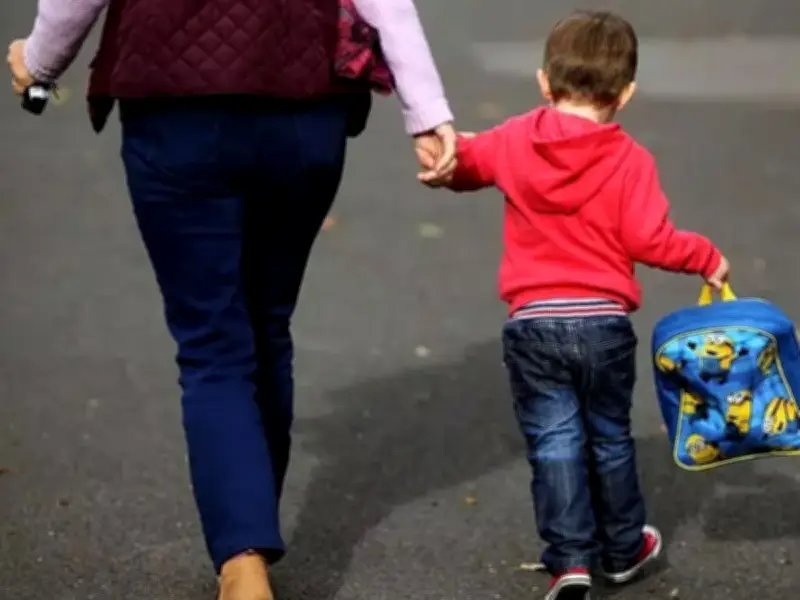
More than one in five children in Scotland are living in poverty, according to a landmark report from the Joseph Rowntree Foundation (JRF), which warns that the SNP Government needs a “much bolder” plan to tackle the issue.
The charity said there is an “increasing disconnect” between rhetoric from Nationalist politicians on child poverty and the reality facing families. It also fears that John Swinney’s plan to centralise councils and slash health boards could “distract” political leaders from “the glaring need to improve the lives of children in Scotland”.
Targets set to be missed
The JRF’s annual report found that 21 per cent of Scots youngsters are in poverty, despite the First Minister’s pledge to eradicate it entirely. Since taking office in 2024, Swinney has repeatedly said that eradicating child poverty is the number one goal of his Government.
The stand-alone Scottish Child Payment, introduced during Nicola Sturgeon’s time in office, was hailed as a “game-changer” in helping families. However, the report warns that without “radical change”, Scotland will miss its legally binding target to cut relative child poverty to below 10 per cent by 2030/31 by a “wide margin”.
Disaffection with councils
The report also reveals high levels of disaffection with councils, with people on low incomes or living in the most deprived areas reporting worse experiences of local services. It found that people do not think their local authorities are well enough funded to deliver the services needed in their area, or are doing enough to tackle poverty.
Chris Birt, JRF associate director for Scotland, said: “There is a risk that public service reform and the review of the child poverty reduction targets could distract us from the glaring need to improve the lives of children in Scotland.
“But that doesn’t need to be the choice. The Scottish Government can and should choose for its actions to meet its rhetoric.
“Significant action is required – on housing, work, and social security in particular – to make progress on reducing poverty and building the country we all want to see.
“We are on course to miss the legally binding targets by miles, but parliament can choose to up the ante and provide challenging new targets that reenergise government efforts.
“Our report shows that reform of local government probably should be on the table, but it must be designed to make services work better for families in poverty, not just to save money.
“With people feeling overlooked and ignored by politicians, and shocking numbers of children still growing up in poverty, we must take action now and choose a future where all of our children can flourish.”
Political reaction
Mark Griffin, Scottish Labour social justice spokesman, said: “It is absolutely shocking that in 2026, one in five children in Scotland remain in poverty.
“Reducing child poverty must be an immediate national priority, and Scottish Labour has been clear that parties across Parliament should work together on this crucial issue.
“It was welcome that MSPs from across the chamber backed our call for a recommitment to legal targets that would halve child poverty in Scotland by 2030.
“However, this will require hard work to make that a reality, and we must see immediate steps taken to establish that commission so we can agree a package of measures towards this goal.
“It is also clear that the SNP’s underfunding of local authorities, for years, has had a significant impact on services across Scotland – and the public are feeling that impact.
“The Scottish Government must ensure that funding is in place so that councils can properly invest in vital services for years to come.”
Poverty figures and recommendations
The JRF report found that 940,000 people in Scotland (17 per cent) are in poverty, with 11 per cent in deep poverty and seven per cent in very deep poverty. Rates of poverty and deep poverty have only fallen by one percentage point between 2021-24 and 2020-25, and very deep poverty has shown little change.
Around two in five people in poverty are in very deep poverty, meaning their incomes are well below the poverty line.
The report calls for Swinney’s public service reforms to focus on reducing child poverty, while local government finance should be overhauled to help make services best where they are needed the most. The JRF also wants local authorities to prioritise preventing poverty in their communities, and make full use of their levers including economic development, childcare, employability, transport, housing, and schools.
Shirley-Anne Somerville, the Social Justice Secretary, said: “Eradicating child poverty is the Scottish Government’s defining mission. We want to enable every family to flourish.
“That is the fair and equal society that befits the people of Scotland, and how we create a more prosperous nation.
“While we have made great strides, with our policies keeping around 100,000 children out of poverty this year, we know there is more to do.
“The time to go further is now. That means changing how services work together, ensuring they are joined up and designed around need, so that families can get the right support, at the right time and in the right place.
“Whole family support is central to that ambition. Our efforts combine action to strengthen support now, such as through our £20 million Whole Family Support Third Sector Delivery Fund, while also ensuring poverty prevention is our long-term focus. That is public service reform in action, with the aim of improving daily lives.”