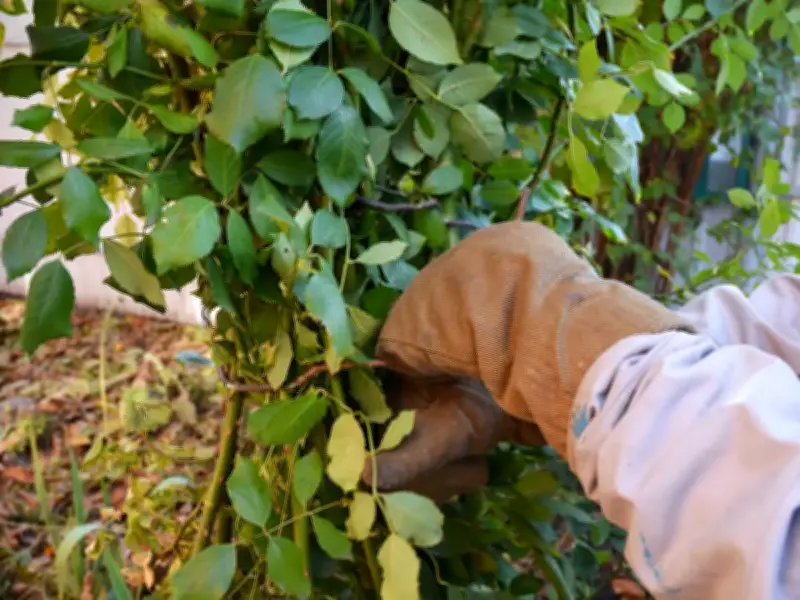
Monty Don has shared his essential October pruning advice for climbing roses, a task he says gardeners should be addressing now to ensure spectacular blooms and healthy growth next season.
Climbing roses are especially popular for adorning bare walls, arches and other garden structures. However, to ensure they continue blooming year after year, they require attention as the growing season draws to a close.
Why prune climbing roses in October
Unlike rambling roses, which produce flowers on shoots grown during the previous summer, climbing roses bear flowers on shoots that develop during the same spring. This means they can be cut back substantially in October without compromising the following year's display.
Monty wrote: "Prune climbing roses... Start by removing any damaged or crossing growth or any very old wood, which can be pruned right back to the ground."
How to prune climbing roses
The main stems should be fanned out at an equidistance as horizontally as possible, tying them to wires or a trellis.
"Then all the side shoots growing from these main areas, which produced this year's flowers, can be reduced to a short stub of a couple of leaves," Monty added.
"The effect should be a tracery of largely horizontal growth with pruned side-shoots running along their length. Finally, make sure it is all tied firmly in to avoid winter damage."
Don't mix up climbers with ramblers
Prior to reaching for the secateurs, it is essential to determine whether you have a climbing rose or a rambling rose. The two are frequently mistaken for one another, yet their blooming habits differ considerably.
Monty explains that rambling roses flower on shoots produced the previous summer, so they should be dealt with immediately after flowering rather than treated like climbing roses in October. If you are uncertain about which variety of rose you have, observe its flowering pattern before carrying out any significant pruning.
A straightforward October checklist
- Remove damaged or crossing growth
- Cut out very old wood, taking it back to ground level where possible
- Spread the main stems out horizontally
- Tie the main stems securely to wires or a trellis
- Shorten the flowering side shoots to a couple of leaves
- Check that everything is firmly secured before winter