Declining birth rates across Merseyside are creating a funding crisis for schools, with experts pointing to funding cuts and poverty as likely causes. The knock-on impact is being felt across the region's school system, with closures, mergers, and reorganisations becoming increasingly common.
Over the past few years, numerous schools in the region have either closed, planned to close, been considered for mergers, or had to drastically reorganise to confront this growing challenge. Most have cited declining birth rates as a core reason for their problems.
High-profile closures and mergers
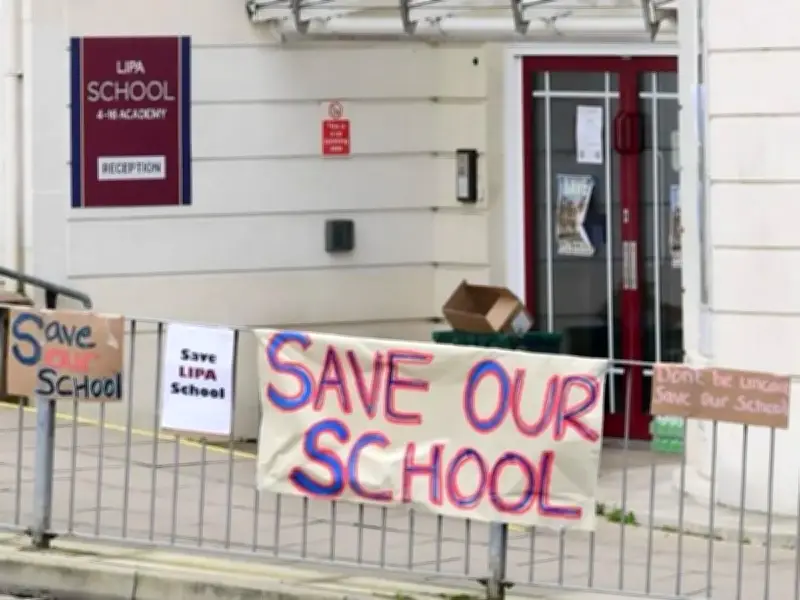
One of the most high-profile examples was LIPA Primary and Secondary School in Liverpool city centre. While the school had a multitude of issues, those making the decision to shut it down permanently in July said several years of declining pupil numbers was a key factor.

At the start of this month, it was revealed how shocked parents had been left devastated after being told that their children's school had been sold and would be closing down. The owners of the fee-paying Belvedere Preparatory School in Liverpool cited a number of factors for the decision, including a "substantial downturn in pupil numbers." The school said numbers had fallen from 140 in September 2024, to 94 for September 2026.
In Runcorn, a shortlist of eight primary schools has been drawn up which the local authority says could be closed, merged or turned into academies due to the impact of falling birth rates. A report stated that as of October last year, there were 6,223 primary school places available compared to 4,944 pupils on roll, equating to approximately 20.6 per cent surplus capacity across the town.
Anger as the impact is felt across the sector
Other schools and those running them are having to become creative in order to address the issues of falling pupil numbers - often facing plenty of resistance along the way. Earlier this year, the case of Townfield Primary School in Wirral was reported, where children and their parents were left upset and angry after being told that they may be split up from their friends as their classes were being reorganised.
The changes mean the school has now moved from single-year classes to classes which are a mix of Year 5 and 6 pupils from next year. School bosses said they and others are doing this in response to falling birth rates. But the changes - and the way they were communicated - did not go down well with some children who were left in tears and refusing to go to school. Things reached such a head that the police were called as one angry parent attempted to remonstrate with the headteacher.
This is very much a national issue, and not just limited to Merseyside. Last year research from the Education Policy Institute warned that declining numbers of children across England could lead to the equivalent of 800 primary schools falling empty or closing by the end of this decade.
Pattern emerges across the region
When looking at the birth rates across the region a dramatic pattern emerges. In 2010, Liverpool's birth rate was 1.62, but in 2025 it had fallen to 1.24. For Knowsley the 2010 number stood at 1.9 and was down to 1.45 15 years later. Sefton's fall has been even more sharp, from 1.9 to 1.36. St Helens and Wirral's falls have been similarly substantial going from 2.01 to 1.32 and 2 to 1.31 respectively.
This is far from just a Merseyside issue. Data published by the Department of Education in June showed that there was a decrease of 112,200 pupils across all school types from the previous year. This is the equivalent of more than 530 full one-form entry primary schools. Despite there being fewer children and more schools, the average class size at primary school level has basically remained the same – this is because schools are doing more creative things with class structures to make them viable.

When it comes to funding, schools need around 24 children to make a class viable financially, even then this leaves very little room for wider investment. Anything under that figure and funding has to be found elsewhere. While a school might cope with one class in this situation, if it becomes three or four then they have real problems. While the overall numbers of pupils are dropping, the figures for those eligible for free school meals and those with Special Educational Needs is increasing - which indicates the wider challenges being faced by schools and the struggles of families as well.
'Not just about pupil numbers'
Townfield Primary School is part of the Rainbow Education Trust and trust Chief Executive Gina Donaldson told the ECHO that merging classes is an example of the creative approaches school leaders simply have to take to deal with the crisis of falling birth rates and the financial crisis this is leading to.
Ms Donaldson said: "The landscape is definitely shifting. Last year we had five of our nine schools affected with reception intake numbers. This year it was three. There is a clear drop in the birth rate, but there are still schools opening. I think that is due to the fact that a lot of those schools are independent schools that will be catering for SEND provision. The fact that under the pupil funding model you need around 24 children in a class to make it financially viable means that pupil numbers are so high on our radar. In our funding system, empty seats directly impacts the budget that we rely on to afford staff and resources."
She added: "But it is not just about pupil numbers, I do think it is about needs as well. And whilst obviously numbers are dropping, the percentage of free school meals has doubled and the percentage children with SEND requirements is rising sharply. So the complexity of the needs in the classroom I'd say is is greater than ever. Our approach is quite simple, we focus intensely on ensuring that our schools are the absolute best they can be and we want to offer such a high quality, inclusive environment that they would naturally become the school of choice. Ultimately we need children to be in our schools. So we have tried to be proactive, sensible, and massively inclusive. We've introduced mixed-age classes as you'll know across several of our schools, which I think is a fantastic creative way to maintain viability, but also build collaborative learning environments. We certainly see the the poverty side of that and the struggles lots of our families go through. We see less and less families with multiple kids in school, I think the cost of living is definitely an issue that contributes to that."
Someone else with a deep understanding of how issues around poverty may be affecting the number of children being born in the region and beyond is Professor David Taylor-Robinson, a professor of public health at the University of Liverpool. He told the ECHO: "Generally there is evidence to show that if you create an environment where children and families can thrive that's the basis of most policies that have shown to be successful in increasing fertility rates. The latest data does show that the rates have gone down everywhere and it is strikingly low. I have often thought about testing the hypothesis as to how changing fertility rates are related to austerity. We haven't done work in this area, you can see that it drops annually from 2010 onwards. That's a pattern we see with other trends, like infant mortality going up, life expectancy going down and a general pattern of inequality, so that overall trend does fit with what we are seeing on birth rates. And Liverpool has certainly been at the sharp end of some of these policies, things that haven't been good for children's health. We have done work on school funding and found that funding for big schools in disadvantaged areas was hit hard under austerity - so when you couple that with the fact funding is allocated on a per-pupil basis, you can see how those things collide to cause compound problems for schools."