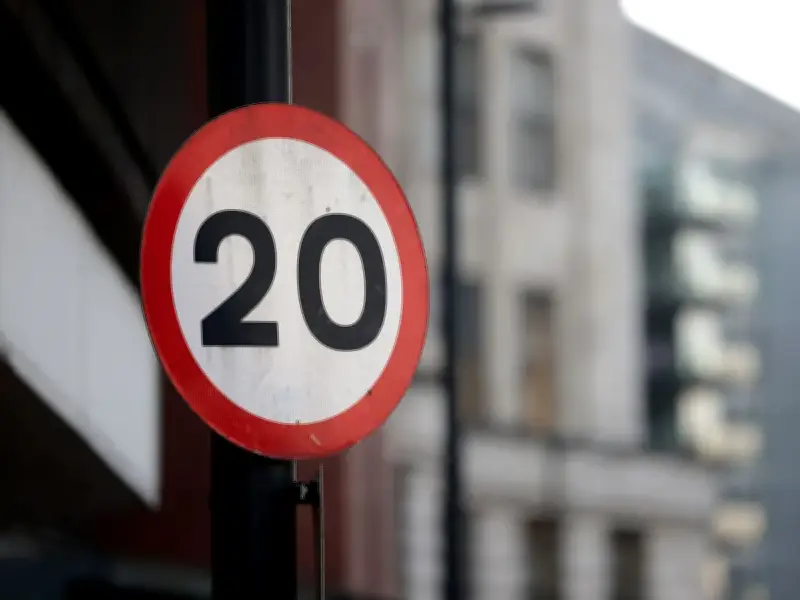
Manchester council has announced plans to lower speed limits to 20mph on nearly 500 roads in Wythenshawe, including Hollyhedge Road, as part of an effort to reduce collisions and bring the area in line with other parts of the city. The move, announced in August, has drawn both support and scepticism from local residents.
On Hollyhedge Road, a supposed 30mph area that cuts across the estate from east to west, locals report a major speeding problem. Some people 'struggle to cross the road' at certain times of day due to the speed of cars and traffic congestion.
Support for lower limits
Carl Sutton, speaking on Hollyhedge Road with his mum Pauline, said speeds in the area have to come down. "I think it's a good idea, there are a lot of accidents around here," he told the Local Democracy Reporting Service. Carl explained that his mum's brother was hurt last year when a car came off the pavement and went into him on Hollyhedge Road.

Pauline added: "I support the lower speed limits, it will make things safer for everyone."
Council figures show that nearly 70 per cent of Manchester's road network is already at 20mph. Previous changes saw speed limits on residential and city centre streets cut from 30mph to 20mph in 2025 after a surge in injuries and deaths. Some faster roads, such as the A34 Kingsway, also saw reductions, dropping from 40 to 30 last year.
Mixed reactions from residents
However, some residents say Manchester is becoming a '20mph city' which could become 'too slow' to get around by car. Thomas Razniewski, 49, said: "If you drive safely, then I think everything on the roads should be fine. There are more cars on the road now so it can be dangerous, but for me, we should be focusing on education for kids, and drivers should stick to the existing speed limits."
He added: "It's not good to have a 20mph city, and as long as drivers aren't doing anything dangerous then it should be fine as it is. Maybe it's to push people to walk more or use public transport."
Data and expert views
Council-shared figures showed that 30mph residential streets have ten times more collisions than 20mph local streets, with a similar situation for high streets. Most pedestrian casualties (77 per cent) on residential streets in Manchester happen on 30mph roads, despite 30 zones only making up 26 per cent of the total residential road network.
Harry Gray, from active travel group Walk Ride GM, said Manchester has to follow the lead of other large cities by reducing car use. "I think it is important to reduce speed limits, especially in urban settings. A lot of these roads that are being reduced to 20mph are roads that won't ever have dedicated cycling infrastructure on them, they'll be designated as quiet roads where cyclists and pedestrians and drivers need to share the space," he said.
Councillor Mandie Shilton Godwin, Manchester's lead on transport issues, said: "The council's position on road safety is that one injury or death on the road is too many." She noted that around 68 per cent of the road network already has a 20mph limit, covering around 74 per cent of residential streets, but coverage is not evenly distributed, with lower coverage in northern wards and Wythenshawe compared to central, eastern and southern wards.
"People's safety should not be a postcode lottery which is why we are working to improve safety across the city," she added.