
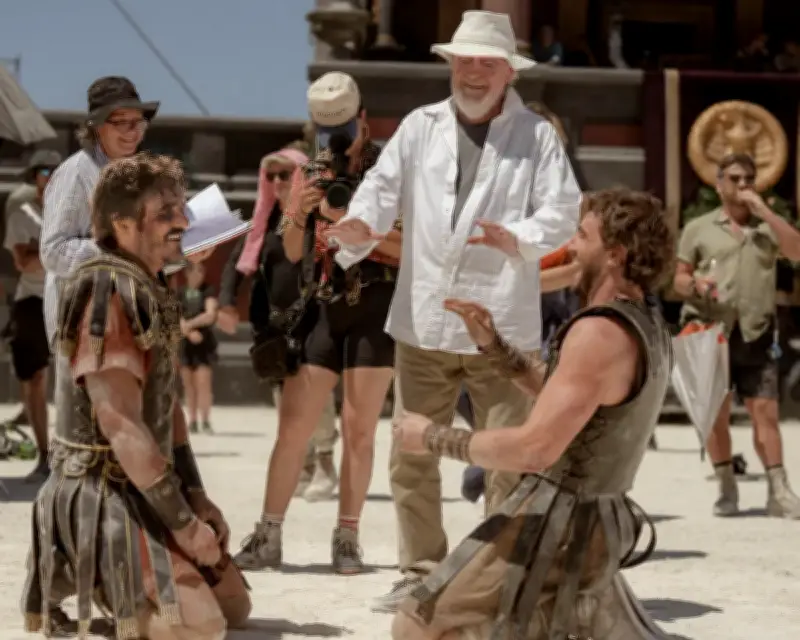
Malta has become one of Europe's most popular filming locations for American and British productions, hosting over 30 film and TV shoots each year for the past three years, including a record 36 in 2023 and 2025. The EU's smallest country, roughly the size of Sheffield, has doubled for ancient Rome, the Caribbean, Enid Blyton's Land of Spells, and the Bay of Pentos from Game of Thrones.
Tax Incentives Drive Growth
Malta's success is largely due to its aggressive tax incentive program. Introduced in 2005, the cash rebate mechanism has been ratcheted up over the last decade to what the producer of Napoleon and Gladiator II described as "probably the most generous cash rebate in the world." All 36 major productions that filmed in Malta in 2025 qualified for a 40% cash rebate, which can also apply to crew and equipment brought in from abroad if not available locally.
These incentives have become crucial as European film financing has shifted from direct funding to tax rebates, which now make up almost half of European fiction films' budgets. As a recent report by the European Audiovisual Observatory noted, "films and series no longer simply occupy locations, they are engineered around them."
From Silent Era to Blockbusters
Malta's cinematic history dates back to 1925's silent maritime drama Sons of the Sea. Since the 1970s, it has hosted two of the world's largest water tanks for filming maritime scenes. However, the industry was once seasonal. Now, according to film commissioner Johann Grech, "we have an industry that is working every day, all year round."
Recent productions include Jurassic World Rebirth, Gladiator II, the spring adaptation The Magic Faraway Tree, and the Jason Statham thriller Mutiny. Malta has also stood in for Greece in the BBC's Two Weeks in August, 1980s Sicily in The Travel Writer, rural southern France in The Madame Blanc Mysteries, and the Caribbean in Guy Ritchie's Viva la Madness.
Economic Impact and Expansion Plans
At the Mediterrane film festival in June, Grech announced plans to improve the rebate model, which expires in 2028, and to seek private investment for an €80m (£70m) studio complex. "Every euro that we invest in the rebate, the industry generates back four," he said. "The film industry is becoming an economic pillar for our country."
Adrian Wootton, chief executive of the British Film Commission, said, "For such a small European country, Malta is really punching above its weight. It's been very aggressive, in a positive way, about diversifying its industry."
Challenges and Criticisms
Despite the boom, some critics argue that local cinematic talent is being neglected. Maltese directors often lose crew to international productions, as screenwriter Teodor Reljić noted: "There's a bit of a parallel universe: people in servicing are thriving, but local film-makers can't pay a DOP [director of photography] because they are expecting Jurassic World fees."
The Malta Film Commission focuses on international productions, while domestic film funding is left to the arts council with a smaller budget. Malta does not match funding for financial incentives to homegrown film funding, unlike countries such as Estonia. Edith Sepp, head of the Estonian Film Institute, said, "Without incentives, smaller European countries would simply be excluded from the global production market. They can be gamechangers. At the same time, we need to ensure our own films are seen, exported and remembered. Otherwise, we risk becoming a place to shoot the films, but our own stories struggle to find their funding."
Infrastructure Strains
Malta's infrastructure is also feeling the strain as cities and villages regularly turn into film sets. Road closures and parking restrictions have frustrated residents, with one Valletta resident asking MaltaToday, "What are Valletta residents supposed to do – stay confined in their homes?" Last month, film equipment knocked over and damaged a 100-year-old statue and historic pedestal in St George's Square, angering the religious community.
Reljić noted, "There are signs of a pushback against overtourism, like in Barcelona or Venice. But in Malta we have online gambling, construction and tourism – for now, film-making is the least toxic of our big industries."




