New data released today reveals that August recorded the highest ever number of heat pump vouchers issued under the Boiler Upgrade Scheme (BUS). The scheme offers grants to incentivise property owners to swap existing fossil fuel heating for more efficient, low carbon heating systems including air source heat pumps, ground source heat pumps and, in limited circumstances, biomass boilers.
Grant amounts and eligibility
Ofgem says you can claim £9,000 off the cost and installation of air-to-water or ground source heat pumps in eligible off-gas grid properties until March 31 2027. Alternatively, you could claim £7,500 off the cost and installation of an air source heat pump; or £7,500 off the cost and installation of a ground source heat pump; or £5,000 off the cost and installation of a biomass boiler.
These grants are designed to help UK property owners overcome the upfront expense of fitting a low carbon heating system. Yet the surge in take-up shows many Brits are making the switch to clean energy as the Iran war has driven up bills. There has been roughly a 40% rise in BUS vouchers issued in comparison with the same period in 2025.
Record uptake and expert reaction
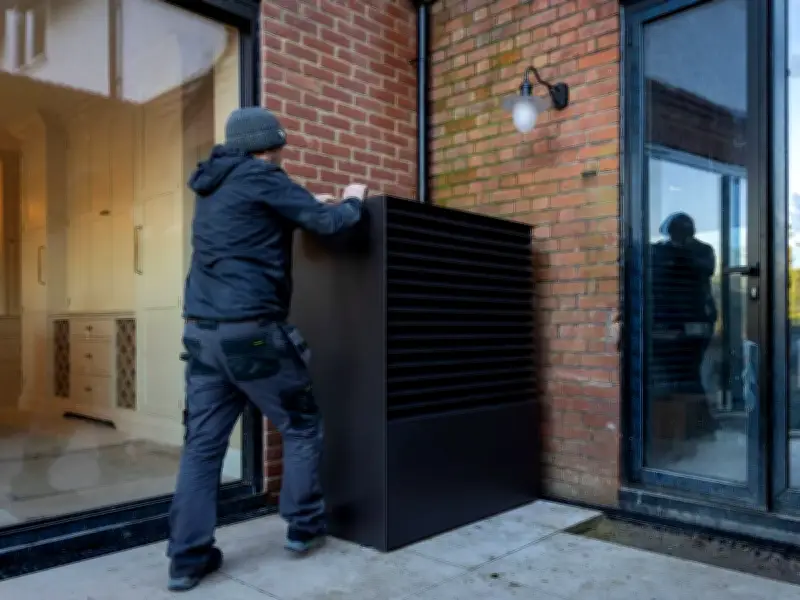
Heat pumps are highly efficient electric devices that extract and amplify heat from the outside air or ground into a building, the government has said. They can generate approximately 3 units of heat for every unit of electricity they consume. They can slash a property's energy demand when replacing technologies such as gas boilers.
Jess Ralston, Head of Energy at the Energy and Climate Intelligence Unit (ECIU), said in a statement today: "August's record month for heat pumps under the Boiler Upgrade Scheme is another signal that this net zero technology is moving into the mainstream, with people seeing the clean transition as a route to energy independence and more stable bills. If the UK had fewer Liquefied petroleum gas (LPG) and gas boilers, we'd be far less exposed to the international oil and gas price spikes that have repeatedly driven up bills and triggered energy crises."
"For years, boiler industry lobbying helped keep the UK locked into gas heating for longer than necessary, leaving households and the wider economy vulnerable to price shocks. More households in the UK are recognising that electric heat pumps offer a route away from the volatility of oil and gas markets, and other countries are already way ahead on installations."
Homeowner experiences and energy costs
The scheme can prove invaluable for British homeowners. Matthew Bell told the Energy Saving Trust: "My wife says that it's the first house where she hasn't felt the cold. You feel like you have a level of control over the feel of the house that you never quite got with the gas boiler."
This latest development comes as UK energy costs are being driven up by the conflict in Iran. A deputy governor at the Bank of England has warned that interest rates may need to rise should energy prices remain at their current levels. Clare Lombardelli today said: "The main driver of near-term inflation is developments in global energy prices. The energy shock due to the conflict in the Middle East has already pushed up UK inflation, and we expect it to continue to do so in the coming months. There is significant uncertainty about how the conflict will develop, and so about the evolution of energy prices."
This month marked 200 days since the conflict began. Since then, global oil and gas prices have been turbulent, and in recent days these costs have surged, particularly UK gas prices. The war has driven up energy bills, petrol and diesel prices, and inflation across the UK and beyond, with further increases expected.
Ms Ralston said in a separate statement today: "Gas prices have hit a 4 year high, with petrol and diesel costs already climbing and analysts warning that energy bills could rise again in the new year. It's a stark reminder that conflicts thousands of miles away can still hit households here, especially those already struggling with the cost of living."
The Energy Crisis Commission has warned that the UK remains 'dangerously underprepared' for future energy shocks. It set out that the clearest way to protect households is to reduce our dependence on volatile oil and gas markets through electrification and renewables. "More drilling in the North Sea won't bring down bills or reverse the basin's long-term decline. If the UK wants to increase energy security, lower exposure to global crises and so energy price volatility, it will need to accelerate the rollout of heat pumps, electric vehicles, and homegrown wind and solar power."
Eligibility for the Boiler Upgrade Scheme
Installers who are MCS certified can apply for and redeem Boiler Upgrade Scheme vouchers on behalf of property owners. Many energy firms in the UK offer guidance on the scheme, with British Gas, E.ON Next and EDF Energy all having details about it on their websites.
Government guidance shows your property needs to be a residential dwelling or small to medium-sized non-domestic premises located in England or Wales. It must have a valid energy performance certificate. Biomass boilers qualify only for properties situated in rural areas and without mains gas connection. Heat pumps face neither of these limitations.
You need to be completely replacing an existing fossil fuel system - such as an oil or gas boiler - or an electric heating arrangement like storage or panel heaters. Funding won't be available for replacing current low carbon heating systems. The government says the installation must not get funding from multiple public funding sources, and you are ineligible if you have already obtained government funding or support for a heat pump or biomass boiler.
However, you are still eligible if you have secured separate funding for energy efficiency improvements including insulation, doors or windows. Newly-built homes and social housing do not qualify for the Boiler Upgrade Scheme, although self-build properties are eligible.
When it comes to possible cost savings from having a heat pump, Mr Bell told the Energy Saving Trust: "We haven't figured out really whether we've seen significant savings yet, but I have no doubt that over the life of the heat pump, we will, particularly if electricity prices come down." To apply or for further information such as eligibility, visit the dedicated government web page on the subject.