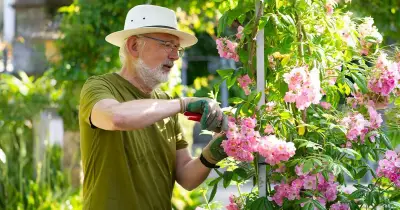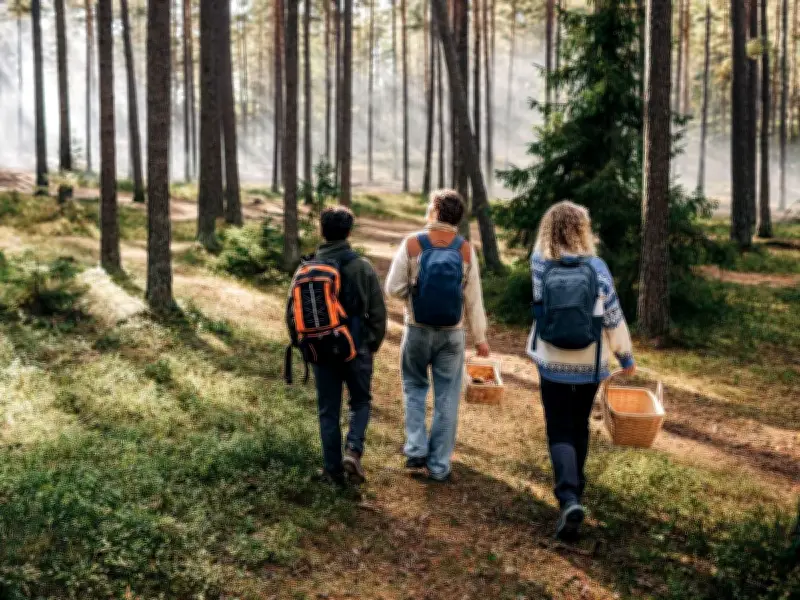
Foraging for wild fruit, flowers, fungi, and foliage is generally legal in the UK for personal use, but the law is "incredibly complicated", according to Ray Woods of the wild plant conservation body Plantlife.
Section 4 (Property) of the Theft Act 1968 states: "Subsection (3) A person who picks mushrooms growing wild on any land, or who picks flowers, fruit or foliage from a plant growing wild on any land, does not (although not in possession of the land) steal what he picks, unless he does it for reward or for sale or other commercial purpose."
In foraging circles, this is sometimes known as the four Fs: fruit, flowers, fungi, and foliage. The rule does not protect picking crops growing in a field, as these are likely planted by a farmer, and taking them without permission would probably qualify as theft. The Scottish Outdoor Access Code contains similar provisions, allowing foraging but not for commercial use.

Legal exceptions and bylaws
Woods told the BBC: "In common law there's a general protection if it's for your own use - this is to stop the nobs [wealthy landowners] serving unnecessary prosecutions if someone takes one blackberry. In such a case, you can't be prosecuted under the Theft Act."
There are exceptions. Seaweed would not fall under the Theft Act, while certain protected species are covered by wildlife legislation. Bylaws can also deny foraging rights, but signs must be clearly posted. Councils, the National Trust, and government conservation agencies such as Natural England, Scottish Natural Heritage, and the Countryside Council for Wales can pass such bylaws.
Where foraging is allowed
While the Theft Act allows picking in most places, it does not automatically grant access to the land. On private land, permission is still required, and without it, a person must leave if asked or risk trespassing, a civil offence. A footpath does not imply the right to stray off it and forage.
Most roads, country lanes, and adjoining verges are owned by the Highways Agency or local authorities, while pavements are usually owned by the local council, making foraging technically against the law there, though any action would be extremely unlikely. Foragers are urged to act responsibly - not stripping plants bare, leaving some for others, not littering, and not damaging plants.
Woods said: "It's all a matter of common sense. You should never pick all there is, you should always leave plenty for others to enjoy - including wildlife. If you are prosecuted, there's no need to prove the value of the property taken - there's generally just a fine for breaching the law."
Rights in Scotland and England
In Scotland, the Land Reform (Scotland) Act 2003 grants the right to roam, but people must still be 'responsible', respect property, avoid damage, and follow local rules. The Countryside and Rights of Way (CROW) Act 2000 gives people in England and Wales access to certain open land, such as mountains, but restrictions on foraging remain.
Nature reserves, Royal Parks, and Sites of Special Scientific Interest (SSSIs) often prohibit picking to safeguard delicate habitats. Fixed penalty notices, ranging from £100 to £300, can be issued to prevent ecological damage.
Neighbours' trees and hedges
It is technically an offence under the Theft Act to keep fruit from a neighbour's overhanging tree without the owner's consent. A neighbour has no legal right to any fruit on overhanging branches. However, hedges are different: "The owner or tenant of any land is entitled to cut off branches which overhang or roots which penetrate from his neighbour's hedge, as long as he does it on his side of the boundary." The cuttings remain the property of the hedge owner.
Under Section 4 (Property) of the Theft Act 1968, picking wild plants or fungi for sale or reward without the landowner's permission is theft, regardless of quantity, intention, or destination.