Small business took centre stage at Labour Conference in Liverpool as firms pressed the Government for action on everything from tax to glassmaking. Thousands of delegates, led by Prime Minister Andy Burnham, gathered for days of debate.
Business Secretary vows to be 'champion' for entrepreneurs
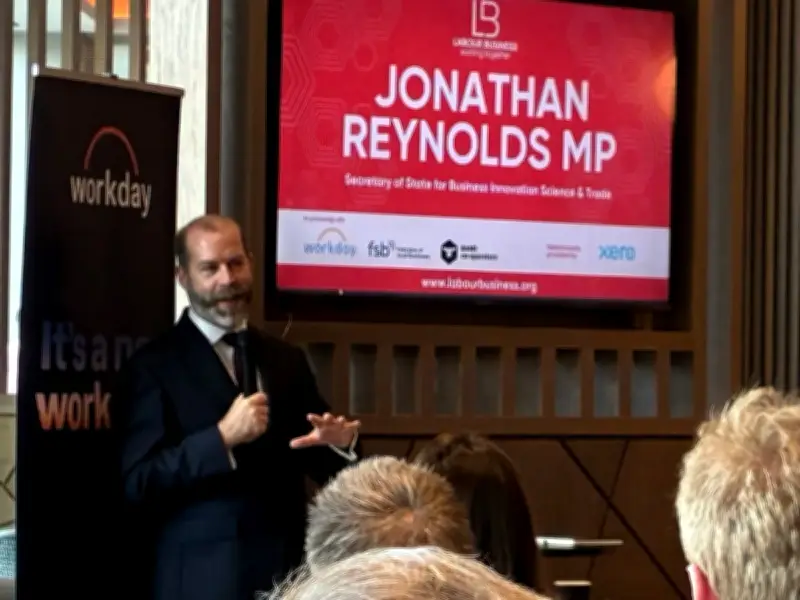
Labour Business, the party's business voice, opened its week with Small Business Sunday, where Business Secretary Jonathan Reynolds was the keynote speaker. He took questions on glassmaking, VAT thresholds, public procurement, and mathematics.
Chair Emily Wallace said the event was about "the importance of helping our smallest businesses to grow, to become the medium-sized businesses that can scale, and to be the future Great British success stories." She added: "It's our job to make sure the voices of all businesses, not just the largest, are heard."
Philip Ross, vice-chair of Labour Business, said: "There's lots of stuff to fix, and the party, we believe, is the natural party of business… and we're trying to be that bridge." He added: "We, as Labour Business, were founded in 1972 by Harold Wilson, and he believed that Labour only succeeds when it's in step with business."
Growth and town centres in focus
Mr Reynolds said: "I couldn't be prouder and happier to be the champion of all of you in the Cabinet." He said one slogan of the conference was "good growth in every postcode," and that "the one way you do that… is to support small business." He vowed to be a "champion for small business and SMEs."
He also discussed the theme of "pride of place" and improving town and city centres, saying: "The only way you provide the kind of active thriving town centres people want is if there is thriving business in those town centres." He asked for suggestions on easing red tape and helping SMEs "make the difference" in town and city centres.
Sticky notes reveal business concerns
Labour Business posed six questions to delegates, and officials handed out multicoloured sticky notes to collect answers. Key themes included red tape, regulation, taxation, and business rates. One pink note read: "Business rates – the silent killer of the high street."
Suggestions on the board asking "What Can Government Do To Support Your Business?" included: ensure zero hour/low hour contract reforms are practical for hospitality businesses, review the cumulative burden of regulation, fund local government business support services, and one note simply saying "Rejoin EU." Tina McKenzie, interim national chair of the Federation of Small Businesses, summed up the points, suggesting the last note was a debate for another day.
Budget hints and VAT threshold concerns
Jonathan Reynolds observed that delegates were thinking about the Budget in this "tight fiscal environment," discouraging speculation as "problematic." Chancellor John Healey, in an article on the Liverpool Echo website, said: "I will do what I can in the budget to give the country and businesses that bit of breathing space."
Andrea Edwards, from small business support group Move Business, raised the VAT threshold for microbusinesses. She said businesses "fall off a cliff" at the £90,000 turnover mark, when they must become VAT-registered, and that some firms limit hours or close for seasons to stay below. She suggested tapered VAT rates for turnover above £90k, rising gradually to the full 20% rate.
Late payments and the Small Business Protections Bill
In his speech, Mr Reynolds said Government work to tackle late payments would make the UK "the best jurisdiction for any major economy." Lord Leong, Minister for Small Business and Enterprise, closed the event saying: "Britain cannot win unless its small businesses win."
Lord Leong highlighted the Small Business Protections Bill, which includes a 60-day cap on payments and mandatory interest on late payments at 8% above the Bank of England base rate. He said: "It's fair. It's good business. It's essential to resilient supply chains."