
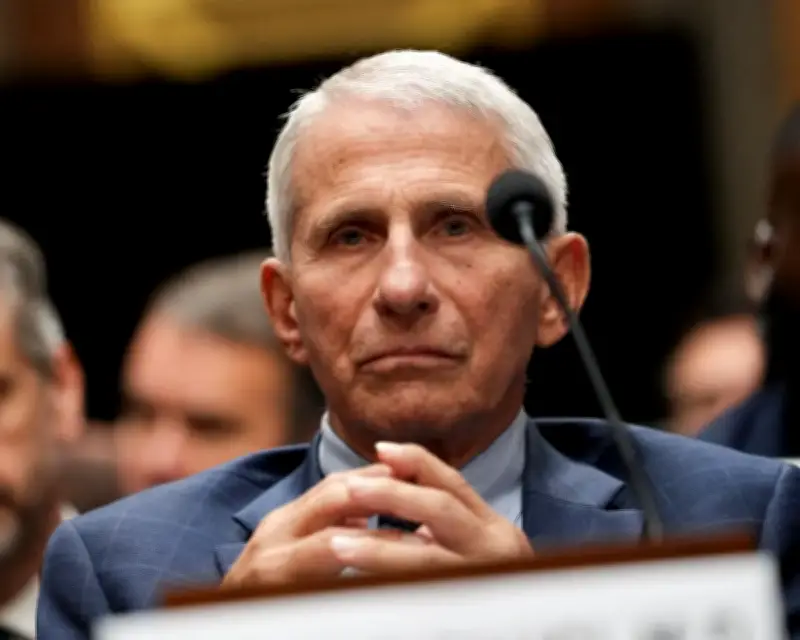
The recent congressional hearing featuring Dr. Anthony Fauci was painful to watch, according to microbiologist and infectious disease clinician David Relman. In an opinion piece, Relman argues that despite the hearings, we are further than ever from understanding Covid-19's origins.
Politicization and Polarization
Relman, a professor at Stanford University, laments the devolution of public discourse on Covid-19 origins, citing politicization, polarization, and illogical thinking. He emphasizes that much is at stake, including trust in science, scientists, and government, as well as our ability to thwart and respond to the next pandemic.
The hearing on 29 July, hosted by Senator Rand Paul, involved a hostile interrogation of Fauci. Relman also notes that Fauci's public diary comments on the origins debate have been difficult to read.
Two Viable Possibilities
Before Covid-19, scientists were divided on whether humans could start a pandemic. When the virus emerged in Wuhan, China, in late December 2019, two possibilities arose: a natural spillover at a wildlife market or a lab accident at the Wuhan Institute of Virology, which housed the world's largest collection of bat coronaviruses. Six years later, both possibilities remain viable, supported by circumstantial evidence, but the virus has not been found in nature or a lab.
Relman acknowledges that risky work with bat coronaviruses was undertaken in Wuhan, some with US National Institutes of Health (NIH) support, and that this work involved creating chimeric viruses. However, this published work does not reveal a plausible Covid precursor virus. Thus, Rand Paul is correct that NIH funded risky work, and Fauci is correct that the published work did not cause Covid.
A Path Forward
Relman believes a lab accident in Wuhan is the most plausible explanation, given the kind of work pursued there and other factors, but he admits he could be wrong. He calls for humility, an objective and transparent forensic investigation with international engagement, and for scientists and politicians to embrace their responsibilities.
He warns that continuing down the current path of wishful thinking comes at our own peril.




