
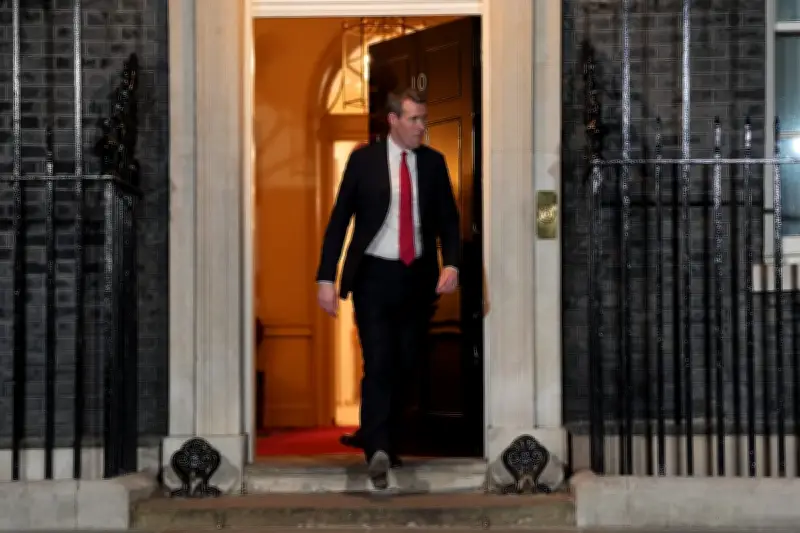
Housing minister Matthew Pennycook has said the conflict in Iran is partly to blame for a slowdown in housebuilding, as the Government prepares to overhaul planning law to accelerate new homes.
Speaking to broadcasters, he said the Middle East conflict had led to “dampening demand”, with people buying fewer homes and first-time buyer numbers drying up. He also noted that materials costs for developers were rising.
The Government has reached just over a quarter of the way to its target to build 1.5 million homes in England, after two years of the five-year Parliament.
Minister cites ‘extremely challenging’ conditions
Mr Pennycook told Times Radio: “There is no doubt that house builders across the country are finding things extremely challenging. The downturn that we inherited on coming into office and that we have pulled every lever to pull ourselves out of has been made worse by the conflict in Iran, and as a result, largely of that conflict, but not entirely, we’re seeing dampening demand.”
Pressed on whether the Government would meet its manifesto commitment, he said: “We stick by that target. As I said, that ambition is really important.” When asked whether it was an ambition or a commitment, he said: “It’s a commitment, it was in our manifesto, but to be very clear with your listeners, it is a really, really challenging time for the housing industry at present. Viability pressures are acute in lots of parts of the country. That’s why we’re pulling every lever and why we’re publishing today a new National Planning Policy Framework.”
New planning framework to streamline housebuilding
Ministers are set to publish new measures on Monday to streamline housebuilding in England. Under the new National Planning Policy Framework (NPPF), there will be default approval for homes built within “reasonable walking distance of well-connected stations”.
Housing Secretary Angela Rayner said the shift to a “default yes” to developments around stations would help “tackle the housing crisis and raise living standards”. The plans will also give pubs extra protection from being closed or converted into flats or shops, and will make conflicting local positions carry less weight if they are inconsistent with national decision-making policies.




