An A&E doctor with 588,000 followers on TikTok has warned against common methods people use to cool down during a heatwave, saying they can actually increase the risk of heatstroke. Dr Ahmed, who calls himself the "healthcare Gordon Ramsay," shared his advice as the UK braces for temperatures potentially reaching 40 degrees Celsius in parts of Wales and England.
The Met Office has issued a red weather warning for parts of South Wales, describing it as a "severe weather event" with "an exceptional spell of hot and humid weather" that will impact the general population. As people seek ways to stay cool, Dr Ahmed cautioned that some instinctive actions may backfire.
Taking Off Your Shirt Increases Heat Absorption
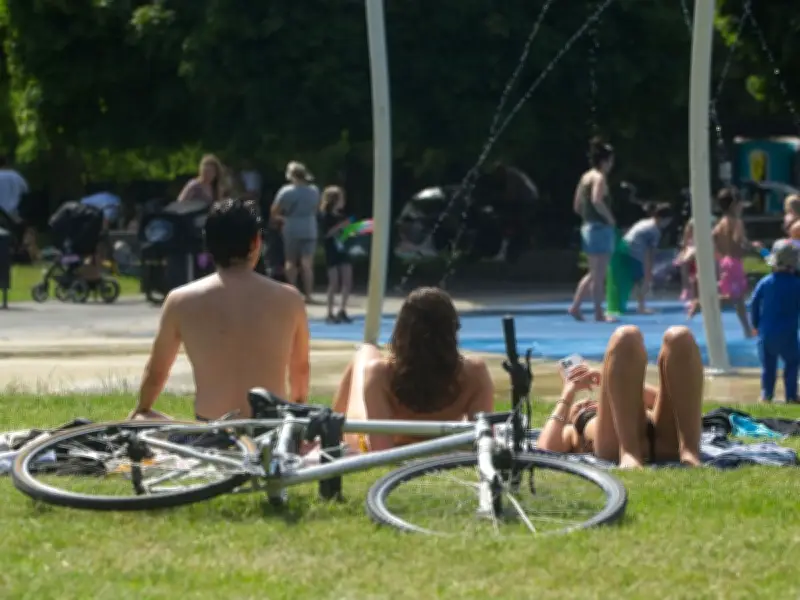
One of the most natural reactions to heat is removing clothing. However, Dr Ahmed warned against this. "What should you do if you start having heatstroke out in the sun? Should you take off your shirt to cool down? No! Doing that will expose you to direct sunlight, direct radiation, you will absorb more heat," he said. He advised keeping a simple cotton layer on to protect the skin from the sun.

Government guidance recommends lightweight, loose-fitting, light-coloured clothing such as long-sleeved shirts, trousers, or long skirts, along with wide-brimmed hats to shield the face, eyes, head, ears, and neck.
Jumping Into Cold Water Can Be Deadly
Another common remedy is plunging into cold water, but Dr Ahmed cautioned it can be hazardous. "Jumping into a body of water with a sudden temperature drop will actually make your muscles seize up and you will drown, and that will make it my problem," he said. According to the RNLI, water colder than 15 degrees Celsius can cause cold water shock. The sea around the UK and Ireland averages about 12 degrees, and rivers are even colder, even in summer. Cold water shock increases the risk of heart attack and can cause involuntary gasping, leading to water inhalation.
Safe Cooling Alternatives
Dr Ahmed suggested safer methods: spraying yourself with a cool mist, or applying ice packs or wet towels to your armpits, back, or thighs. "That will cool yourself down very nicely," he said. However, he warned against cooling too quickly. "You don't want your temperature to drop too quickly because, like I said, in heatstroke your body's normal temperature regulation systems are off. You can go into hypothermia without knowing it. If you're not yet in heatstroke, still be careful, because reducing your body temperature too quickly can make you shiver, and shivering can cause more heat increase inside your body."
Seek Help When Needed
Dr Ahmed emphasised the importance of seeking assistance. "Most important: seek help. Somebody to watch over you, somebody to contact emergency services while you cool down to make sure you are safe. Do that and don't become my problem in A&E."
The 50 areas of the UK predicted to face 40-degree heat include parts of Wales (Blaenau Gwent, Bridgend, Caerphilly, Cardiff, Carmarthenshire, Merthyr Tydfil, Monmouthshire, Neath Port Talbot, Newport, Powys, Rhondda Cynon Taf, Swansea, Torfaen, Vale of Glamorgan), the East Midlands (Northamptonshire), East of England (Bedford, Cambridgeshire, Central Bedfordshire, Essex, Hertfordshire, Luton, Thurrock), London and South East England (Bracknell Forest, Buckinghamshire, East Sussex, Greater London, Hampshire, Kent, Milton Keynes, Oxfordshire, Reading, Slough, Surrey, West Berkshire, West Sussex, Windsor and Maidenhead, Wokingham), South West England (Bath and North East Somerset, Bristol, Dorset, Gloucestershire, North Somerset, Somerset, South Gloucestershire, Swindon, Wiltshire), and the West Midlands (Herefordshire, Warwickshire, West Midlands Conurbation, Worcestershire).