
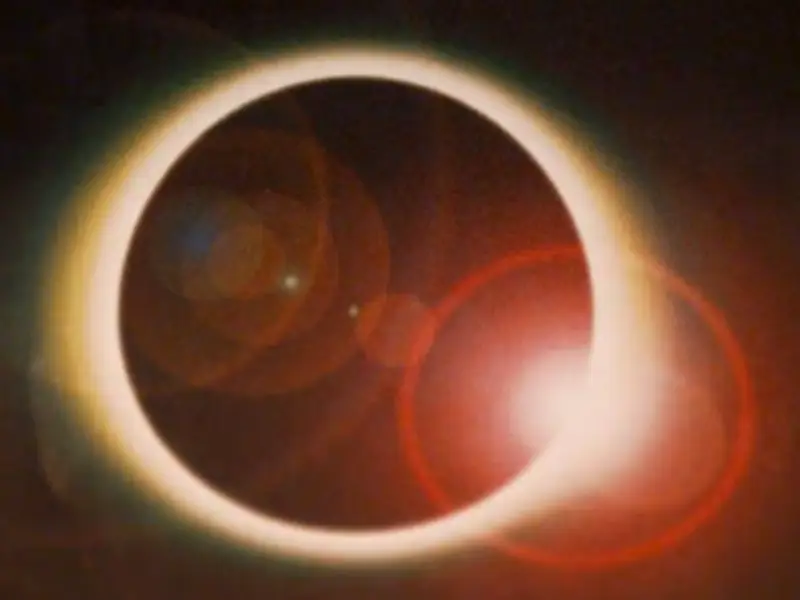
A rare solar eclipse will occur on Wednesday, August 12, with Scotland expected to witness over 90% of the sun's light blocked by the moon. It is the largest such event in the UK since 1999 and the last of its kind until 2081.
Safety First: Why You Need Protection
Looking directly at a solar eclipse can cause permanent eye damage. The reduced brightness can override the natural reflex to look away, allowing intense sunlight to reach and damage the retina. Standard sunglasses are not safe, and binoculars or telescopes without proper solar filters should not be used.
NASA warns: "Except during the brief phase of totality during a total solar eclipse, you should never look directly at the Sun without proper eye protection specially designed for solar viewing. Do not use standard binoculars or telescopes to watch a solar eclipse without safe solar filters attached to the front of the device."
How to Make a DIY Pinhole Projector
Instead of risking eye damage, experts recommend making a simple pinhole projector at home using basic materials. Here's what you need:
- A cardboard box (e.g., cereal or shoe box)
- Scissors
- White paper (large enough to cover one end of the box)
- Aluminium foil
- Tape
- A pin or needle
- Pencil or pen
Step-by-Step Method
- Stand the box upright and trace one end onto the white paper.
- Cut out the traced shape and place it inside the box on the same end.
- Cut two square holes on the opposite end, one on each side, leaving a space in the middle. If using a cereal box, tape the middle to keep it together.
- Cover one square hole completely with aluminium foil and tape it down.
- Make a very small hole in the centre of the foil with the pin or needle. A smaller hole will produce a sharper image.
Your DIY projector is now ready to use.
Where to See the Eclipse
The eclipse will be visible not only in the UK but also in parts of Europe. In the Balearic Islands, Spain, a total eclipse will occur with 100% coverage. In Scotland, the Isle of Barra will see the greatest coverage at about 93%, with an uninterrupted Atlantic horizon. Edinburgh and the Lothians will see around 90.7% coverage, while Glasgow is forecast to enjoy about 91.4% coverage.




