
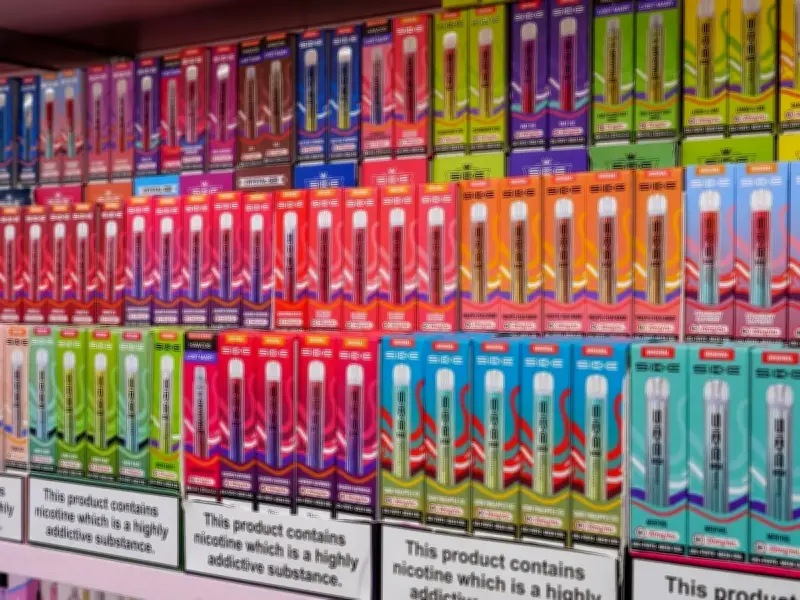
Councils will be given powers to restrict vape and betting shops on 'hollowed out' high streets, under the government's plans to give local communities greater control over their town centres.
New planning rules for vape shops
The changes come as vape shops and adult gaming centres have spread rapidly across many of Britain's town centres. Unlike most businesses, they can currently open without planning permission under the same rules that apply to cafes and clothing shops.
Earlier this year, the Manchester Evening News counted 51 vape shops on two neighbouring streets near Bury New Road in Strangeways, north Manchester.
Under the new rules, vape shops will require planning permission, with local residents given a greater say over whether they can open and to stop them opening near schools. The definition of a vape shop will also be tightened to stop businesses getting around the new rules by claiming to be a general convenience store or retailer.
Revoking the Gambling Act's 'Aim to Permit' rule
The Government also intends to revoke the Gambling Act's 'Aim to Permit' rule, which currently restricts the ability of councils to refuse new betting shops and 24-hour slot machine shops. They will require planning permission under proposals due to come into effect at the start of next year.
Betting shops are disproportionately clustered in the UK's most deprived areas, with around half of the 1,450 gambling centres located in the poorest 20 pc of British neighbourhoods. A third are found in the most deprived 10 pc.
The Prime Minister is focused on ways of 'improving high streets' as he embarks on a 'listening tour' of the UK this week. It comes as the government faces mounting pressure to take more actions on the cost of living crisis ahead of October's Budget, while opposition figures accuse Andy Burnham of 'embarking on a vanity tour'.
Prime Minister's statement
Mr Burnham said: “For many people, the high streets they grew up with have been hollowed out and become unrecognisable over decades of decline. The rise of vape shops, betting shops and rogue operators have replaced the shops, services, and community spaces that people are crying out for.
“That's not on. I said we would improve Britain's high streets, and that's exactly what we are starting to do. We're putting communities back in control and giving local people a real say over what opens on their high street. Local councils will be given the powers they need to rein in unwanted shops and bring town centres back to life.
“High streets are the beating heart of local communities, but for too long Westminster has stood by while they have been in decline. This government is committed to restoring our high streets and bringing back hope across Britain.”
Building on existing measures
The proposed measures will build on a £30m – announced by Sir Keir Starmer's government in May – unit to tackle rogue businesses linked to organised crime.
In June, Sir Keir's government also announced police would get new powers to shut down rogue businesses, increasing the closure orders from a maximum of six months to a full year to give them more time to investigate. Mr Burnham's government will continue that policy.
The Office for National Statistics estimates there are nearly three million unregistered businesses in the UK.
The last decade has seen Britain lose nearly 1,800 pubs and bars, while the number of vape and tobacco shops rose by 245 to almost 2,200, according to the Centre for Social Justice (CSJ).
The think tank analysed the number of businesses registered, which showed a 22 per cent rise in the number of barbers, nail salons and other beauty shops since 2016, rising to 91 per cent when compared to 2010.
The CSJ warned that valued community assets, such as pubs, were being replaced by a wave of 'dodgy shops' that do not reflect real consumer demand.
The maximum length of Closure Orders will also double from six to 12 months, giving police and councils more time to investigate premises linked to organised crime, pursue prosecutions, and prevent rogue businesses reopening before investigations are complete.
Government response
Angela Rayner, Secretary of State for Housing, Communities and Local Government, said: “These problems have built up over years, but this government won't leave councils and communities powerless to crackdown on everyday eyesores that blight our high streets.
"That's why we're giving local leaders the power to say no to what doesn't belong on their high street, and the tools to fix it themselves.”
The Prime Minister's plans are part of the government's wider drive to restore pride in local places, shift power out of Westminster and back into communities.
It also builds on action the Prime Minister has taken in his first weeks in office to back local communities and town centres, including a 20 percent cut to business rates for pubs, social clubs and live music venues across England from next year.
Opposition criticism
Melvyn Stride, the shadow chancellor, has previously accused the prime minister of 'breathtaking hypocrisy', claiming Labour was 'hammering our high streets' by forcing businesses to close with the party's 'red tape' policies.
Sir Melvyn, Conservative MP for Central Devon, added: “If Burnham is really serious about cutting the cost of living, he should adopt our plan for stronger high streets – including scrapping business rates for thousands of high street firms. And if he wants people to feel proud of the places where they live, he should scrap his disastrous plans to let vile criminals walk free.”
Daisy Cooper, the Liberal Democrats' Treasury spokesperson, echoed Sir Melvyn's criticisms, saying struggling high street businesses 'need more than a new PM embarking on a vanity tour this summer'.
Meanwhile, Robert Jenrick, Reform UK's Treasury spokesperson, suggested the proposals would lead to more empty shops if there wasn't support for alternative businesses to open up to replace vape and betting shops.
He said: “Until this government scraps the jobs tax, addresses sky-high business rates and provides real, fundamental support for high street businesses, this policy will only create even more empty shops on our high streets.
“Preventing businesses from opening only works if the government and local councils make it attractive for the right kind of shops to open in their place. Labour is doing the opposite by making life harder for small, legitimate businesses to operate on our high streets.”




