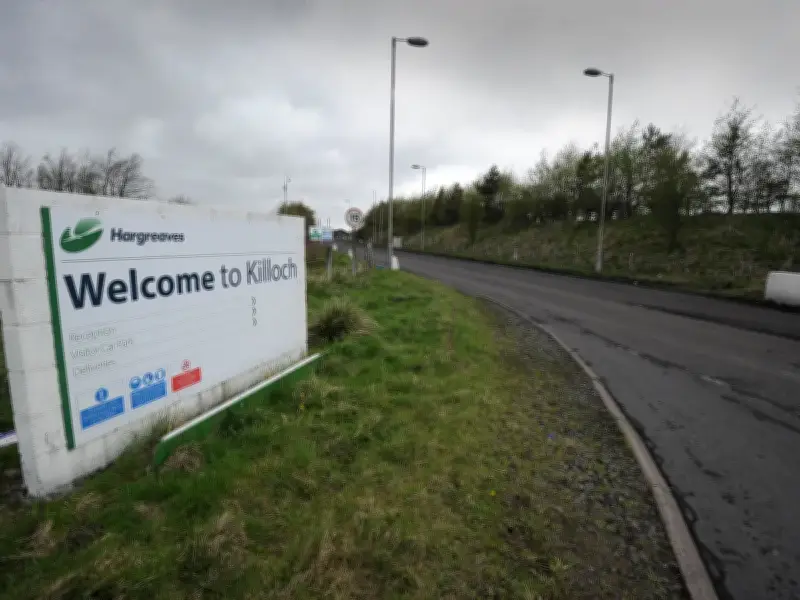
East Ayrshire Council’s Planning Committee has approved plans for a facility capable of processing almost 25,000 tonnes of contaminated soil every year, despite strong opposition from residents and community councils.
The committee voted by 10 votes to two to approve the development at the former Killoch Colliery site, west of Ochiltree, after a lengthy debate over the impact of heavy goods vehicles, environmental risks and whether sufficient safeguards were in place to protect surrounding communities.
Facility details and operations
Killoch Resources Ltd wants to establish a treatment facility capable of processing up to 24,500 tonnes of contaminated soil annually, with material brought to the site from construction, demolition and land remediation projects.
The operation would involve bioremediation, stabilisation and physical screening, with treated soil reused in construction and land restoration where possible. The development is expected to generate up to 100 vehicle movements daily, comprising 50 vehicles entering and 50 leaving the site, predominantly heavy lorries using the A70.
Local opposition and concerns
The application attracted 68 objections from 57 parties, including Ochiltree and Skares Community Council and Coylton Community Council. Concerns included dust, pollution, public health, noise and increased HGV traffic.
Conservative Councillor Neill Watts opposed the plans, arguing that their environmental benefits did not outweigh the potential harm to local communities. He said: “In this case, the harm to Ochiltree and the surrounding road network in my view is simply too great.”
He added: “My view is that our rural communities must not be treated as a convenient dumping or processing ground for industrial waste at the expense of residents’ daily lives and road safety.”
Cllr Watts proposed refusing permission on grounds of residential amenity and road safety, arguing that the development conflicted with the council’s transport planning policies. His proposal was seconded by Labour Councillor June Kyle, who raised concerns about lorries travelling through nearby villages.
Committee decision and conditions
Other councillors acknowledged those concerns but argued that the development could proceed with stronger planning conditions. Councillor John McGhee said: “My view would be to accept the recommendation of the officers. However, I would like to see a strengthening of some of the conditions.”
He acknowledged the site had conditions around its previous use, but specifically called for additional traffic management requirements and contamination monitoring.
Planning officers explained that the site already had an established industrial use and that Ayrshire Roads Alliance, environmental health officials and SEPA had not objected. The site’s management arrangements include wheel-washing facilities, dust suppression measures and controls intended to prevent contaminated material escaping.
Officers also highlighted the environmental benefits of treating soil for reuse rather than sending it to landfill.
The committee ultimately rejected Cllr Watts’ refusal motion by 10 votes to two, instead approving the scheme with strengthened conditions. Planning officials were authorised to finalise additional requirements relating to traffic management and measures to minimise environmental impacts.