
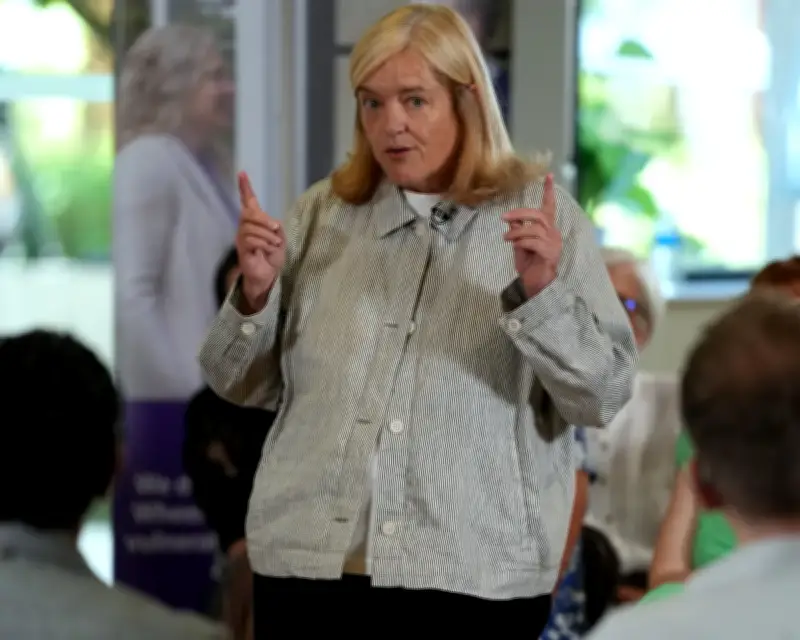
Louise Casey, heading the commission on social care in England, is preparing her first report with 'everything on the table', including the possibility that older people's wealth should contribute to care costs rather than placing the burden on younger taxpayers.
During a visit to Millvina House in Anfield, Liverpool, Casey witnessed the realities of dementia care. An angry resident shouted at her, while a care assistant calmed him. 'People don't want to know,' Casey said, 'but if you are born, you will die. Chances are you will need care, and dementia is the biggest killer.'
Casey expressed profound shock at the standards she found. She described an elderly man with diabetes and swollen legs who couldn't open a bottle of water, having cut his care visits by half because he couldn't afford more. Another woman had an untreated, infected stoma bag.
Care workers' pay and conditions
Casey praised care workers, noting they are paid about £4,000 a year less than NHS healthcare assistants. She believes many more people should stay in their own homes with better care, which could be cheaper than residential homes even with four visits a day.
Millvina House symbolizes the sector's problems. It was previously privately run but put into special measures after CQC reports of staff shortages, medicine shortages, and neglect. Liverpool council took it over in September 2025, fearing the loss of 60 beds.
Privatisation's legacy
Casey urges insourcing to council or voluntary services: 'If it's public money, it should mainly be publicly run.' She wants to stop private-equity profiteering while ensuring services survive, possibly with better-off residents subsidising others.
The state's bill for nursing homes rose from £20m in 1979 to £459m in 1986 after privatisation. Casey's report will likely address this history.
Wealth and generational justice
Older people hold most wealth, and Casey's finance report will examine where wealth resides. Better-off people may not be freed from residential payments, which total £14bn. The report may consider capping liabilities.
'Everything is on the table,' Casey said, including a plan for auto-enrolment of 1p in the pound on income tax for over-40s. She faces conflicts between public and private services, taxpayer funds and family payments, and local versus national standards.
Casey's fiercest fight may be over inheritance and generational justice. 'I will do what's right, however controversial. That's it,' she said.




