
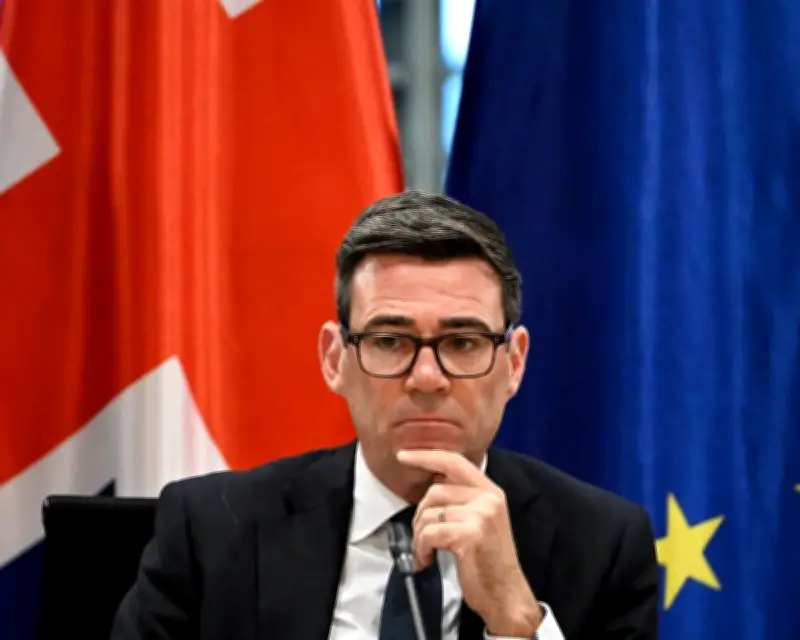
Prime Minister Andy Burnham has called for a closer relationship with the European Union, drawing a line under a decade of “drift and division”. On his first day back after party conference, he said the UK could go “all the way” towards full EU membership and called for a “longer-term discussion” about Britain’s relationship with the bloc.
On Sunday, Burnham said it was “clear” the Kremlin had been involved with the 2016 Brexit referendum vote. Both statements mark a rhetorical break from his predecessors, as Conservative governments long insisted there was no evidence of Russian interference in the vote, while Keir Starmer treated Brexit as a historic event rather than a cause of economic pain.
What could closer ties mean?
Burnham has kept the details of his plans vague. During his Labour conference speech, he promised to lay out “different options” for Britain’s long-term relationship with Europe and acknowledged that Brexit had caused “more harm than good”.
According to the Guardian’s Brussels correspondent Jennifer Rankin, the UK was seen as “a model of how not to run your country” from 2016 to 2020. This impression softened after the passing of the Withdrawal Agreement Act in early 2020 and the Windsor framework deal in 2023, which amended the Northern Ireland protocol. “That was a turning point in drawing a line under the bad blood of the Brexit years,” Rankin said.
Options on the table
Rejoining the EU would require another referendum, which would be politically fraught. A YouGov poll in January 2025 found that just 11% of people thought Brexit had been more of a success than a failure, and the Messina Group reported that half of voters say they would like to rejoin the EU. Research has estimated that UK GDP per head is between 6% and 8% lower than it would have been without Brexit.
However, Burnham has said he will stick to Labour’s red lines: no rejoining the single market, no customs union, no freedom of movement. Rankin noted that “as soon as you look at the democratic deficit that comes with single market membership, the case for rejoining the EU becomes stronger.”
The debate is also shaped by the EU’s own changes, including far-right gains in France and Germany and the “Made in Europe” agenda, which could affect UK exports. As Mujtaba Rahman wrote in the Guardian in July, “any serious rejoin debate must start from an honest assessment of what the EU has become.”
What happens next
Burnham confirmed that the planned UK-EU summit will go ahead in November, with negotiators expected to discuss a trade deal on food and drink, a deal on emissions trading, a plan to link energy systems, and a youth mobility scheme. These areas were all discussed at last year’s UK-EU talks.
Rankin said: “There’s a lot of frustration in Brussels that the UK has been talking a big game on a reset with the EU, without actually changing very much. The theme over the last ten years is that the EU has always been waiting for the UK to define what it wants. The rhetoric may be warmer, but the substance has stayed the same.”




