
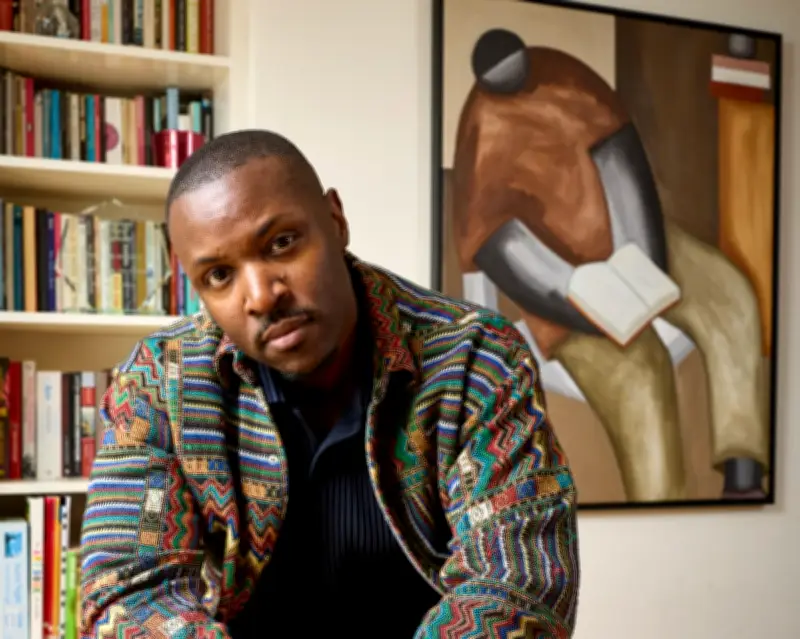
Symeon Brown's new book, The Good, the Black and the Boujee, argues that class is the elephant in the room in British conversations about race. Despite unprecedented cultural and economic prominence, black Britons are often assumed to be working class, masking the reality that those closest to power are disproportionately middle class.
Two Paths from Tottenham
Brown and David Lammy attended the same primary school in Tottenham, north London. Lammy went on to become a prominent politician, while Brown became a journalist. Lammy once told Brown he could 'never become prime minister, because you sound like where you come from' – a remark that highlights the class divide between two boys from the same streets.
Brown's book is an attempt to reconcile two contrasting trends: the rise of black cultural and economic capital, and the persistence of racial inequality as seen in Black Lives Matter protests. He interviewed about 1,500 members of Britain's black middle class, exploring education, employment, dating, and social values.
Reluctance to Identify as Middle Class
Many black Britons are reluctant to identify as middle class. Brown notes that the most common response to interview requests was 'Thanks, but I'm not middle class.' This reluctance stems from the nebulous nature of class itself and the fear of being seen as privileged when racism still poses significant barriers.
Among black professionals surveyed, almost one in four had attended a fee-paying school, with 72% having fees paid by parents. Brown argues that this educational advantage is often overlooked in discussions about black success.
Politics and Representation
Brown points to black politicians like David Lammy, Kwasi Kwarteng, and Miatta Fahnbulleh, noting they often have more elite credentials than white counterparts. He argues that representation has brought little benefit, as these politicians represent their class interests rather than broader black community interests.
He says, 'Black politicians actually have to have more elite credentials than white candidates.' This reflects a pattern where advancement depends on acquiring establishment-approved credentials.
Class vs. Race in Everyday Life
Brown argues that many conversations ostensibly about race are actually about class. He cites debates on 'proximity to whiteness' and dating patterns, noting that 'people primarily date class before race.' He found that black women are more likely to be middle-class professionals than black men, leading to challenges in finding partners of similar class status.
Brown himself describes his class as 'multi-class,' acknowledging he will never be read as middle class due to his accent. He is part of a young black professional class that embraces black cultural products, distinct from traditional white middle-class norms.
Stratification and Economic Shifts
Brown highlights the growing stratification within black Britain, with a prosperous middle class and a working class that remains disenfranchised, as seen in unresolved Windrush cases. He argues that the 'white working class' label often ignores the shared struggles of minority-ethnic working-class people.
The economic foundations of middle-classness are shifting, with wage stagnation making the category less secure. Brown notes, 'If we think about what it means to be middle class, whatever your race, at this moment in time, it means to be poorer, less influential, and doing work of lesser stature than 30 years ago.'
Conclusion
The book concludes that just as black Britain has developed a sizable middle class, the middle-class bargain itself is falling apart. Brown's work challenges Britain to confront the uncomfortable intersection of class and race.




