
The finalists for the 2026 National Architecture Awards' sustainability category have been announced, featuring a compact Canberra housing development and the largest commercial use of hempcrete in the country.
Jury Chair's Perspective
Adam Haddow, chair of the jury, said architecture 'holds a mirror up to who we are as a society – what we value, what we're willing to invest in, what we want to leave behind.' He added that the architects on the list have 'designed buildings built to last, not just physically, but in the way they'll continue to serve people long after the ribbon is cut.'
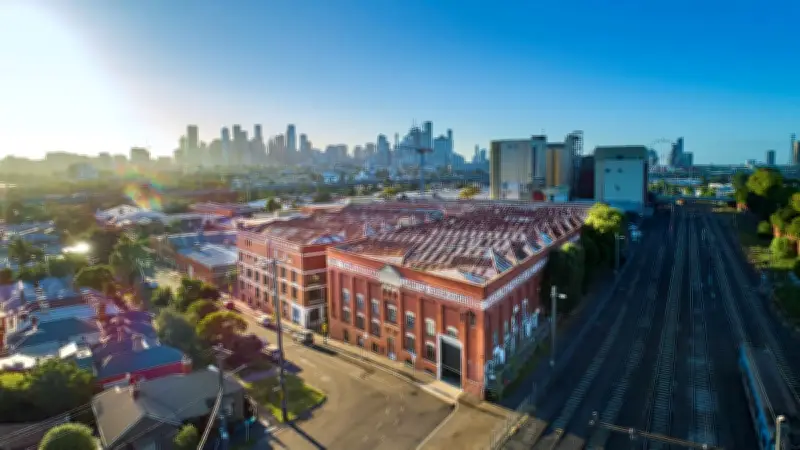
Younghusband by Woods Bagot, Melbourne
A federation-era wool store complex in Kensington, Melbourne, has been converted into a 17,000 sq metre mixed-use precinct, preserving original brickwork and sawtooth roof. The project achieved an 84% reduction in embodied carbon and net-zero operational performance, according to the project team.
The project won the Victorian chapter's sustainability award, with judges noting: 'All-electric services, rooftop solar, battery storage, rainwater harvesting, and improved thermal performance support a carbon-conscious future.'
Yitpi Yartapuultiku by Ashley Halliday Architects, Port Adelaide
An Aboriginal cultural centre in Port Adelaide is a finalist in three categories, having already won South Australia chapter awards for sustainability, steel architecture, and public architecture. Developed with Kaurna elders and custodians, the SA jury called the consultation 'exemplary in boosting social, environmental, ecological and cultural understanding in a living building environment.'
The project offers indoor and outdoor spaces for education, exhibitions, and community events. The SA jury said: 'Warm and sheltered, yet open to the outdoors, the building embraces a whole-of-site experience, commanding a presence from all sides.'
Port Phillip EcoCentre, Bourke and Bouteloup Architects, Melbourne
Located in St Kilda Botanic Gardens, this is the first citizen science laboratory in the southern hemisphere. Weathered timber cladding blends with the garden setting. The building aims to be carbon-negative throughout its lifecycle due to thermal efficiency, on-site energy generation, and use of recycled materials.
Winning a Victoria chapter award, the jury said: 'As a home for environmental education and Australia's first Citizen Science Lab, the building turns its own design into a teaching tool.'
North Wright Compact Housing, Trella Architecture and Interiors, Canberra
This precinct of 23 compact courtyard homes in Canberra's west pilots a European-style medium-density housing model. Built with recycled and low-carbon materials, each home has its own solar power. Homes are flexible, with spaces for work and study, and some dual-key dwellings for multigenerational living.
Courtyards allow light to penetrate deep into each structure, while laneway gardens and 'microforests' add greenery. The ACT jury praised the homes for being 'price-sensitive, energy-efficient and well-designed.' They noted: 'While compact by ACT standards, the homes are carefully planned and comparable with inner-city benchmarks. Strong sales indicate market appetite despite tight economic conditions.'
The Forest, Woods Bagot, Hobart
This new University of Tasmania campus adapted two warehouses and a heritage-listed domed atrium into a flexible series of structures. Open to the public, the centrepiece is an indoor forest with 3,200 native plants. The redevelopment used the largest commercial use of hempcrete in Australia.
The Tasmania jury commended the design for prioritising 'adaptive reuse, significantly reducing the need for new construction while extending the life of significant buildings.' They also said: 'Materials are used thoughtfully rather than decoratively, with many elements designed for disassembly and future reuse.'




