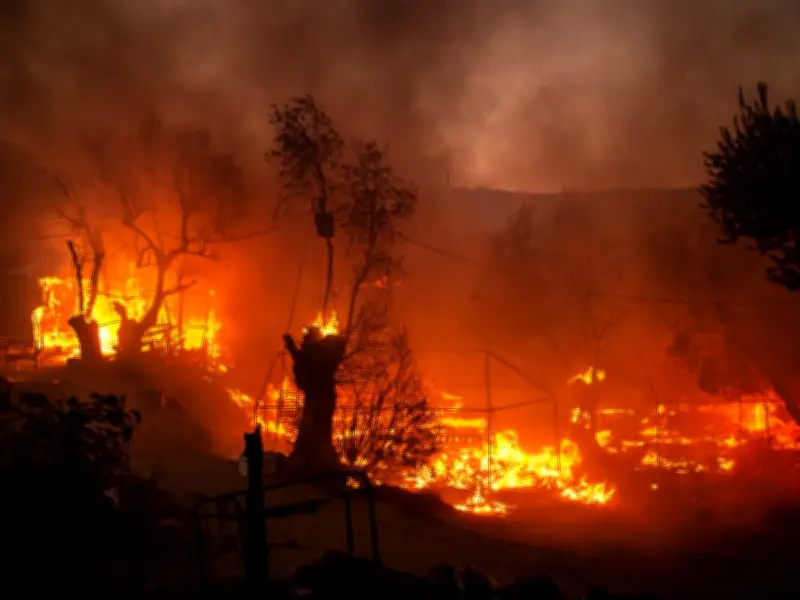
A decades-old scientific forecast predicting the end of the world in a matter of weeks has resurfaced, and one of its authors is noted for having been right about the dangers of artificial intelligence long before it became widespread.
In 1960, the academic journal Science published a paper by three researchers at the University of Illinois: Heinz von Foerster, Patricia M. Mora and Lawrence W. Amiot. The study warned that a possible end-of-the-world event would occur on Friday, November 13, 2026.
The Theory Behind the Prediction
The researchers reached their conclusion by studying trends in Western society. Their theory was based on the Earth reaching its maximum capacity as a result of rapid population growth. When the study was published, the world's population stood at around three billion; it has since grown to roughly 8.3 billion.

This is not the first time people have predicted Earth's demise, but this particular study has received special prominence because it is rooted in science. One of its authors, Austrian-American von Foerster, also made an astute prediction about the potential dangers of AI, long before it became an essential part of everyday life for many.
Von Foerster's AI Warning
In a 1995 interview with The Information Philosopher, von Foerster discussed the technology and explained that it is dangerous to believe that AI "thinks" the same way humans do. He argued that even if AI can perform tasks that look intelligent—using the hypothetical example of a robot rearranging blocks—it is not the same as human intelligence. He called this assumption "dangerous."
Von Foerster, who died in 2002, made these remarks 31 years before the present day, when there are genuine fears about people relying on AI for human-like connection, with some individuals even having romantic relationships with chatbots.
Overpopulation as the Cause
According to von Foerster and his colleagues, the world's population will reach its limit in just over two months. Their vision of doom has nothing to do with nuclear war or natural disasters—they attribute the end of the world to overpopulation.
The global population is projected to peak at roughly 10.3 billion in the mid-2080s before it finally starts to decline. British economist Thomas Malthus suggested back in 1798 that mankind would, sooner or later, run out of food. He argued: "Famine seems to be the last, the most dreadful resource of nature. The power of population is so superior to the power of the earth to produce subsistence for man, that premature death must in some shape or other visit the human race."
He made his comments during the industrial revolution, and advances in farming have managed to keep pace with the growing number of mouths to feed worldwide—for now.