Wild macadamia trees hidden in Queensland's rainforests could hold the key to saving the $2bn global macadamia industry, according to a group of Australian nut hunters dedicated to preserving the species.
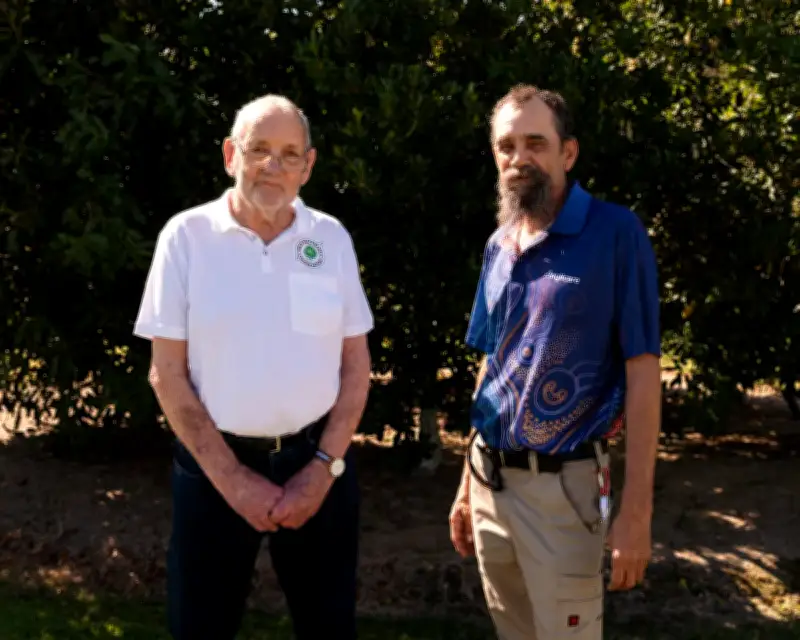
Ian McConachie, now 90, has spent much of his life devoted to the nut, including developing a tree that has raised $2m in royalties for the Macadamia Conservation Trust. He is part of a group seeking to preserve the scrappy rainforest plant, which is grown in industrial quantities in subtropical climates in Hawaii, the Americas, Africa and Asia.
A Vulnerable Crop
Macadamias are a vulnerable crop despite being grown in huge numbers commercially. All four macadamia species are native to a tiny patch of Australian subtropical rainforest in south-east Queensland and northern NSW.

"They like expensive real estate, which makes them incredibly endangered because we've got so little rainforest left," says Denise Bond, executive director of Wild Macadamia Conservation. More than 80% of the habitat that these trees evolved in over 120m years is reduced to remnant now.
One of the macadamia species, M. jansenii, is seriously endangered, so rare "a bushfire could totally wipe them out", McConachie says. Their locations are kept secret to protect them. While the nuts are too bitter to eat, "it could be a major tool in terms of climate change because it is so hardy". The other three species are listed as threatened or vulnerable.
Genetic Potential
Wild trees may hold the key to the next generation of climate- and disease-resilient nuts. McConachie says for commercial macadamia farming, "one of the very few things Australia has got going for it is the wild trees and their genetic potential".
Cultivated trees have significantly less genetic diversity than their wild counterparts, making those that remain "a genetic bank", says Bond. "If anything were to happen, like a root rot fungus go through the commercial population, or any sort of pest or disease that commercial nuts can't survive, if all the wild trees are gone you can't go back and say, lets breed some resistance into the crop."
McConachie has spent decades walking the remnant rainforests not far from where he lives, to find and document wild macadamias in situ. In August, he and fellow macadamia conservationist Russell Bennet took a reporter on one of their hunts.
Searching for Wild Trees
Bennet, a Kabi Kabi man, custodian and elder, is known for his ability to spot them. "It's some genetic ability handed down through the ancestors, I reckon," he says. When he finds a new undocumented tree, Bennet says, "it's almost like finding gold. You can go through a lot of rainforest and not see one."
Except in September, when they flower and put on a show. The rest of the year, their dark leaves retreat into the rainforest, easily overlooked. "They're quite cryptic," says Bond, with a couple of trees scattered here and there. Their modesty, says Bennet, "is their problem – they get dozed over".
McConachie is "shocked" by the degradation of the trees they find. An invasive creeper called cat's claw has been smothering them; some have been smashed by storms. They came to a sudden halt at a "Keep Out" sign, behind which was logging machinery. The hills are denuded, the small macadamia trees struggling in the dust. "The rainforest is tired," McConachie says. "Whether the remaining trees are still there is unknown."
Conservation Goals
"We can conserve DNA, but we can't regenerate it. So one of the goals in the future will be to find out if we can store the genetics of the wild macadamias, so that they're available for breeding for conservation," McConachie says.
In 1981, McConachie and his wife, Jan, bought a rundown dairy farm near Wolvi. After an extensive selection trial, he found a particularly hardy and accommodating tree, named it MCTI and secured planter breeding rights. "It has sold about a million and a half trees," he says, "and raised about $2m in royalties." All of that has been gifted to Wild Macadamia Conservation.
"We're probably all a bit eccentric," he says of the group, "but we're passionate about the need to conserve the wild genetics."