
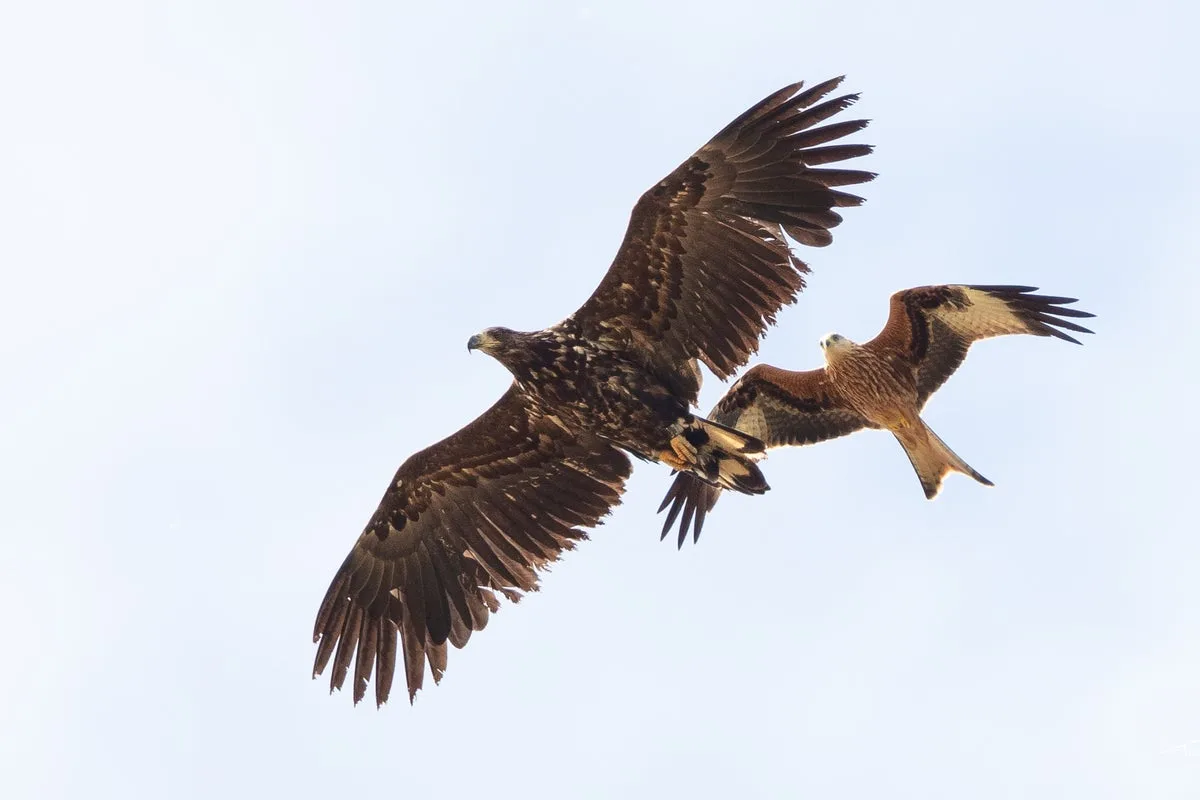
White-tailed eagles, Britain’s largest bird of prey, are set to return to Exmoor after more than two centuries. The last breeding pair in southern England was recorded in 1780 before persecution and habitat loss drove them to extinction in the region. Modern reintroduction programmes have now paved the way for their comeback.
Up to 20 young eagles will be released from a site on Exmoor over three years, building on an existing programme on the Isle of Wight that began in 2019. This summer, releases will take place at both locations, with the aim of linking the Isle of Wight population to the moorland, woodlands and hills of Exmoor National Park, which straddles west Somerset and north Devon.
The project, led by Forestry England and the Roy Dennis Wildlife Foundation, has already seen 45 white-tailed eagles released on the Isle of Wight. Four pairs have established territories along the south coast, and the first successful breeding in 2023 produced the first wild chick in England for over 240 years. Since then, five more chicks have been born.
Roy Dennis, founder of the Roy Dennis Wildlife Foundation, said: “White-tailed eagles were once a common sight in England but were lost centuries ago. This project is reversing that situation, and I am delighted that we will be able to release additional birds this year and boost their numbers in the wild.” Stephen Egerton-Read from Forestry England added that returning this lost species was “a key part of restoring biodiversity and supporting nature recovery”.
The reintroduction aligns with the government’s 25-year environment plan, and follows a £90m pledge by Defra to safeguard threatened native wildlife. However, in Scotland, where white-tailed eagles were successfully reintroduced in the 1970s, farmers have raised concerns about predation on lambs, though it is unclear whether the eagles routinely kill lambs or scavenge carcasses. Meanwhile, a 2022 RSPB report found that the eagles contribute between £4.9m and £8m annually in tourist spending on the Isle of Mull alone.
Natural England said the new licence allowing releases on Exmoor will be closely monitored.




