
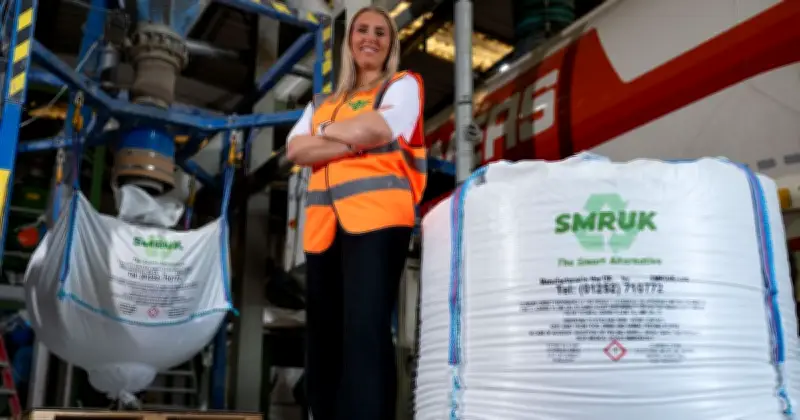
A Welsh manufacturer, SMR UK, is revolutionising the construction industry by transforming excavated soil into valuable, high-performance aggregate, offering a sustainable alternative to traditional dig-and-dump practices. The company's patented technology produces a range of lime and dye-free sand and cement-based binder products, enabling the direct re-use of soil on-site.
Innovative Technology and Expansion
Following investment in new machinery, SMR UK now offers an on-site Mini Mixer that shreds spoil, available for purchase or hire, enhancing delivery of its smaller, bagged products. Managing director Clare Thomas, who took over the business in 2016 from her late father Clive Holloway, emphasises the transparency and versatility of their binder technology. “Our binder tech has a transparent performance record and can cover multiple depths. We have strategic partnerships with recycling facilities and third party supply networks that offer national availability without centralised distribution. This minimises transport emissions and our circular business model turns waste into valuable product streams,” she explains.
Key Products and Achievements
Among SMR UK's standout products is PreMixd, a back filler popular for highways, created by mixing excavated spoil with its most successful product, SMR Eco. This mixture serves as a direct replacement for rubble and crushed concrete, known as Type 1 aggregate. The company's on-site remediation product, ReBind, treats and stabilises land contaminated with heavy metals while preventing leaching. “It works in all weathers and eliminates delays caused by lime mellowing. For one large structure scheme it has prevented over 1,300 vehicle movements and saved more than £2 million costs,” declares Thomas.
Environmental and Economic Impact
By unlocking unviable sites, new homes could be delivered more quickly. Thomas states, “Our goal is to become a leading force in brownfield redevelopment. Attention is increasing on remediation and sustainable construction and our products align with both regulatory and environmental goals.” The company, headquartered in Swansea with a production facility in Monmouthshire, has a team of 12 and projects turnover to reach £2.7 million next year, with revenue increasing 80 per cent since 2023.
Support and Future Plans
Part of the Business Wales Accelerated Growth Programme, SMR UK has received support with marketing and branding, modernising its image and aligning it with market expectations. The increased focus on reducing carbon emissions is helping the business get in front of key decision makers. Clients now include utility providers, councils, and developers such as Vistry Homes and Redrow. As it plans a network of regional hubs and focuses on training and upskilling, SMR UK is looking to secure more investment and growth expertise. To manage fuel cost rises, it is spreading its supply chain across more logistics and delivery companies.
Looking Ahead
Thomas sees a big opportunity with the 2030 Landfill Tax Reform. “Rather than recovering and processing spoil into recycled aggregates, the need is to prioritise use at source bypassing traditional recovery. Industry is at a pivotal point where innovation and sustainability must go hand-in-hand. We carry dad’s legacy forward,” she concludes.




