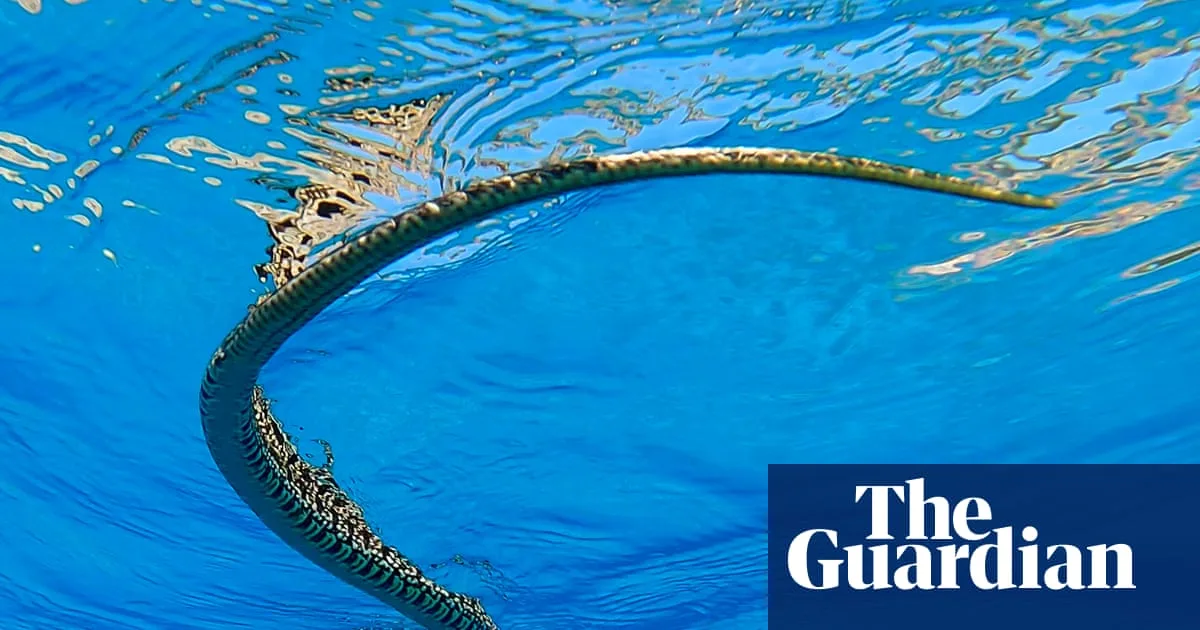
Swimming Snakes Threaten Ibiza's Endemic Lizards

The horseshoe whip snake (Hemorrhois hippocrepis), an invasive species from mainland Spain, has become an existential threat to the endemic Ibiza wall lizard (Podarcis pityusensis), with new evidence confirming the snakes are swimming between islands to expand their territory.

Swimming Snake Confirms Fears

In April 2024, a grainy video captured by a wildlife ranger on the islet of Santa Eulària, 450 metres off Ibiza's east coast, showed a horseshoe whip snake swimming through turquoise waters. This provided the first solid proof of what researchers had long suspected: the snakes are capable of crossing open water to colonise new areas.

Oriol Lapiedra, a biologist at the Centre for Ecological Research and Forestry Applications (Creaf) in Catalonia, noted that anecdotal evidence from fishermen and tourists had suggested frequent swimming events, but this was the first definitive documentation.

Wide Pickt banner — collaborative shopping lists app for Telegram, phone mockup with grocery list

Origins of the Invasion

The horseshoe whip snake first appeared on Ibiza two decades ago, likely introduced via ancient olive trees imported by wealthy property owners from mainland Spain. These trees, with their hollows and crevices, provided ideal hiding spots for hibernating snakes and their eggs. Since then, the snake has spread across at least 90% of the island.

Impact on Lizards

The Ibiza wall lizard, a keystone species that controls insect populations and pollinates flowers, has suffered dramatically. The International Union for Conservation of Nature moved it from 'near threatened' to 'endangered' on its Red List in October 2022. Unique populations on islets have been wiped out: researchers counted 72 lizards on Santa Eulària in 2016, but only three in 2023. Today, 10 islets have lost their distinct lizard lineages, representing thousands of years of evolution.

Snake Proliferation

On the mainland, horseshoe whip snakes are typically slender and rarely exceed 1.8 metres. But on Ibiza, they thrive, with specimens over 2 metres long and weighing 2.5 times more than their mainland counterparts. Lapiedra described finding snakes 'as thick as my wrist.' Over 3,500 snakes were captured on Ibiza in 2023 alone, and more than 16,000 have been culled since 2016. Despite these efforts, the snakes are expected to cover 100% of the island by 2027.

Conservation Efforts

A captive breeding programme, likened to a 'Noah's ark,' was established at Barcelona Zoo last year, involving lizards from eight populations. However, the small size of the islets and the snakes' voracity make recovery challenging. Lapiedra draws parallels to Guam, where the brown tree snake wiped out 10 of 12 native forest bird species, though he notes that Guam's snakes do not swim, leaving some islands unaffected.

Urban Refuges

Ironically, the safest lizard populations are now in urban areas, where snakes are often killed by traffic or people. Lapiedra explained that in cities, lizard populations remain healthy, offering a glimmer of hope. But the overall outlook is grim: the loss of unique lineages is an ecological and cultural tragedy, akin to 'a fire in an old church.'

Pickt after-article banner — collaborative shopping lists app with family illustration