
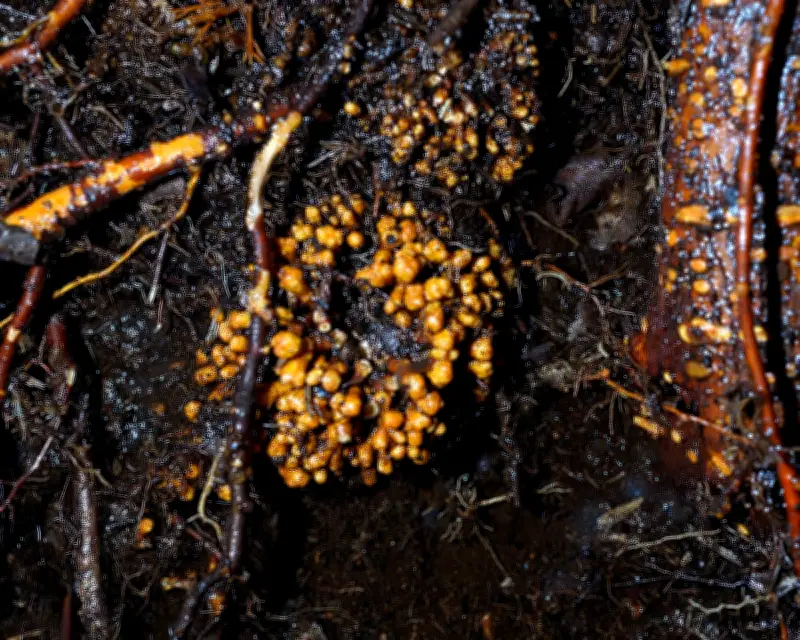
Our planet's soils contain enough subterranean fungi that sustain plant life and help regulate the climate to stretch from Earth to the sun almost 750 million times, a groundbreaking new study has found.
Understanding Arbuscular Mycorrhizal Fungi
Arbuscular mycorrhizal fungi are networks of tubular cells called hyphae that form critical partnerships with more than 70% of plants. These networks, which have been developing for about 475 million years, provide nutrients and water in exchange for carbon produced by plants, and help regulate the climate by drawing carbon into soils.
Despite their importance, very little is known about their distribution and density across natural ecosystems. This gap led to the formation of the Society for the Protection of Underground Networks (Spun) in 2021 by a global network of scientists.
First Global Mapping
In a new study published in Science, a Spun team used machine-learning models with data from over 16,000 soil cores worldwide to produce the first global map of arbuscular mycorrhizal fungi networks. They calculated that the fungi networks, if stretched end to end, would reach a length of 110 quadrillion kilometers, nearly 750 million times the distance from Earth to the sun.
"There could be up to 10 meters (32 feet) of mycorrhizal network in just a teaspoon of soil," said Dr. Justin Stewart, lead author of the study.
Threats to Fungal Networks
The study also documents potential threats to this life-giving infrastructure. Network densities in cropland are 47.3% lower than in wild ecosystems. "A lot of large-scale agriculture practices harm fungal networks," said Stewart. "The most apparent way is with something like tilling, where you go into soil and literally rip it up." Fertilizers or fungicides can also disrupt the symbiosis between plants and fungi.
The scientists warned that the loss of fungal networks could have wide-ranging consequences. Lower-density networks reduce the soil's ability to store carbon and distribute nutrients, and they also protect waterways from nitrogen, phosphorus, and other chemicals.
"If they disappear, there's going to be a lot more chemicals going into waterways," said Dr. Toby Kiers, an author of the study. "Ultimately, the aim of the research is to help scientists and decision-makers understand where fungal systems are thriving and where they are threatened. We will be presenting these data to governments at the upcoming desertification COP in Mongolia in August."
Grasslands and Conservation
Through their mapping, researchers found that grasslands contained the densest hyphal systems. Regions including the Everglades in Florida, the Sudd flooded grasslands of South Sudan, and prairie and steppe ecosystems globally were found to have exceptionally high density. However, these regions are often poorly protected and increasingly degraded.
The researchers called for closer collaboration between farmers and fungi. Stewart noted that current crop yields are artificially boosted by heavy fertilizer use. If farmers were encouraged to protect and support soil fungi, plants could obtain more nutrients naturally, reducing the need for fertilizers, while the fungi would help transfer more carbon deep into the soil.
Kiers said: "There's a big movement now to not only restore communities above ground, the things that you can see, the plants and animals, but also to restore underground fungal communities. And this dataset allows us to have benchmarks for what a healthy microbial community can look like."
Biologist and co-author Dr. Merlin Sheldrake said the study helps find "ways that we can better work with fungi to help address many of the unfolding challenges of our times, from food security to climate change."




