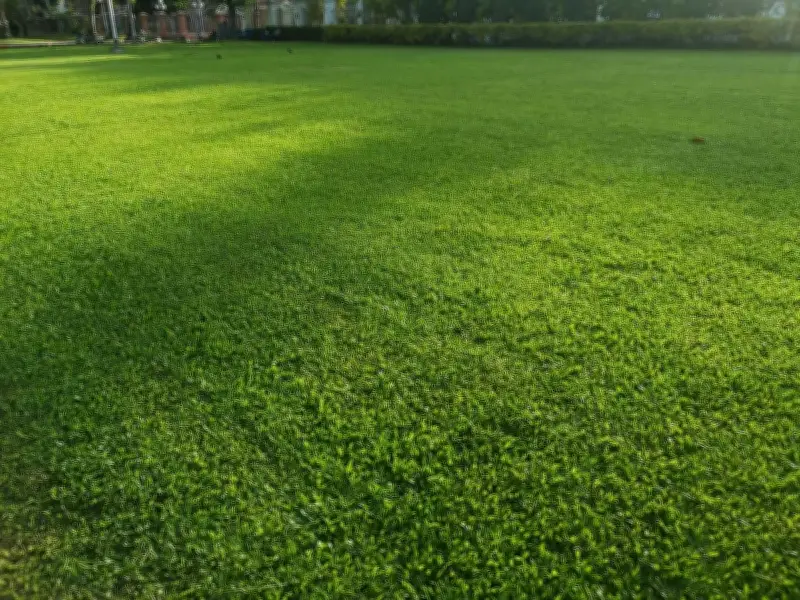
With record temperatures and drought conditions across the UK, many lawns have turned yellow-brown and lifeless. A simple 'screwdriver test' can help gardeners determine whether their grass is dead or just dormant, and guide them toward effective revival.
Dormancy vs. death: the first step
DIY Garden explains that depending on grass type and drought severity, much of a brown lawn may be dormant rather than dead. Dormancy is a survival mechanism allowing established turfgrass to conserve resources during prolonged heat and water stress. The key is helping the lawn recover without adding stress, giving it time to respond. Rain must soak into the soil, surviving grass plants need to resume active growth, and new green tissue must emerge.
Visible recovery may take several days or longer, depending on grass variety, temperature, drought severity, and soil moisture. Tiny green shoots among brown blades or a subtle green tinge in straw-coloured patches are positive signs that recovery is underway.

The screwdriver test
Parched, compacted soil makes it harder for grass to recover. The gardening specialists suggest taking a long screwdriver and pushing it carefully into several areas of the lawn. It should penetrate reasonably easily through moist, uncompacted soil. If some areas are hard to push into while others are easy, those spots may be dry or compacted. If only the top is moist while soil underneath remains dry, the lawn hasn't received deep rehydration. This isn't a laboratory test, but it's a useful quick comparison across the yard.
Aeration importance and timing
Experts at Greener explain that aeration physically removes or displaces small plugs of soil, creating channels for oxygen, moisture, and nutrients to penetrate deeper. These holes give roots room to expand and encourage beneficial organisms. Over time, surrounding soil collapses into the spaces, loosening structure and improving texture. Aeration provides better drainage, stronger roots, more efficient feeding, and a lawn that responds faster to treatment.
According to Martha Stewart, the optimal period for aerating is during active grass growth. Greg Niewold of Power Planter says aeration is best in early fall or spring in the north, while in the south, late spring or early summer is ideal. Wait a day or two after heavy rainfall, as ground that is too wet becomes muddy and too dry won't hold moisture well.
Spike, slice, and core aerators are widely used methods. B&Q recommends an electric aerator for large gardens, though it requires storage and maintenance. For small gardens, a manual aerator such as a hollow tine aerator or garden fork is suggested. Experts recommend covering the entire surface with holes around five inches deep, leaving a six-inch gap between sections.
DIY Garden cautions that core aeration removes plugs to relieve compaction, but timing matters. Don't run heavy equipment over saturated soil, and don't aerate automatically just because the lawn is brown. Aeration is most beneficial when compaction is evident and grass is beginning active growth. The experts advise diagnosing compaction first and aerating during the appropriate season.