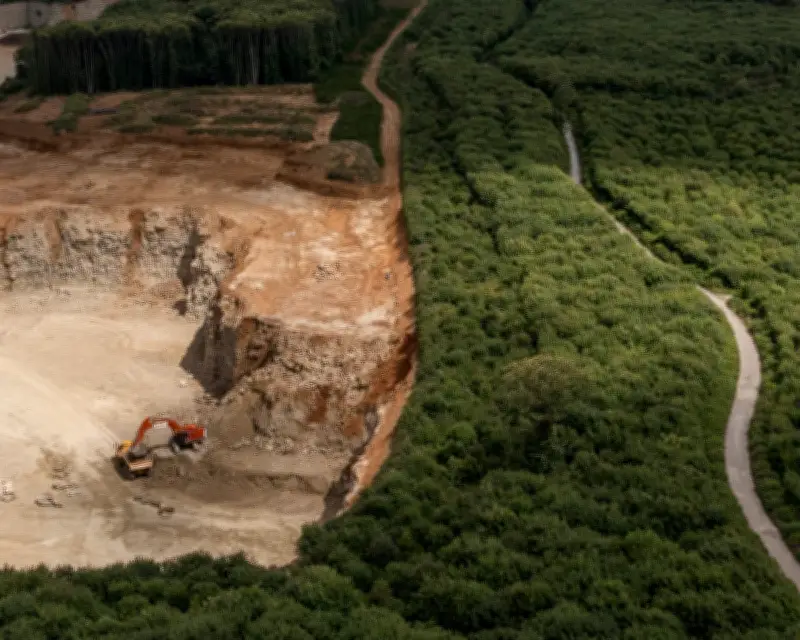
The Reform-led Kent county council has voted to include 40 hectares (100 acres) of Oaken Wood in its mineral sites plan, making it a potential site for quarry expansion. The decision does not yet amount to planning permission, as government approval is needed, but it identifies the Kentish ragstone beneath the forest as essential for building and restoration projects.
Seven Wents and ancient woodland
At the confluence of seven forest paths known as Seven Wents, which has been on maps for 400 years, the wood is a plantation on ancient woodland site, continuously wooded since at least 1600. It has been worked as a sweet chestnut coppice, with sections felled in rotation. Green party councillor Allison Sweetman noted: "It takes about seven years before they're ready to be coppiced again. And in the time they grow they're actually absorbing more carbon from the atmosphere than a fully grown tree."
Ecological importance
The wood supports wildlife including dormice, nightjars and owls, and contains veteran oaks and bluebells. Kent Wildlife Trust says the soil, bound by a mycorrhizal network, is a seed bank and carbon sink. The Kentish ragstone beneath has been quarried since Roman times and is considered crucial for conserving ancient buildings such as the Tower of London and Canterbury cathedral.
Conservation vs development
Opponents argue it is wrong to prioritize built conservation over nature. Brontie Ansell of Lawyers for Nature said the wood is "protected in exactly the same way, legally, because it's not just about the fact that there's newish growth of trees. It is still irreplaceable. You couldn't just create this somewhere else." Gallagher Group, which runs the adjacent Hermitage quarry, plans to translocate the soil and remove non-native chestnut trees, planting more than double the tree cover in restored native woodland. Campaigners are sceptical. Ansell said: "Essentially they lift a lot of the topsoil… and then they chuck the topsoil down somewhere and go: 'There you go, it's been replaced.'" Rachel Rodwell added: "It's just treated like garden topsoil. And they forget the interconnectivity."
Campaigners' response
Last year, over 25,000 people voiced concerns in a consultation. The Woodland Trust and Kent Wildlife Trust oppose the plan. Maidstone borough council, where Sweetman and Rodwell are councillors, passed a rights of nature motion in April. Walking near the quarry, the group encountered exhaust fumes, hammering noise, and a film of white dust on foliage. Rodwell said: "It's replicated across the country, across the globe."