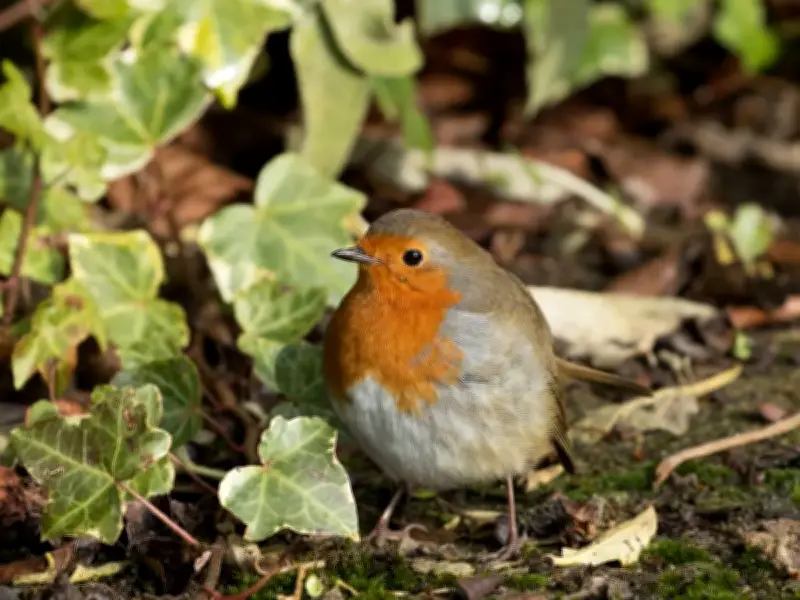
Robins will keep returning to gardens where a common plant is left untrimmed in December, according to gardening experts and conservation charities.
Even in the depths of winter, it is a welcome sight to spot birds visiting the garden. Much of wildlife will be in hibernation, but robins, wrens, sparrows and blackbirds are among the British garden birds that can be seen fluttering about during the colder months. Gardens can act as a sanctuary for birds in need of food and shelter.
The great thing is that households can lend a hand without necessarily needing to buy or plant anything new either – experts say the common ivy plant is enormously beneficial to robins and other feathered creatures.
Why ivy matters for birds
According to the Woodland Trust, "Ivy and honeysuckle are also popular with birds – they provide dense cover, fruits and attract insects for birds to feast on."
"It may not be fashionable to grow ivy on walls and fences, but it's an absolutely excellent plant for providing nest sites for colonies of house sparrows as well as robins and wrens," observes the Royal Horticultural Society (RHS).
Canal & River Trust describe holly and ivy as a "winter haven" for birds. The charity states ivy berries are a valuable winter food source, pointing out: "It's estimated that these berries have the same number of calories as a chocolate bar, gram for gram. Darkly coloured and rich in fat, they grow in abundance along our canals and rivers."
Other garden tasks to skip
While ivy flowers in November, they explain birds will eat shorter-lived fruit like holly berries first and eat the more resilient ivy berries from December onwards.
Another garden task you can strike off the list is being overly thorough with lawn mowing. The RHS says dandelion seedheads are food for goldfinches, while short grass enables blackbirds, thrushes and starlings to locate worms and other invertebrates to eat.
Generally speaking, a bird-friendly garden features a mixture of plants, trees and shrubs that offer food or shelter. Berry-producing shrubs, such as hawthorn and elder trees, are an invaluable source of food for birds.
Plants that attract different birds
Come May, elder trees burst into bloom with large clusters of creamy, wonderfully fragrant elderflowers that are just as popular with people as they are with wildlife.
Crab apple trees and rowans may draw in waxwings, while bullfinches are "particularly keen" on guelder rose berries, according to the RHS.